A chance for peace? Russia's offensive is slowing, but is Putin ready to stop war


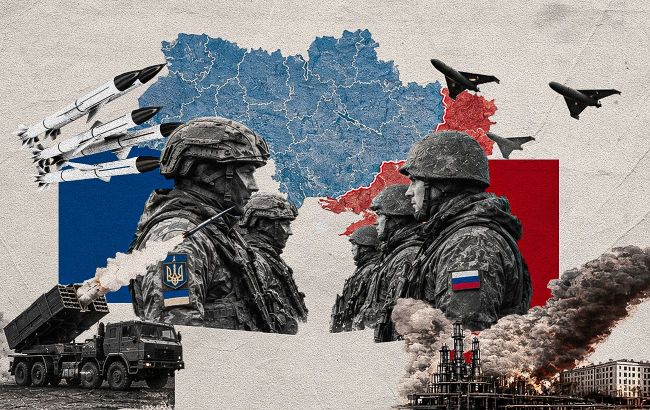 Why Russia is stalling on the battlefield (photo: RBC-Ukraine collage)
Russia is spending more and more manpower to achieve increasingly modest results on the battlefield. Against this backdrop, and following successful strikes deep inside Russian territory, the Kremlin has announced a campaign of attacks against the Ukrainian capital.
Why Russia's offensive has slowed, how Ukraine's Defense Forces have begun changing the battlefield, and what lies behind Moscow's threats — in the RBC-Ukraine article.
Key points:
- Russia's advance is slowing. Russian forces continue offensive operations, but the pace of their advance has fallen to its lowest level in a year, while personnel losses are barely being offset by new contract recruits.
-
The drone effect. Ukraine has significantly expanded its use of drones both on the front line and in the enemy's operational rear. Strikes on roads, warehouses, and command posts are making Russian assaults and logistics increasingly difficult.
-
The war is reaching Russia. Ukrainian long-range strikes on defense industry facilities and fuel and energy infrastructure are putting additional pressure on Russia's economy and military machine.
-
The drone race. Ukraine is close to reaching parity with Russia in the number of long-range drones launched. More than 10–12% of Ukrainian long-range drones now consistently reach and strike their designated targets.
-
A ceasefire is possible, but not guaranteed. Russia has not shown any willingness to abandon its military objectives and could still resort to new risky steps. However, Ukrainian officials believe the overall dynamics of the war are gradually shifting in Ukraine's favor.
Russia's offensive is becoming slower and more costly. The pace of Russian advances has fallen to its lowest level in the past year, while losses in personnel and equipment continue to rise disproportionately.
While Moscow's main advantage once lay in its large pool of manpower and resources, Ukraine is now seeking to offset that advantage through technology.
Ukraine's Defense Forces are increasingly striking the enemy not only along the front line and in its operational rear, but also deep inside Russian territory. What remained an almost exclusive advantage for Moscow in 2022–2023 has gradually become possible for Ukraine as well. Experts at the Institute for the Study of War describe this as a new stage of the war.
At the same time, the Kremlin has shown no willingness to change its plans on the battlefield and is attempting to compensate for its difficulties through escalation, including threats of "consistent and systematic strikes" against Kyiv.
No breakthroughs on the battlefield
In recent weeks, OSINT groups and analytical centers have not recorded any significant changes in positions along the front line, even though May has traditionally been a period of intensified spring and summer campaigning by the Kremlin over the past three years.
The war remains largely positional, with limited advances being made by both sides. However, these gains lack the operational impact that the Russian army demonstrated during its 2024–2025 campaigns.
Ukraine's Defense Forces continue to hold their positions and, where circumstances allow, conduct counterattacks reaching up to 10 kilometers deep into enemy positions. This has been seen in recent weeks near the administrative border between the Dnipropetrovsk and Zaporizhzhia regions (regions in southeastern Ukraine), in the Oleksandrivske direction.
At the same time, Russian forces continue attempting offensive operations on several sections of the front, primarily in the Donetsk region (eastern Ukraine).
For nearly a year, Russian troops have sought to capture the Pokrovsk–Myrnohrad urban area, advance toward Dobropillia (a city northwest of Pokrovsk), and from there encircle the Kramatorsk–Kostiantynivka urban area from the west.
So far, without a decisive result. In several sectors of the arc surrounding the urban area, Russian forces have advanced only a few kilometers over the past several months.
In the Pokrovsk area, despite continued pressure, Ukrainian Defense Forces units remain in position. Near Dobropillia, Russian offensive operations have also been slowed. The situation around Kostiantynivka remains difficult, as Russian troops continue trying to infiltrate the area, but they have so far been unable either to bypass or capture the city.
The capture of the Kramatorsk–Kostiantynivka urban area remains Moscow's primary objective, as it would allow the Kremlin to claim full control over the Donetsk region.
"Russia's objectives for the summer remain unchanged — the complete capture of the Donetsk region, including Kostiantynivka, Druzhkivka, Sloviansk, and Kramatorsk. Initially, Putin was promised this by the end of the summer, but the latest promises appear to have shifted again, now to the end of the year. At the same time, the enemy will continue applying pressure this summer in the Zaporizhzhia, Kharkiv, and Sumy regions," one informed source told the media outlet.
Several senior RBC-Ukraine sources identified two factors that have contributed to the slowdown in Russian advances, despite the fact that Russian battlefield tactics remain largely unchanged: infiltration by small groups, force accumulation, and then assaults.
The first factor is that Ukraine's Defense Forces have begun eliminating more Russian troops on the battlefield, pushing Russian losses to around 35,000 personnel per month (killed and seriously wounded).
According to the media outlet's sources, approximately 60–62% of those losses are irrecoverable casualties.
According to Digital Transformation Minister Mykhailo Fedorov, the cost of Russia's advances continues to rise. While Russian forces were losing 67 soldiers for every square kilometer gained in October, that figure had increased to 179 by April.
In practice, the recruitment of contract soldiers is now barely enough to offset Russia's current losses. Following meetings with military and intelligence officials, President Volodymyr Zelenskyy said the Kremlin could launch a new wave of mobilization to replenish its forces, potentially involving another 100,000 people.
Within Russia itself, there are also signs that Moscow may be preparing such a step. People have increasingly been receiving mobilization notices requiring them to report to military enlistment offices if a new mobilization wave is announced, without the need for an additional summons.
There is another possible scenario: Putin may intend to use a new mobilization not so much to reinforce existing forces as to support an offensive operation in northern Ukraine.
According to the media outlet's sources, this could involve an attempt to launch operations from Belarus (Russia's ally bordering northern Ukraine) with the participation of Belarusian troops, operations conducted solely by Russian forces from Belarusian territory, or independent Russian attempts to enter the Chernihiv region (northern Ukraine bordering Belarus and Russia). At present, this is not considered an inevitable scenario.
However, as RBC-Ukraine previously reported, if Putin ultimately orders such an offensive, Russian forces would need at least three months to prepare for it.
The slowdown in Russian advances is not solely the result of effective defensive actions by the Ukrainian military. According to RBC-Ukraine's sources, another key change in recent months has been the significant increase in the use of drones by Ukrainian forces.
On the one hand, this has enabled conventional military units to repel Russian assaults along the front line more effectively. Drones remain on constant patrol in the air, detecting enemy movements and striking Russian troops before they reach Ukrainian positions.
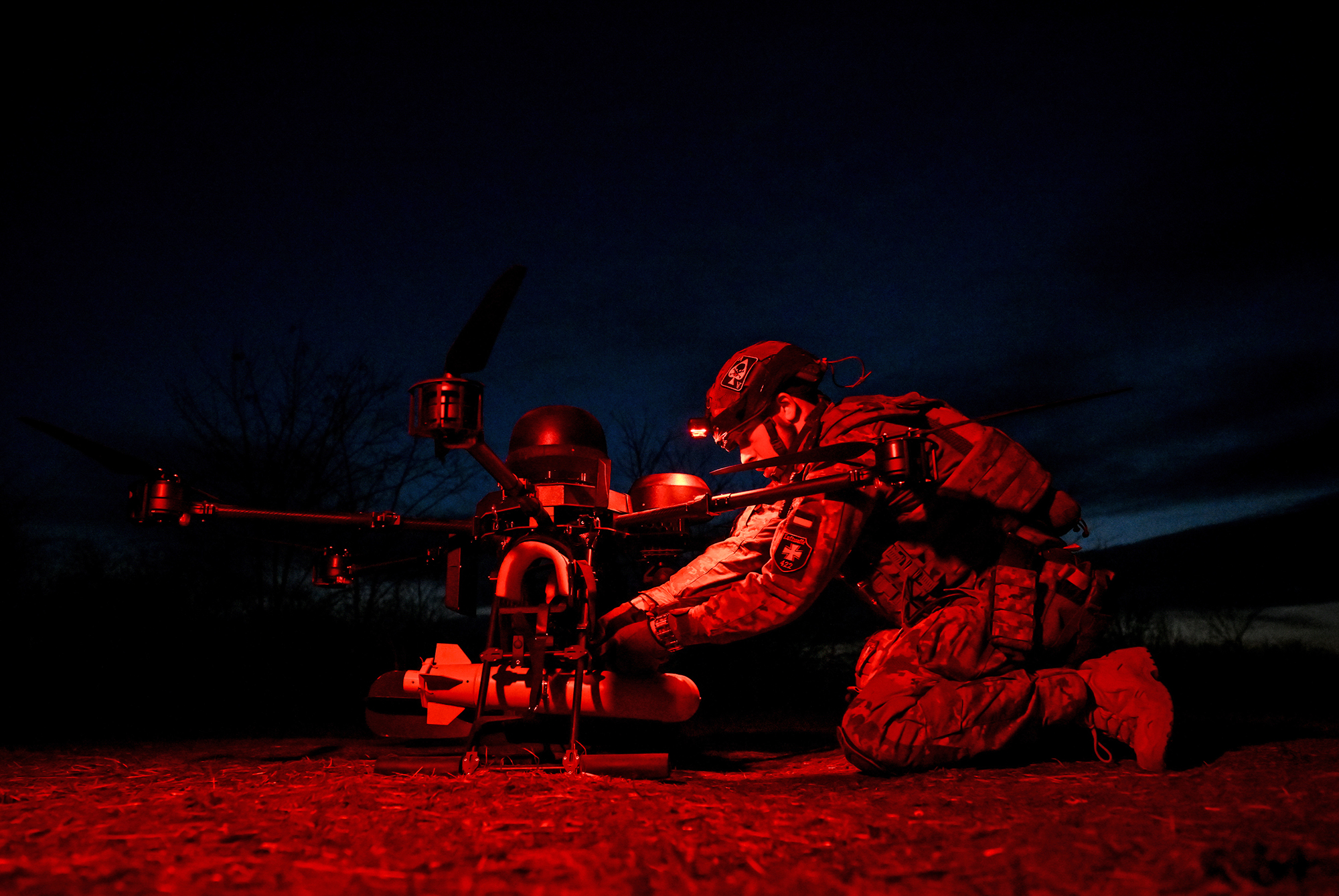 The use of drones has expanded the "kill zone" (photo: Getty Images)
At the same time, the widespread use of drones by both sides has effectively expanded the "kill zone" — the area that can be actively targeted by strikes.
Due to the constant threat of attacks, the Russian command has been forced to move a significant portion of its logistics, personnel, and some command elements 20–40 kilometers away from the line of contact.
About four months ago, Ukraine began systematically targeting this area on the Russian side — the operational depth between the front line and the enemy's strategic rear.
Ukraine's medium-range strike drones have increasingly targeted Russian logistics routes, command posts, airfields, fuel and ammunition depots, troop concentration areas, drone operators, and military equipment.
Russia uses Molniya drones for strikes at operational depth. Since the beginning of this year, Ukraine's Defense Forces have started deploying more advanced systems on a large scale — Hornet drones developed by a US company founded by a former Google chief executive, as well as Ukrainian and German counterparts.
According to Russian online sources, the Hornet features terminal guidance capabilities with artificial intelligence elements, combines satellite and inertial-optical navigation, is resistant to electronic warfare jamming, and can operate using Starlink Mini terminals and mesh networks. It approaches targets very quietly and is difficult to shoot down with small arms. The drone has a range of up to 200 kilometers.
A year ago, drones of this type were reserved for high-value and expensive targets. Now they are available in such numbers that even individual military trucks, fuel tankers, and support vehicles are being targeted.
Hundreds of Ukrainian drone strikes have also been recorded around Horlivka (a Russian-occupied city in Ukraine's Donetsk region) and along the Donetsk–Mariupol–Crimea highway corridor (the H-20 and M-14 highways), a key land route connecting Russia with occupied Crimea.
Ukraine's Defense Intelligence recently stated that sections of the highway between the temporarily occupied cities of Berdiansk, Melitopol, and Dzhankoi are under the fire control of Ukrainian military intelligence drone operators.
Footage showing attacks on Russian logistics routes has also been published by the 1st Azov Corps (a Ukrainian military formation) and units of the Unmanned Systems Forces. As a result, fuel sales limits were recently introduced in occupied Crimea.
"Over the past several months, we have quadrupled the destruction of enemy logistics, warehouses, equipment, command posts, and supply routes in the operational rear. A clear pattern is already visible in the data: the more Russian logistics are destroyed, the fewer assault operations take place along the line of combat engagement," Minister Fedorov said recently.
So far, Ukrainian strikes against Russia's operational rear have not produced a breakthrough on the battlefield. However, they are making it increasingly difficult for the Russian military to concentrate forces for large-scale operations and maintain uninterrupted logistics.
If Ukraine's Defense Forces can sustain this trend and gain greater control of the airspace near the front line, it could push Russia to reconsider its ambitions and plans on the battlefield. At the same time, Russia is also adapting and seeking to implement similar technological solutions.
"If we talk about the situation on the battlefield itself, the concept of active defense is working. People can criticize Syrskyi (Commander-in-Chief of Ukraine's Armed Forces - ed.) as much as they want, but his method of active defense is actually working. On the one hand, the material component is increasing the number of Russian troops being killed directly on the front line, combined with strikes on logistics, the Russian economy, and production. On the other hand, Syrskyi is not giving them any respite or the opportunity to concentrate forces for major attacks," an RBC-Ukraine source close to the presidential administration said.
Long-range strikes
Ukraine's growing drone capabilities are being felt not only on the battlefield but also deep inside Russia — hundreds and even thousands of kilometers from the Ukrainian border.
Over the past year, drone strikes on Russian territory have evolved into a systematic campaign targeting the country's defense industry and fuel and energy sector.
According to RBC-Ukraine, the current priority targets include facilities involved in the processing, storage, transportation, and export of Russian oil, as well as sites linked to the production of precision weapons and explosives.
In this way, Ukraine's Defense Forces are simultaneously targeting two areas that are critically important to the Kremlin — oil revenues and the Russian defense industry's ability to produce weapons for the war.
Although Russia was the first to use long-range drones against Ukraine, it has lagged in developing defenses against such attacks. Moscow has faced a dilemma in which it must constantly redeploy air defense systems from deep inside the country to protect troops on the front line, thereby weakening defenses in other regions.
Pantsir air defense systems (Russia's short-range air defense system) and their missiles alone are not enough. Some pro-war Russian channels are already reporting shortages of air defense assets needed to repel large-scale drone attacks.
Following Ukraine's example, Russia has also begun using interceptor drones, including the Yolka. However, their tactical and technical limitations are so significant that the question is less when they can be used and more under what conditions they can be used at all.
In other words, Russia has not yet achieved the same level of development in interceptor drone technology as Ukraine.
Russian online sources indicate that hundreds of drones enter Russian territory almost every night. Over the past year, however, Ukraine has changed not only the quantity and range of systems it uses but also the effectiveness of its strikes by experimenting with both attack methods and tactics.
"We are now close to reaching parity in the number of long-range drones being launched. There has been progress — the number of jet-powered drones in strike packages has increased, and so has the size of their warheads," one informed RBC-Ukraine source said.
In addition, like Russia, Ukraine has begun including a certain share of decoy and imitation drones with small explosive payloads in its strike packages. Their purpose is to penetrate and exhaust the enemy's air defense system.
According to the media outlet's sources, more than 10–12% of Ukrainian long-range drones currently reach and strike their designated targets. By comparison, among Russian Shahed drones that are not shot down, only about 3–5% now reach their targets, another informed RBC-Ukraine source said.
In mid-May, Ukrainian forces carried out their largest attack on the Moscow region to date. Ukraine's Defense Ministry reported the successful strike on four Russian fuel and energy sector and defense industry facilities as a result of that operation.
A week later, Russia launched a large-scale attack on Kyiv and the Kyiv region (the area surrounding Ukraine's capital), injuring nearly 100 people.
Following that attack, Moscow threatened to move to "consistent and systematic strikes" against facilities in the Ukrainian capital used by the Armed Forces of Ukraine and against centers where relevant decisions are made.
The Kremlin describes this as retaliation for a Ukrainian strike on a dormitory in Starobilsk (a Russian-occupied city in Ukraine's Luhansk region). Ukrainian military officials said their target was one of the headquarters of Rubicon, a Russian drone unit.
Russian authorities and state media, meanwhile, claimed that Ukraine had allegedly targeted "civilian children." Either way, Moscow used the Starobilsk incident as justification for strikes on Kyiv and other Ukrainian cities.
Although Russia said it would target military facilities, that is only one of its priorities. Over the past week, the aggressor has also attempted to strike power substations, gas production facilities, airfields, railway and transport infrastructure, as well as ordinary civilian buildings where no "decision-making centers" were located.
According to the media outlet's sources, attacks on these targets are also likely to continue.
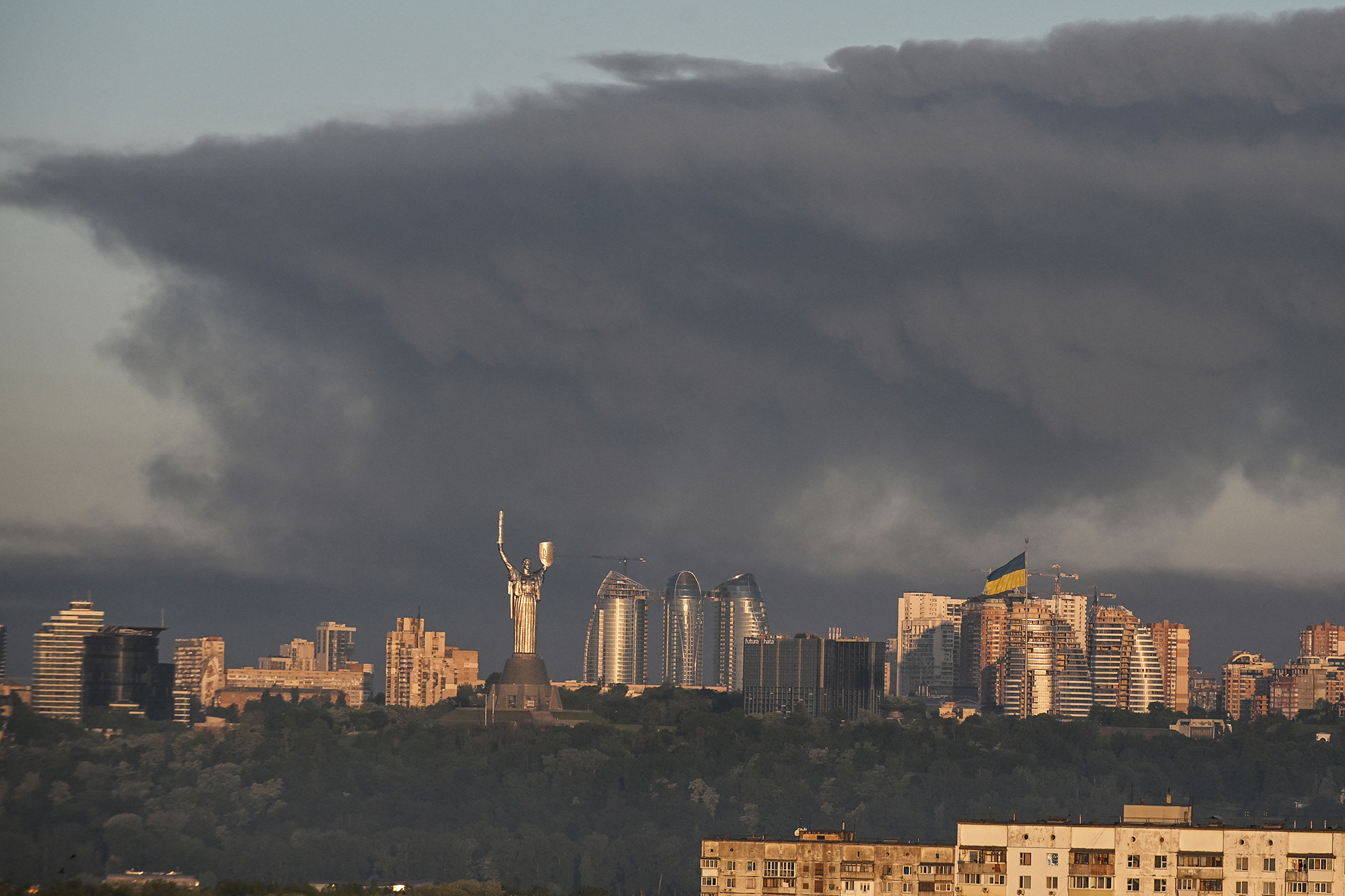 Moscow has threatened to launch "consistent and systematic strikes" on targets in Kyiv (photo: Getty Images)
In the assessment of the media outlet's sources, Russia has the resources to carry out large-scale missile and drone attacks on average every 5–10 days, taking into account the time required for reconnaissance and target analysis.
While Ukraine has the means to counter drones, it is no secret that it faces a persistent shortage of interceptor missiles for ballistic targets.
"Had it not been Starobilsk, they would have used the Moscow oil refinery instead. For them, it is just a pretext. We know for certain that these strikes were being prepared even before Starobilsk," one informed source told the media outlet.
That source, along with several other RBC-Ukraine sources, pointed to similar underlying motives behind the Kremlin's actions. One of them is a form of retaliation for strikes on the Moscow region.
In addition, Putin may be seeking to secure an informal ceasefire arrangement: if Ukraine refrains from striking Moscow, Russia would refrain from attacking Kyiv.
Another possible motive is that Russia seeks to weaken Ukraine's defensive capabilities amid Ukrainian strikes on Russian territory.
As RBC-Ukraine previously reported, Russia's military leadership concluded that while it was concentrating on Ukraine's energy infrastructure during the winter, Ukrainian enterprises were significantly increasing weapons production. The Kremlin subsequently decided to shift the focus of its attacks once again.
A third, more strategic objective may be that through the regular terrorizing of Kyiv, Putin hopes to pressure the Ukrainian government and population into accepting peace on his terms. However, the media outlet's military sources are skeptical about Moscow's chances of success in this regard.
Is a ceasefire possible?
"For the first time in a long while, the war's momentum has shifted in our favor," an RBC-Ukraine source within the country's leadership said, describing the current situation. Put simply, this means that time — perhaps for the first time since the start of the full-scale war — has begun working in Ukraine's favor rather than Russia's.
Viewed from this perspective, some of the high-profile statements made in recent days become easier to understand. This includes President Volodymyr Zelenskyy's remark that there is a chance the active phase of the war could end by around November, when US congressional elections are scheduled to take place.
The "cards" that Donald Trump often accused Ukraine of lacking have, in fact, been in Kyiv's hands for a long time. The difference now is that Ukraine is no longer playing them only occasionally, but is carrying out a systematic strategy that is gradually pushing Russia into a difficult position.
According to one informed RBC-Ukraine source, Russia has found itself in a certain deadlock because the war's momentum is no longer working in its favor. In theory, the situation could still be changed, but doing so would require drastic and risky steps.
One option would be another large-scale mobilization campaign so that the quantity of so-called meat assaults (costly infantry assaults with high casualty rates) could eventually translate into the capture of additional territory. Another would be a significant expansion of the conflict, for example, through an attack on the Baltic states.
"They are in a state of panic because they do not want mobilization — they are afraid of their own people. They do not want to seriously challenge the Baltics either — they are afraid of that as well. They cannot use a nuclear weapon. So the logic becomes: let's at least bomb Kyiv," the source said.
According to another source, "Russia's last remaining advantage is its missile capability, particularly ballistic missiles."
As a result, Ukraine's capital should realistically prepare for attacks similar to the one carried out on the night of May 24 to become more or less regular.
That is why Zelenskyy appealed to Trump and the US Congress, urging them to urgently provide Ukraine with the anti-ballistic defense systems it needs.
At the same time, Zelenskyy assesses the overall situation on the battlefield positively.
"On the front, our positions have become stronger: thanks to the courage of our people, drones, various technological solutions, as well as mid-range strikes and our long-range sanctions (a term used by Ukrainian officials to describe long-range strikes on military and industrial targets inside Russia), we have managed to stabilize the front line," the president said a week ago, on May 25.
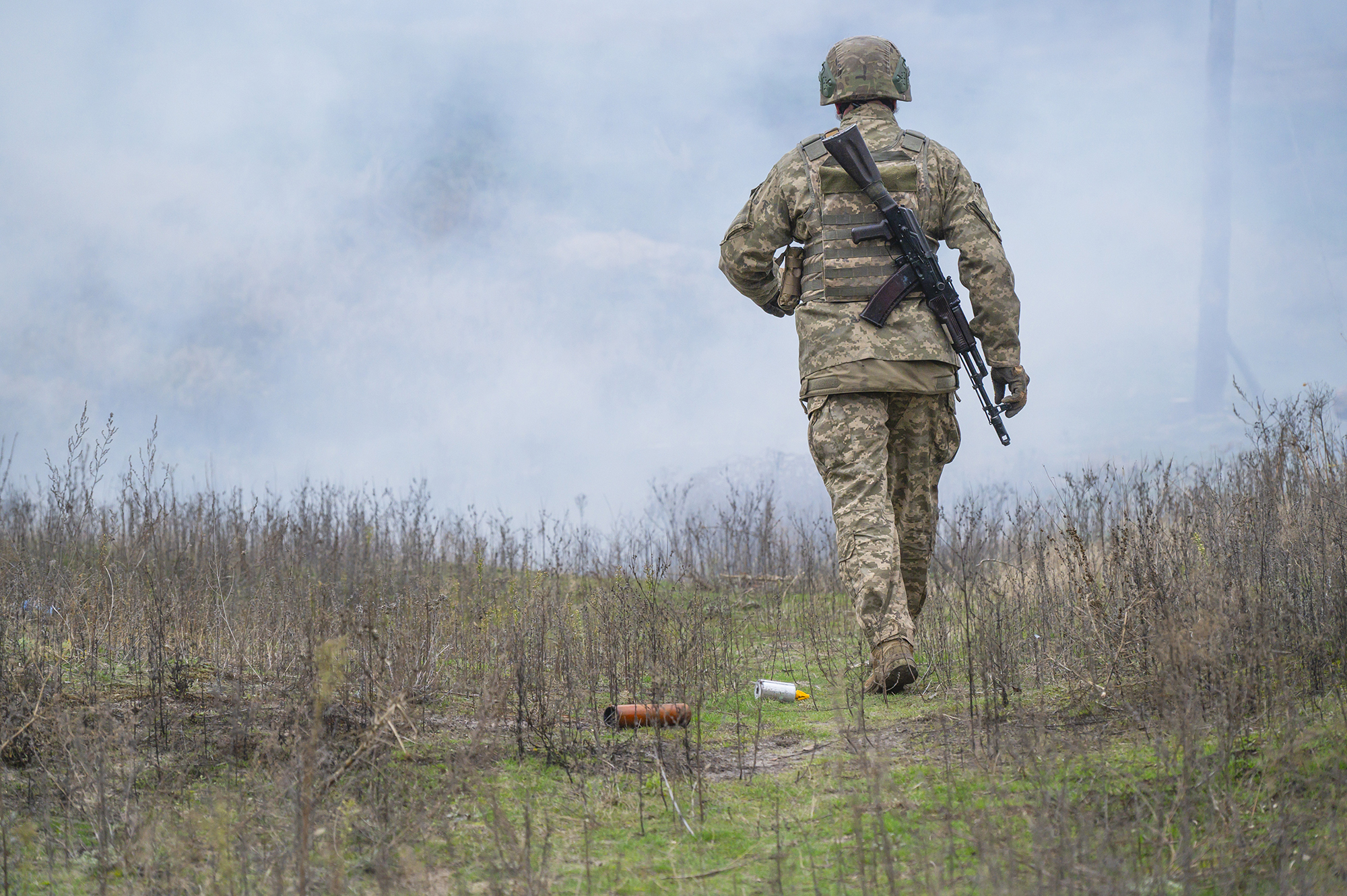 Zelenskyy assesses the overall situation on the battlefield positively (photo: Getty Images)
At the same meeting, Zelenskyy held his first gathering with his parliamentary faction in several months, where he said the active phase of the war could end as early as November this year.
Why that timeframe? As an RBC-Ukraine source explained, it is linked to the US congressional elections scheduled for November 3.
"We assume that the Americans intend to try to calm everything down before their elections in the fall," the source said.
In addition, this assessment is based on the expectation that the United States will eventually be able to stabilize the situation in the Middle East. As a result, two key negotiators — Steve Witkoff and Jared Kushner — along with their boss, Donald Trump, may finally have the time and opportunity to return their attention to Ukraine.
Among other things, this could pave the way for a long-discussed visit to Ukraine by Kushner and Witkoff.
RBC-Ukraine previously wrote in detail about why negotiations have reached a deadlock. The issue is not the "wrong" mediators, but rather the fact that the positions of Ukraine and Russia regarding the unoccupied part of Donbas (eastern Ukraine) are fundamentally irreconcilable.
For Donald Trump, this would also be yet another attempt to "settle" the Russia–Ukraine war. Why, then, is there hope that this attempt could succeed?
"Americans believe the elections could be difficult for him. That is why they will try to resolve it," a source in the Presidential Office said.
According to opinion polls, Trump's Republican Party is almost certain to lose control of the House of Representatives in November. If current trends continue, it could also lose the Senate, even though just a few months ago it appeared likely to remain under Republican control.
No matter how many conflicts around the world Trump says he has "ended," it is obvious that ending the Russia–Ukraine war would outweigh all of them combined.
It can therefore be assumed that this time the White House may approach the issue more seriously, rather than repeatedly setting and postponing its own deadlines.
"The problem is that Trump does not have many tools to pressure the Russians immediately. All of these 'major projects between great powers' — Arctic development, joint resource extraction, and so on — are interesting to Moscow, but they take time. Meanwhile, Putin is running out of money right now," an informed RBC-Ukraine source said.
According to the source, this is why Moscow attempted to push the idea of a "single European negotiator," with Putin proposing former German Chancellor Gerhard Schröder — a candidate widely seen as unacceptable to most European governments — for the role.
For now, Western media report that European countries have been unable to agree on a single negotiator. Russia itself, through Kremlin spokesman Dmitry Peskov, has also stated that Europe cannot be a mediator.
At the same time, RBC-Ukraine's sources both in the West and within the Ukrainian leadership believe that European countries will ultimately be able to reach an agreement.
"They will do things their usual way — hold three summits, someone will veto something, there will be a lot of fuss, and then they will arrive at a compromise," an informed Ukrainian source said.
The issue is not only about personalities, although that matters too, but also about what approach the person at the negotiating table would represent — a more hawkish or a more conciliatory one.
Figures representing the most hardline versions of either approach have little chance of becoming consensus candidates. The process of appointing a single EU negotiator could gain momentum once the United States becomes seriously engaged in the peace process again.
"Rubio's recent statement that the United States sees no point in fruitless negotiations was aimed entirely at a domestic audience. American journalists keep asking: What is happening with Ukraine? So the response is essentially: why hold meetings that lead nowhere? If there is substance, we will meet," an RBC-Ukraine source in government said.
According to the media outlet's sources, it is also inaccurate to say that nothing is happening in the negotiation process. Working-level contacts, including with US officials, are continuing.
"If Putin sees that he is stuck in Donbas, there is an expectation that he will not continue into another winter because that will be difficult for him as well. First, there is the economy. Second, we are also capable of causing blackouts," the source continued.
Of course, this is only one possible scenario. No one knows with certainty what is actually on the Kremlin leader's mind.
"Putin does not plan that far ahead. Right now, he is using the opportunities available to him, and then we will see what happens. He lives through this war and does not want to let Ukraine go. For him, it is personal," another source close to the presidential administration said.
A scenario in which Russia abandons its unsuccessful attempts to take control not only of all of Ukraine but even of the entire Donbas remains possible only under several conditions.
One of them — and one that Zelenskyy emphasized during his meeting with lawmakers a week earlier — is maintaining internal stability. In particular, the president urged parliament to pass legislation needed for further European integration and continued Western financial support.
The very next day, lawmakers failed to pass one such bill concerning the taxation of parcels. However, parliamentary sources later explained that this case may have been an exception because approval of that particular legislation was not being strongly pushed by the country's leadership.
"We never rely on time itself. We do not need a long war. What is happening now is that decisions that were approved and implemented earlier are finally starting to produce results," a source close to Zelenskyy told RBC-Ukraine, summing up the current situation.
***
The maximum objective for the next five to six months is to try to bring the peace process to an outcome acceptable to Ukraine. According to one informed source, even a freeze along the current front line combined with security guarantees for Ukraine would be "still a very good outcome."
"For the Russians, it is very important that we do not end up feeling like winners," one source told the media outlet.
According to his assessment, even if Russia were to agree to a freeze along the line of contact, it would likely, in its usual style, put forward a deliberately unacceptable demand during negotiations — for example, recognizing Russian as a second state language or handing over those allegedly responsible for the strike on Starobilsk.
Back in late 2024, immediately after Trump's election victory and before his inauguration and subsequent attempts to broker peace between Ukraine and Russia, a European diplomat made a similar point in a conversation with RBC-Ukraine.
"For Russia, it will not be enough simply to defeat you or achieve some of its objectives. It will be important for them to humiliate you symbolically."
The risk is that some Russian demands, particularly in the humanitarian sphere, could appear reasonable to the United States and even parts of Europe, while provoking strong public backlash inside Ukraine, especially on social media. Such divisions would undoubtedly work in Moscow's favor.
According to an RBC-Ukraine source close to the presidential administration, Russia has a clear plan in the event of a frozen conflict or a reduction in the intensity of hostilities, for example, if missile strikes cease.
"Their plan is to push Ukraine toward elections, create internal political fragmentation, weaken the country from within, and then achieve the same Russian objectives either through political means or by restarting a full-scale war. But this time, Ukraine would be significantly weaker and more fragmented internally," the source said.
At the same time, that remains a relatively distant prospect for now.
"If there is something we should believe in, this is a good moment to believe that the momentum is beginning to shift in our favor," another government source told the media outlet.
Quick Q&A
– Why has Russia's offensive slowed down?
According to RBC-Ukraine's sources, the main reasons are high Russian personnel losses and the growing use of drones, which allow Ukraine to more effectively destroy Russian logistics, headquarters, troop concentration areas, and place key routes under fire control.
– What are medium-range strikes, and how do they affect the battlefield?
The term refers to systematic strikes against the enemy's operational rear, located dozens of kilometers behind the front line.
Hornet drones and similar systems used by Ukraine target enemy warehouses, airfields, command posts, drone operators, and logistics routes, complicating Russian offensive preparations and supply operations. One visible consequence has been fuel shortages in occupied Crimea.
– What targets is Ukraine striking inside Russia?
According to the media outlet's sources, priority targets include facilities involved in the processing, storage, transportation, and export of Russian oil, as well as sites connected to the production of precision weapons and explosives.
In doing so, Ukraine's Defense Forces are simultaneously targeting two areas that are critically important to the Kremlin: oil revenues and the capabilities of Russia's defense industry.
– Why is Russia again threatening systematic strikes on Kyiv?
According to RBC-Ukraine's sources, the Kremlin may be pursuing several objectives at once: retaliation for Ukrainian strikes in the Moscow region, an attempt to weaken Ukraine's ability to conduct strikes inside Russia, and pressure on Ukrainian society in the hope of forcing Ukraine to accept peace on Russian terms.
– Could the active phase of the war end this year?
Officials consider such a possibility, but it depends on several factors, including developments on the battlefield, the position of the United States ahead of congressional elections, and Russia's willingness to reconsider its current war objectives.