Kyiv offensive or buffer zone? Inside Russia's plans for Ukraine's north


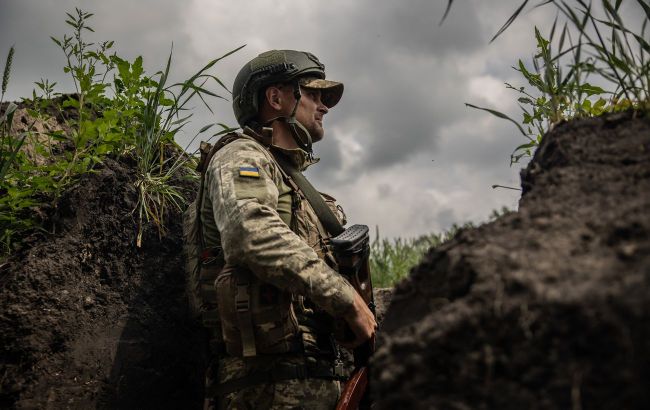 File photo: Russia may be planning new offensive operations in the north (Getty Images)
Over the past week, military-political leadership has warned that Russia may be planning new offensive operations in the north. Moscow is considering several scenarios of action, sources in the Defense Forces say, from creating a buffer zone in the Chernihiv region to once again moving toward Kyiv.
What Putin is planning and what threats exist for the north – read in the RBC-Ukraine report.
Main points
- Scenarios and timing. Russia is considering 5 options for actions in the north. The most realistic is an attempt to create a buffer zone (10–20 km) in the Chernihiv region, while the least realistic is an offensive toward Kyiv. The start of an operation is possible no earlier than fall.
- Current situation. The current threat level is low. The enemy does not have sufficient forces near the border; on the Belarusian side, only about 1,900 Belarusian troops are deployed.
- Enemy forces. For a future operation on the northern borders, the Kremlin is planning a new wave of mobilization of 100,000 people.
- What are the Armed Forces of Ukraine monitoring? The development of military logistics in Belarus, joint nuclear exercises (under the cover of which troops may be increased), and possible intensification of reconnaissance and sabotage-reconnaissance groups (DRG).
- 5 motives of Putin: To tie down the Armed Forces of Ukraine in the north; to force the redeployment of troops from the Donetsk region; to create a buffer zone; to apply psychological pressure; and to attempt to seize the country’s leadership (in the event of an attack on Kyiv).
Scenarios
Last week, citing intelligence and special service data, President Volodymyr Zelenskyy warned that Russia is considering plans for an attack on the Chernihiv–Kyiv direction from Belarus and the Bryansk region. Or against one of the NATO countries, precisely from the territory of Belarus.
The president also reported that the enemy has five scenarios for expanding the war through northern Ukraine. The RBC-Ukraine sources explain that the Kremlin’s new plans may include both the use of Belarusian territory near the Russian border and actions directly from Russian territory without involving Belarus.
The most realistic of these five scenarios – if Russia does decide to launch a new offensive operation – is the creation of a buffer zone in the Chernihiv region, 10–20 kilometers deep into Ukrainian territory. The least realistic is an attempt to advance toward Kyiv.
According to one of RBC-Ukraine’s sources, the start of an offensive, according to one of the options, will be possible no earlier than fall.
Zelenskyy said that Putin aims to persuade the self-proclaimed president of Belarus, Lukashenko, to join new Russian aggressive operations.
Lukashenko, in turn, said yesterday that Minsk does not intend to get involved in the war in Ukraine. He clarified that this is only possible in one case – if Ukraine commits aggression against them.
According to the Ukrainian president, all components of the Defense Forces are working to strengthen defense in the Chernihiv–Kyiv direction. And through diplomatic channels, relevant data will be passed on to partners, as well as signals to Belarus.
Signs
Currently, activity in the Chernihiv–Kyiv direction and the threat level are low. The military-political leadership is monitoring several factors, events, and signs that may indicate Russian preparations for possible offensive actions in the north.
First of all, the number of troops near the Ukrainian northern borders. From the Belarusian side, as before, four battalions of the Belarusian army are deployed (about 1,900 troops), which are constantly rotated. There is also no sufficient number of Russian troops for offensive actions either from Belarus or from the Bryansk region.
However, Zelenskyy stated recently that the Kremlin is preparing new mobilization steps to recruit another 100,000 people into its army.
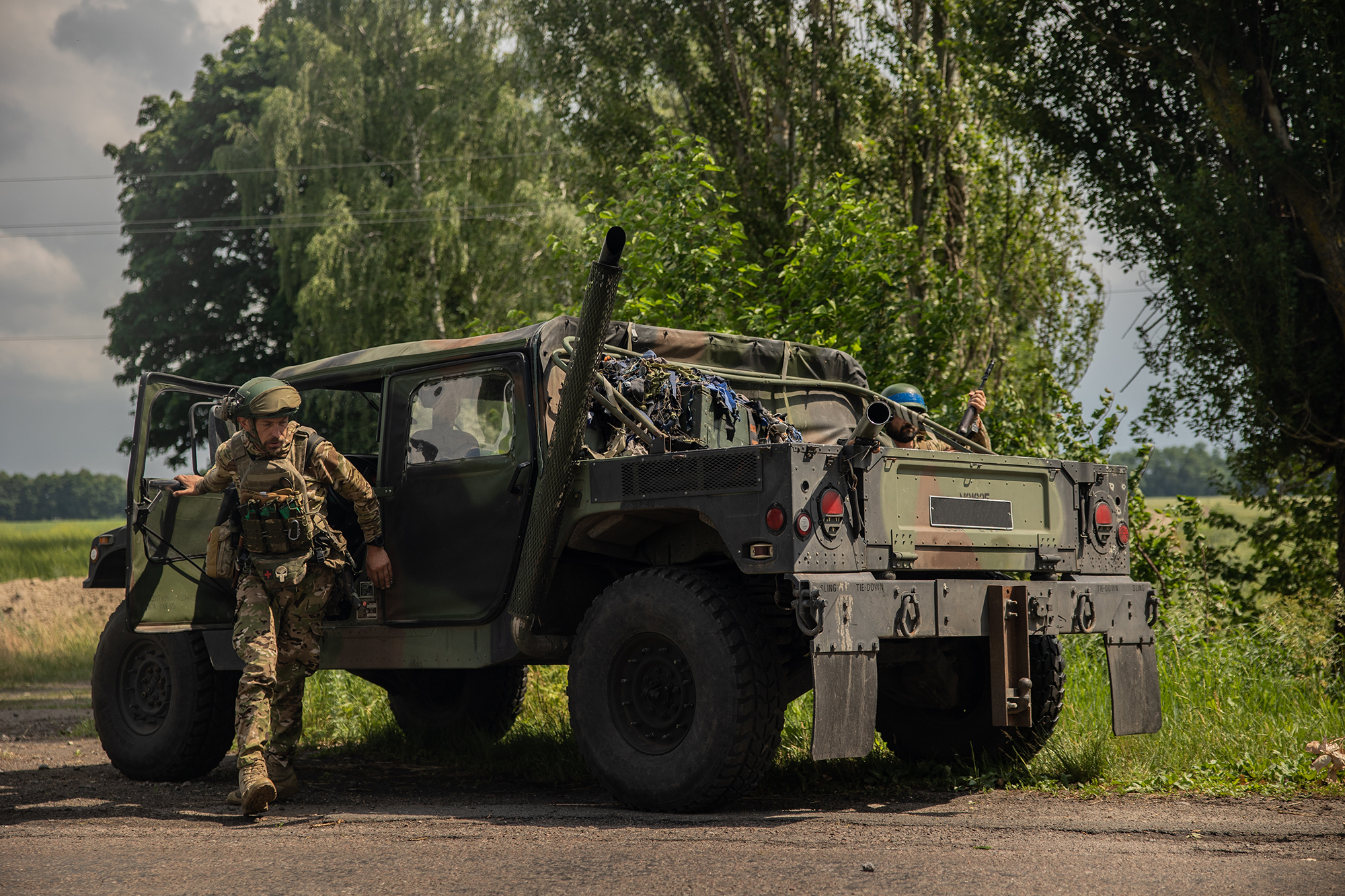 Photo: All units of the Defense Forces are working to strengthen defense in the Chernihiv–Kyiv direction (Getty Images)
This is a new wave of Russian mobilization similar to fall 2022, in addition to the 409,000 personnel that Moscow plans to recruit under contract this year.
The Kremlin plans to allocate these 100,000 soldiers for operations on the northern borders in case it decides to carry them out. At that time, at the end of 2022 – beginning of 2023, Putin mobilized about 300,000 Russians.
The second factor is the development of infrastructure in southern Belarus – expansion of logistics routes, construction of training grounds and bases that can also be used by Russian forces within the framework of the Union State.
The third sign, which is not yet being recorded, is an increase in intelligence and sabotage-reconnaissance activity from Belarus and Russia in the direction of a possible strike.
The fourth factor is joint nuclear exercises of Belarus and Russia on Belarusian territory, which aim to demonstrate force, not only for Ukraine, but also for neighboring NATO member states. It is also not excluded that under the cover of these exercises, Belarusian and Russian forces may increase their troop presence near the Ukrainian borders.
For this purpose and to practice joint actions, Belarus and Russia may attempt to hold additional unscheduled exercises similar to Zapad 2025 or Union Resolve 2022, which served as cover for the mass concentration of Russian forces before the full-scale invasion. There is currently no information about such new exercises from Moscow and Minsk.
Why Putin needs this
Moscow may pursue several reasons, and several of them – simultaneously. First of all, this is an attempt to change the course of the war in the event of the successful implementation of their plans.
First, by tying down Ukrainian Forces in the north, which will have to maintain defense there. Second, by attempting to force the Ukrainian command to withdraw troops from other important directions for the enemy, for example, from the Donetsk region.
Commander-in-Chief Oleksandr Syrskyi also recently stated that the Russian General Staff is actively calculating and planning offensive actions from the north. And if the enemy implements such plans, the front line will expand, the commander-in-chief noted.
Third, this is part of Putin’s plan to create a so-called buffer zone in Ukraine's border area – a task the Russian leader assigned to his military two years ago.
The fourth reason is additional moral and psychological pressure on the Ukrainian population to force it to be more compliant with the Kremlin's conditions.
The fifth motive – if Putin chooses the scenario of an offensive on Kyiv, he will again attempt to remove and seize Ukraine’s military-political leadership. But sources assess this scenario as the least likely.