Five Kremlin scenarios: Is threat of new Russian offensive from Belarus real?


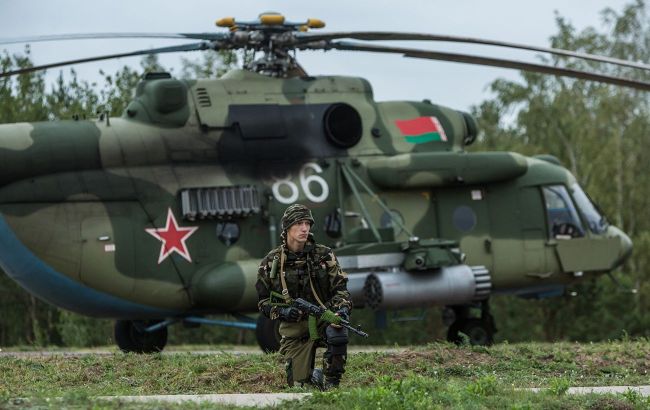 Photo: Russia is pressuring Belarus to involve its army (Getty Images)
In recent weeks, the attention of Ukraine’s military and political leadership has once again shifted to the northern borders. Russia continues its attempts to draw Belarus into a war. Amid intelligence reports, Ukraine has launched large-scale security measures across five border regions.
RBC-Ukraine has compiled all the details on the current situation at the northern border, statements by state leadership, and assessments from experts and military officials.
Key points:
- Kremlin is preparing 5 scenarios: Russia is planning operations from Belarus against the Chernihiv-Kyiv direction or NATO countries.
- Unprecedented SBU security measures: Large-scale inspections have begun in five northern regions of Ukraine.
- Nuclear drills and Lukashenko’s statements: Amid joint nuclear exercises with Russia, the Belarusian leader proposed a meeting with Zelenskyy.
- Border reinforcement: The border area is being heavily mined and fortified, but no direct provocations or breakthroughs have been recorded by the State Border Guard Service so far.
- Offensive resources: A new invasion in the Chernihiv-Kyiv direction would require hundreds of thousands of soldiers, but currently, all of Russia’s forces are tied down in eastern and southern Ukraine.
- Key markers of real threat: According to experts, the true warning sign would be the formation of large strike groups, which would inevitably be detected by US and European intelligence services.
Background: from "specific activity" to 5 Russian scenarios
Signals of escalation on the northern border began emerging in mid-April:
On April 17, Ukrainian President Volodymyr Zelenskyy stated that Russia was trying to involve Belarus in the war. According to him, road construction toward Ukraine and the fortification of artillery positions have been recorded in the Belarusian border areas.
In early May, the President reported "specific activity" in certain sections of the Ukrainian-Belarusian border.
Last week, Zelenskyy revealed information about additional contacts between Russia and Alexander Lukashenko.
“Ukraine has details of conversations between Russia and Belarus. Ukraine will, without a doubt, defend itself and its people if Alexander Lukashenko slips up and decides to support this Russian intention as well," the President said.
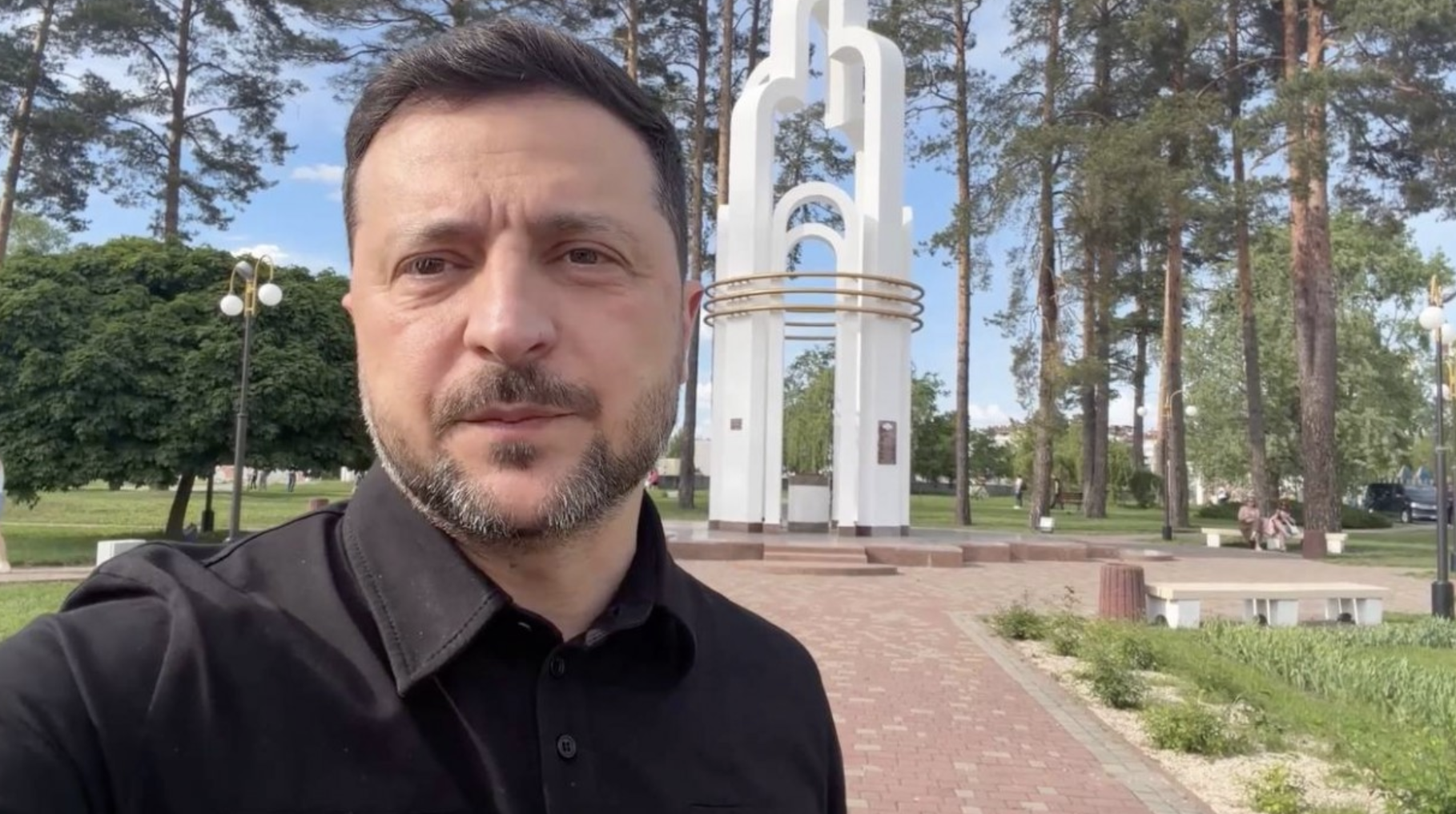
Photo: Zelenskyy visits the city of Slavutych in northern Ukraine amid threats from Belarus (president.gov.ua)
On May 19, an interview with Oleksandr Syrskyi was published by Militarnyi, in which the Commander-in-Chief of the Ukrainian Armed Forces confirmed the reality of these threats.
According to Kyiv, Moscow is considering operational plans both south and north of Belarusian territory — either against the Chernihiv–Kyiv direction in Ukraine or against one of the NATO countries.
The issue of the northern threat was discussed at a meeting of the Staff of the Supreme Commander-in-Chief. The President stated that Russia is preparing five scenarios for an offensive from the north, including the Chernihiv–Kyiv direction. In this context, the Defense Forces were instructed to strengthen this sector, while the Foreign Ministry was tasked with intensifying diplomatic work regarding Belarus.
Unprecedented measures: what is happening in border regions
On Thursday, May 21, the Security Service of Ukraine, together with the Defense Forces, announced the start of large-scale security measures in the northern part of the country. Special operations of this scale have been deployed in five regions: Chernihiv, Kyiv, Zhytomyr, Volyn, and Rivne.
The agency emphasizes that these steps will serve as an effective deterrent against any aggressive actions or operations by the enemy and its ally.
Main objectives of the measures:
- Counterintelligence and protection against enemy sabotage groups
- Prevention of subversive activities and war crimes
What the enhanced regime means for civilians:
- Increased checks of citizens and documents
- Searches of areas and premises to detect prohibited items
- Possible restrictions on pedestrian or vehicle movement, inspection of transport
Border residents are urged to understand the temporary inconvenience, carry identification documents at all times, and strictly observe curfews.
Nuclear drills and Lukashenko’s offer to meet Zelenskyy
Meanwhile, Belarus and Russia are conducting nuclear exercises, which the Kremlin openly described as a signal to NATO. Russia’s Defense Ministry has already reported that nuclear munitions were delivered to field storage sites in Belarus as part of the drills.
Lukashenko visited a missile brigade in the Osipovichi district, where he said that his dream of having Russian Iskander systems in Belarus had come true. Despite this, the Belarusian leader continues to insist that he has no intention of entering a direct war.
"We will defend our Motherland together, from Brest to Vladivostok, where the two states are located… If we are drawn into the war, including if it is against Ukraine, it will only be in one case — if they commit aggression against us. We have no intention of getting involved in the war in Ukraine," Lukashenko said.
He also added that he is ready to meet with Volodymyr Zelenskyy anywhere in Ukraine or Belarus to discuss "issues of Belarusian-Ukrainian relations."
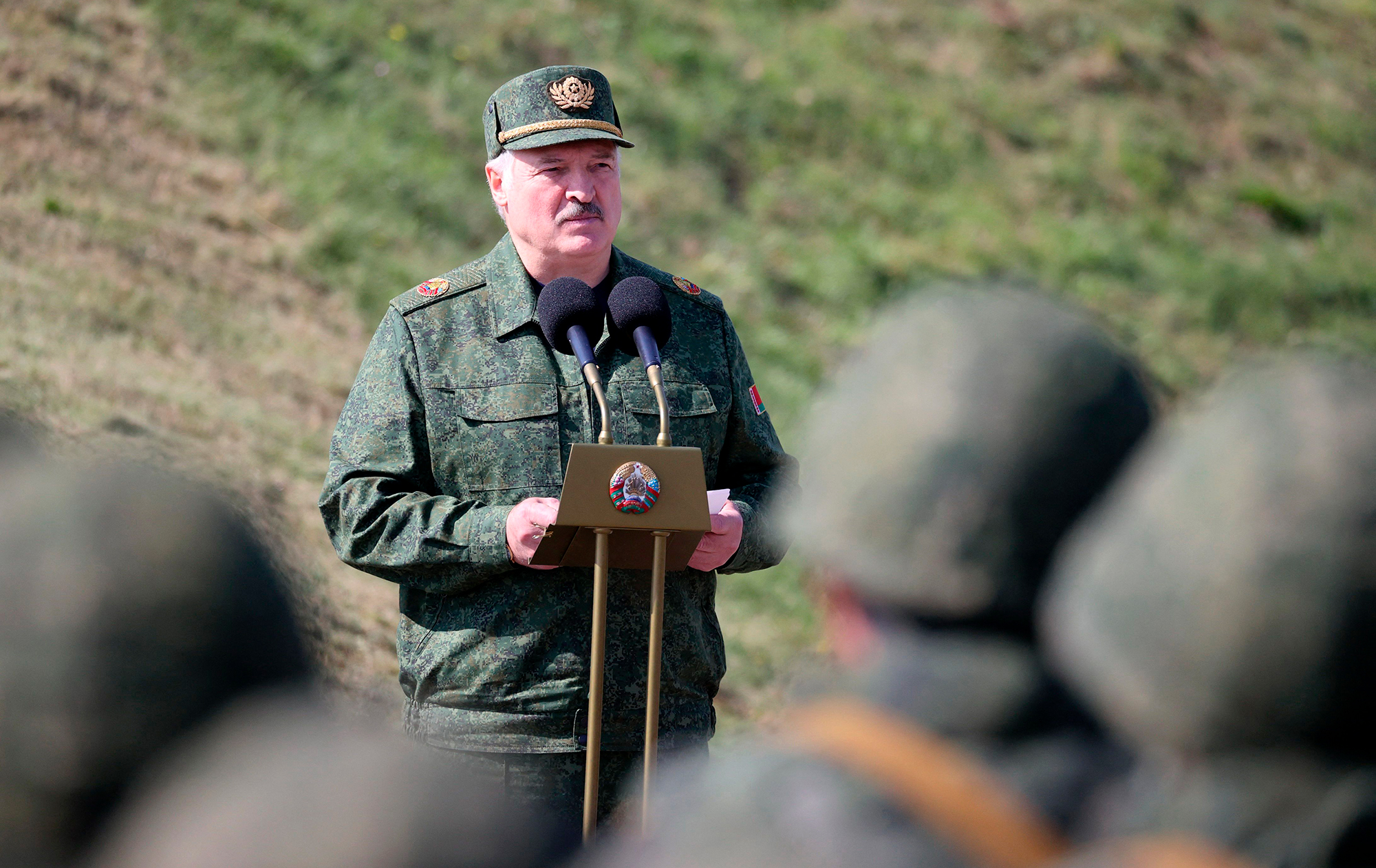
Photo: Lukashenko visited nuclear drills on May 21 and spoke with Putin via video link (Getty Images)
Although Minsk formally denies participation in the war, it was the Belarusian authorities that, in February 2022, allowed their territory to be used for the deployment and offensive of Russian forces against Kyiv, and strikes on Ukrainian cities were launched from Belarusian territory. Lukashenko’s regime also continuously holds reserve training.
The Office of the President of Ukraine has already responded to the latest rhetoric from Minsk.
In response to a question from RBC-Ukraine, presidential communications adviser Dmytro Lytvyn stressed that Lukashenko’s words have lost any weight since the events of 2022.
"Therefore, we are watching his actions. Lukashenko has a habit of making up rather stupid stories, post factum, about where an 'attack was being prepared' against him. There’s nothing to discuss," Lytvyn noted.
He also said that President Volodymyr Zelenskyy was in Slavutych, near the border with Belarus, where he personally spoke with local communities about security issues.
What the State Border Guard Service says about the situation on the border
Spokesperson for the State Border Guard Service of Ukraine, Andrii Demchenko, told RBC-Ukraine that the threat from Belarus has not disappeared, especially amid intelligence data. The border stretches for more than 1,000 kilometers, and the Defense Forces are prepared for any developments.
"We continue, together with local authorities, to strengthen engineering fortifications directly along the border line… The Armed Forces are also continuing to expand mine and explosive barriers in the most threatening areas where enemy equipment movement could be expected," Demchenko said.
According to the State Border Guard Service, Russia currently does not have a large number of its forces in Belarus, but the Kremlin is pressuring Minsk to join the war using its own military units.
"Therefore, provocations cannot be ruled out, nor can an invasion involving Belarusian units be excluded. Of course, Belarus may resist this, but Russia’s attempt to drag Belarus into a larger-scale war is real," Demchenko said.
At the same time, the State Border Guard Service spokesperson noted that no direct provocative actions or attempts by sabotage and reconnaissance groups to cross the border have been recorded recently.
Demchenko reminded that control posts have been deployed on major routes to check people. In addition, legislation stipulates that within a 5-kilometer border strip, citizens must obtain a special permit from the border guard detachment for permanent or temporary residence and stay.
Will Lukashenko deploy his army, and does Russia have resources for an offensive?
Former spokesperson of the Ukrainian General Staff and military expert Vladyslav Seleznov, in a comment to RBC-Ukraine, urged viewing the current situation through the lens of information leaks, manipulation, and, most importantly, available resources.
"Is there currently a sufficient Russian military presence on the territory of the Republic of Belarus to carry out a large-scale provocation? Obviously not. The 1,500 Russian soldiers involved in supporting radio intelligence, electronic warfare systems, and aviation infrastructure… this is definitely not a powerful strike grouping," the expert said.
However, certain preparations are taking place in the long term. If Belarus is building infrastructure and artillery positions directed toward Ukraine, this could create difficulties in the future.
Seleznov emphasizes that border areas remain vulnerable to sabotage group activity, as this does not require large amounts of equipment or personnel. In the Chernihiv region, the enemy is attempting to operate in small groups, creating risks for local residents. However, there is currently no verified data from Ukrainian or Western intelligence about the transfer of significant resources for a large-scale offensive.
In the expert’s view, the Belarusian leader is not ready for such actions and will try to avoid direct involvement. He notes that in 2022, when the Ukrainian Armed Forces were more vulnerable, the Belarusian army did not enter Ukraine.
Secondly, Minsk is aware of Ukraine’s strong fortifications in four northern regions and difficult geographic and climatic conditions (swamps, forests).
Thirdly, Belarus understands that Ukraine may act preemptively, which would deal a devastating blow to its already sanctions-weakened economy.
The cost of a breakthrough in the Chernihiv–Kyiv direction and indicators of an offensive
The expert notes that at present, all Russian military resources are engaged in southern and eastern Ukraine.
According to him, an effective and large-scale attack on the Chernihiv region from the territory of Russia’s Bryansk region would require tens or even hundreds of thousands of troops, which Russia does not have available in this direction.
Therefore, in his view, a large-scale offensive in the coming months is unlikely, although General Staff assessments are always based on worst-case scenarios.
Seleznov explains that the main indicator of a real threat, apart from US intelligence data, should be statements from the intelligence services of other partner countries bordering Belarus (in particular, Lithuania and Poland).
Only when public information appears about the formation of strike armored groups or large-scale troop redeployments can the situation shift from probability to fact, he said.
"Military forces always prepare for the worst-case scenario… Hope for the best, prepare for the worst — that is the standard approach. It is probably not worth taking at face value that everything will necessarily unfold according to the most extreme crisis scenarios. Let us remember, Putin once fantasized that he would capture Kyiv in three days… More than four years have passed since then, and fighting is still ongoing," Seleznov concluded.