Russia and Belarus launch nuclear exercises: Is a new escalation against Ukraine coming?

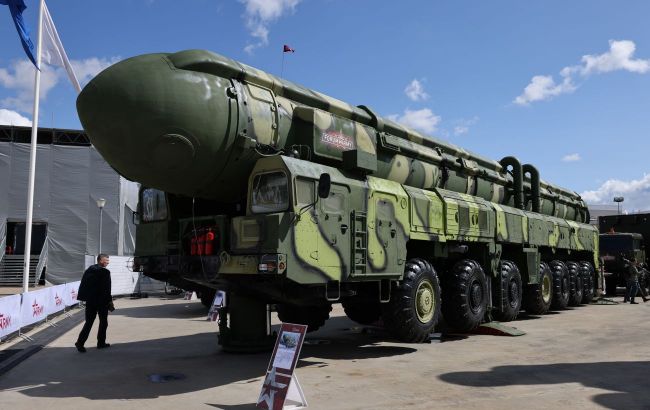 Photo: Russia and Belarus launch joint nuclear exercises (Getty Images)
Russia has announced the start of large-scale three-day drills focused on the preparation and use of nuclear weapons. The Kremlin is once again rattling its nuclear saber — this time together with Belarus, and there may be several reasons behind it.
RBC-Ukraine breaks down the details of the enemy’s nuclear exercises, Belarus’ role in them, and whether this could lead to intensified strikes against Ukraine.
Key points:
- Russia has launched major nuclear exercises involving the Strategic Missile Forces, the Pacific Fleet, and the Northern Fleet.
- The Kremlin says the drills are meant to test combat readiness and practice “deterrence of an adversary.”
- Belarus is participating alongside Russia, but does not actually have access to nuclear weapons.
- The main target of Russia’s nuclear intimidation campaign is the West.
Purpose and scale of the exercises
Russia’s Defense Ministry said today that the drills involve the Strategic Missile Forces, as well as the Pacific and Northern fleets. The official goal is described as “testing troop readiness and practicing actions to deter an adversary.”
The Russian military conducts such exercises regularly. Similar drills involving missile launches from submarines and the Plesetsk Cosmodrome took place in 2022 and again in October 2023.
Belarus’ role
Belarusian authorities said yesterday that the drills are “planned in nature” and “do not pose a threat to regional security.” Belarusian troops are expected to “practice the delivery and preparation of nuclear munitions for use.”
Military expert and former SBU officer Ivan Stupak told RBC-Ukraine that Belarus routinely joins Russian military activities because it lacks relevant experience of its own. However, Minsk does not actually have access to nuclear weapons.
“Belarusians are not really involved with nuclear weapons at all. In fact, we don’t even know whether nuclear weapons are physically present in Belarus, because it could all be a mock-up,” Stupak said.
The expert explained that nuclear weapons are not stored in combat-ready condition. Missiles and nuclear warheads are kept separately and are only assembled when a launch is planned.
Stupak also explained why Russia involved Belarus and why Minsk agreed to participate:
- Lack of Belarusian experience: Belarusian troops have little expertise in this area and “jump at every opportunity to train with the Russians.”
- Benefit for the Kremlin: Russia benefits by amplifying the intimidation effect aimed at the West — another round of nuclear saber-rattling. In reality, Belarusian personnel are not even allowed near the nuclear weapons themselves, as everything is controlled exclusively by the 12th Main Directorate of the Russian General Staff.
Who the nuclear pressure is aimed at
The expert confirmed that these exercises are part of a pre-approved schedule dating back to 2025, although the timing may have been moved forward from June to May. He described the Kremlin’s current actions as another round of nuclear posturing.
“Our citizens no longer pay attention to this. We already went through that fear back in 2022. I don’t think Ukrainians can still be intimidated by this. But Western audiences do react to it, so perhaps that is exactly who this is aimed at,” Stupak explained.
Should Ukraine expect heavier missile attacks?
According to Stupak, the large-scale nuclear drills do not affect the intensity of Russian strikes on Ukraine. Instead, attacks depend entirely on Russian intelligence gathering.
“If they know where to strike in Ukraine, if they have identified targets through their spotters, then they will attack. That explains the pauses we sometimes see. They gather information on where missile production facilities and drone sites are located, then verify it — and that takes time. That’s why the attacks look irregular: sometimes intense, then suddenly quiet, then another wave, then a pause,” the expert concluded.