Putin's grain empire: How stolen Ukrainian wheat fuels Russia's global influence


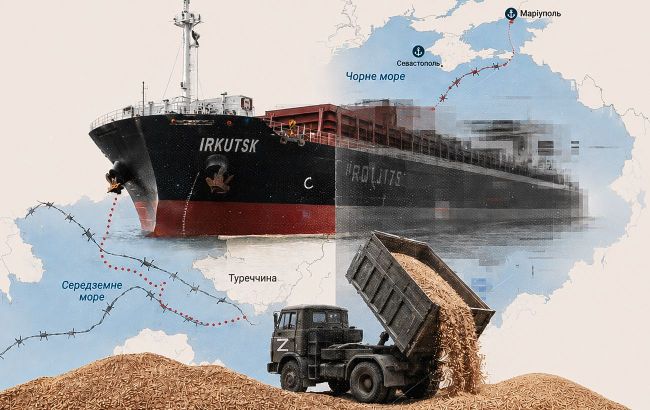 How Russia is building a food empire on stolen Ukrainian grain (RBC-Ukraine collage)
Russia is systematically using stolen Ukrainian grain as a tool of expansion in countries of the Global South.
Why this is dangerous and how Ukraine is fighting such schemes — in the RBC-Ukraine report below.
Key points:
- Destroying competition: Russia is deliberately entering agricultural markets in the Global South using stolen Ukrainian grain.
- Looting economy: The Kremlin uses stolen grain for dumping, offering discounts made possible by the extremely low production costs on occupied territories.
- Shadow logistics: The legalization of stolen grain takes place through large-scale falsification of origin documents and mixing grain shipments.
- Sanctions response: Ukraine is shifting from diplomatic protests to the practical blocking of violating vessels.
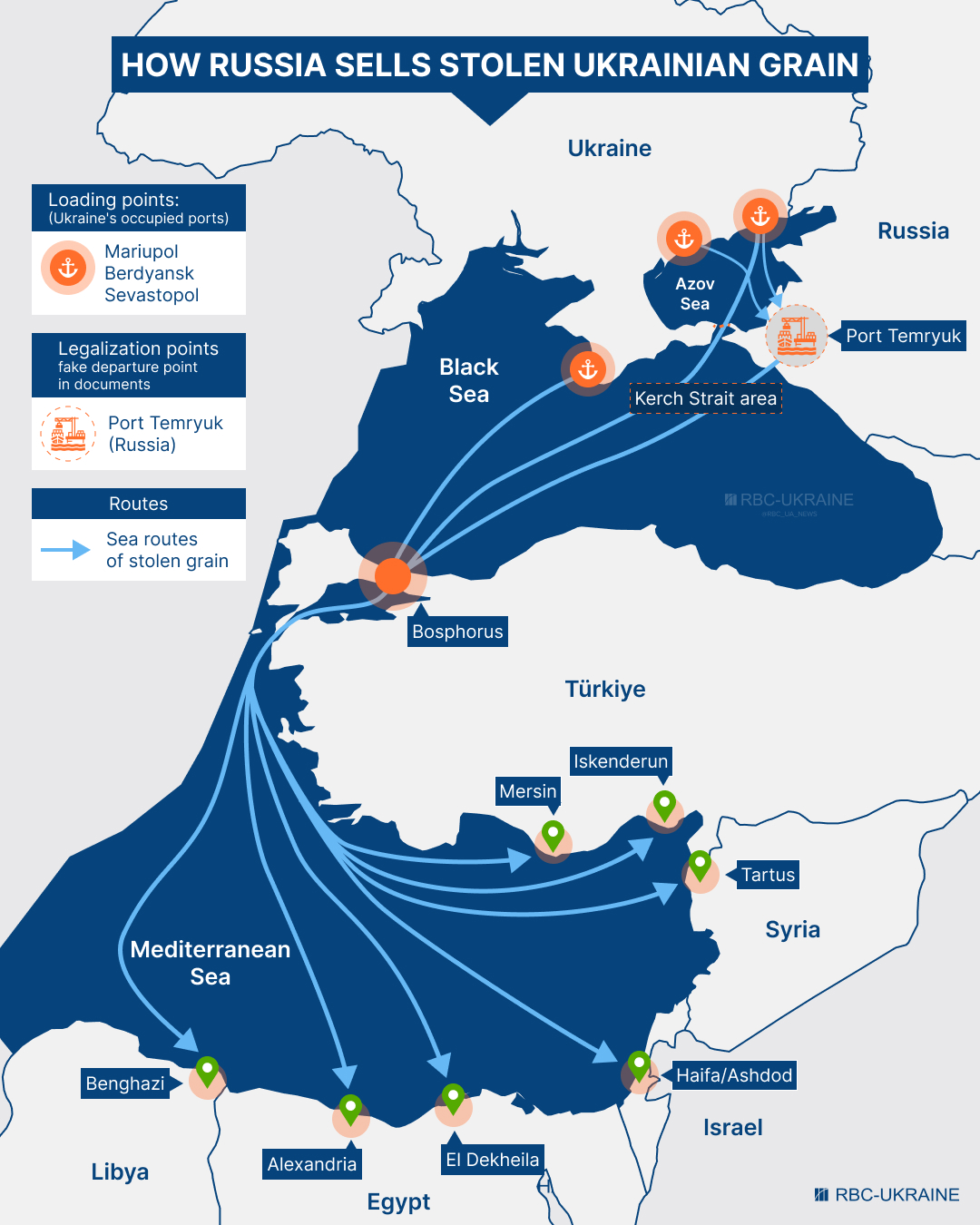
How Russia sells stolen Ukrainian grain (RBC-Ukraine infographic)
On the night of July 31, 2022, a Russian S-300 missile struck directly into the bedroom of a house in Mykolaiv. That attack killed Oleksiy Vadaturskyi, founder of the company Nibulon.
Along with him, an ambitious project was buried under the rubble: the creation of a private fleet and terminals on the Nile River. Vadaturskyi wanted to deliver grain directly from Ukrainian farmers to consumers in Egypt, bypassing intermediaries.
This is only one — perhaps the most visible — example of how Russia is waging war against Ukraine not only on the battlefield, but also on global markets.
After the full-scale invasion, Russia temporarily managed to block all agricultural exports from Ukraine. This nearly triggered a global food crisis and demonstrated just how important Ukraine’s agricultural sector is on a planetary scale.
The grain corridor was eventually reopened, and although Ukrainian agricultural exports declined for several reasons, they still generate more than half of Ukraine’s foreign currency revenue. While Russian grain has largely been pushed out of Europe — something that can partly be seen as a Ukrainian victory — the situation in countries of the so-called Global South is completely different.
For example, according to the International Trade Centre, Russia accounted for 35% of all wheat imports into Africa in 2024 — more than $5 billion. Before the full-scale invasion, its share did not exceed one quarter. For comparison, Ukraine’s share is about 13%.
When it comes to food supplies, the issue is not only business but also political influence. In many countries in Africa and the Middle East, bread prices are a decisive factor for social stability.
Why countries buy stolen grain
To expand its influence, the Kremlin uses a range of methods — from Soviet-era ties to information campaigns. More recently, it has relied on dumping prices, largely at Ukraine’s expense.
Analysis of NASA Harvest satellite imagery shows that harvest volumes from occupied territories amount to about 6 million tons of wheat annually.
One of the loudest recent scandals involved Israel. At the end of April, two ships — Abinsk and Panormitis — arrived in the country. The first vessel is under strict US sanctions, while the second was documented loading grain in occupied Sevastopol.
Thanks to public pressure, diplomatic efforts, and the threat of secondary sanctions, their unloading in Israel was prevented. Panormitis is now heading to Turkey, but Kyiv has promised an equally harsh reaction if the cargo is accepted there.
However, an investigation by Israeli outlet Haaretz suggests such deliveries have become systematic in recent years. Since 2023, at least two ships carrying stolen grain have arrived in Israel, and at least one of them was unloaded.
According to a source familiar with the matter who spoke to RBC-Ukraine, the main reason Israel participates in such deals is simple: the grain is cheap. Russia sells it at significant discounts, which can reach $30–40 per ton compared to legal Ukrainian or European grain.
Such discounts are possible because of the specific “occupation economy.” In occupied territories, grain is seized directly from elevators.
Farmers are either forced to sell their harvest for almost nothing — often merely covering fuel costs — or the grain is simply confiscated. Russia also does not pay land lease fees or service equipment loans. The occupiers’ only major costs are transportation to Crimean ports and the chartering of shadow fleet vessels.
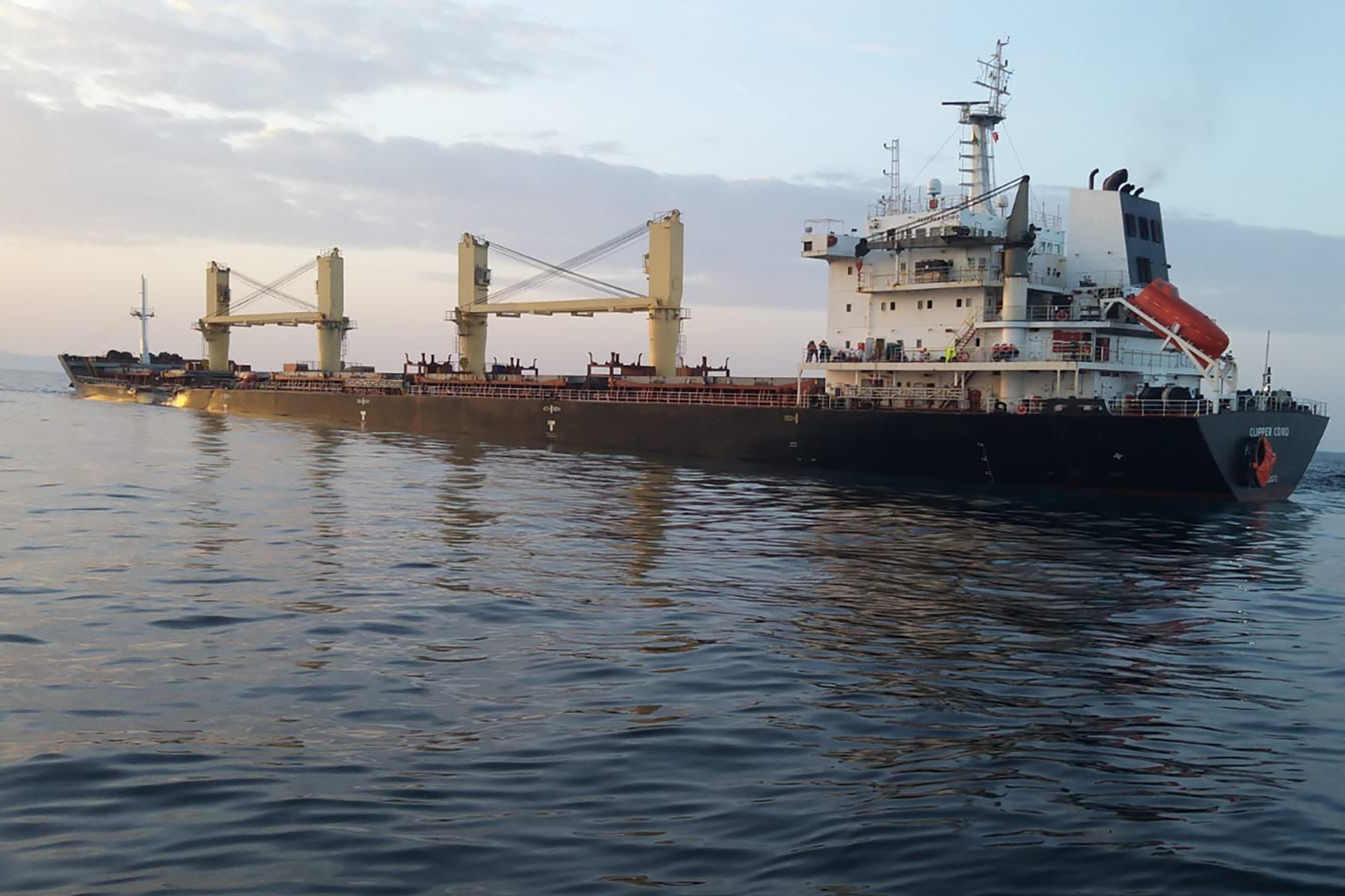
Photo: How Russia is building a food empire on stolen Ukrainian grain (Getty Images)
Directly stolen grain from occupied Ukrainian territories is only the tip of the iceberg. A diplomatic source told RBC-Ukraine that Russians are also actively stealing and reselling other products abroad, such as meal — seed residue left after oil extraction that is later used as livestock and poultry feed.
Meanwhile, Israeli sources told the publication that Kyiv allegedly applies double standards, claiming that shipments of stolen grain to other countries are not monitored as closely.
The fairness of such accusations is highly questionable. Ukraine says it is trying to fight all cases of grain looting.
Grain expansion
According to Ukraine’s Foreign Ministry, besides Israel, cases of stolen grain deliveries have also been recorded in Turkey, Algeria, Egypt, Syria, and Libya.
The most difficult situation remains in Libya. Due to the country’s effective fragmentation into territories controlled by different factions, Russia uses local ports as “gray harbors.”
“Grain is exported from temporarily occupied territories through ports in Crimea and the Azov Sea — primarily Sevastopol and Mariupol — after which origin documents are changed,” Ukrainian presidential sanctions policy commissioner Vladyslav Vlasiuk told RBC-Ukraine.
The main mechanism involves falsifying documentation. Bills of lading list Russian ports such as Novorossiysk, while suppliers register Russian companies and provide fake certificates of origin.
“The grain is loaded in the closed ports of occupied Mariupol or Sevastopol. Initial documents mention Russian ports such as Temryuk, but once the vessel enters the sea, declarations are changed and the final destination becomes Egyptian ports like El Dekheila or Alexandria,” Vlasiuk explained.
For example, Russian vessels Alfa-1 and Irkutsk (formerly Alfa M) loaded grain directly in occupied Mariupol and changed their route narrative while already at sea to conceal the grain’s origin. Irkutsk is already under Ukrainian sanctions and officially under arrest as part of criminal proceedings in Ukraine.
There have also been cases where stolen grain was mixed with Russian grain. In such cases, the chemical profile becomes “blurred,” making it harder to prove the grain originated from occupied territories.
Targeting Russian grain exports
“We work with importing countries in three formats: diplomatic, sanctions-related, and through international legal assistance mechanisms, providing concrete data on vessels, routes, and cargo origins, while also explaining the schemes involved,” Vlasiuk said.
Ukraine’s Foreign Ministry added that efforts also include launching procedures to deprive vessels of the right to sail under foreign flags, as well as canceling insurance policies issued by leading international mutual insurance clubs.
“Ukraine warns third parties that purchasing products labeled as Russian but actually seized in occupied territories will be considered complicity in the theft of state property and financing armed aggression,” the Foreign Ministry said in response to RBC-Ukraine’s inquiry.
Such actions could lead to long-term legal consequences and inclusion in international sanctions lists.
At the same time, Kyiv is consistently raising the issue of stolen Ukrainian grain during meetings of the governing bodies of the International Maritime Organization. Ukraine is currently urging allies to launch criminal proceedings against everyone involved in operating Russia’s “shadow fleet.”
“It is critically important that responsibility extend across the entire network of actors — including beneficial owners, operators, technical and commercial managers, as well as others knowingly participating in sanctions evasion schemes or facilitating them,” the Foreign Ministry stressed.
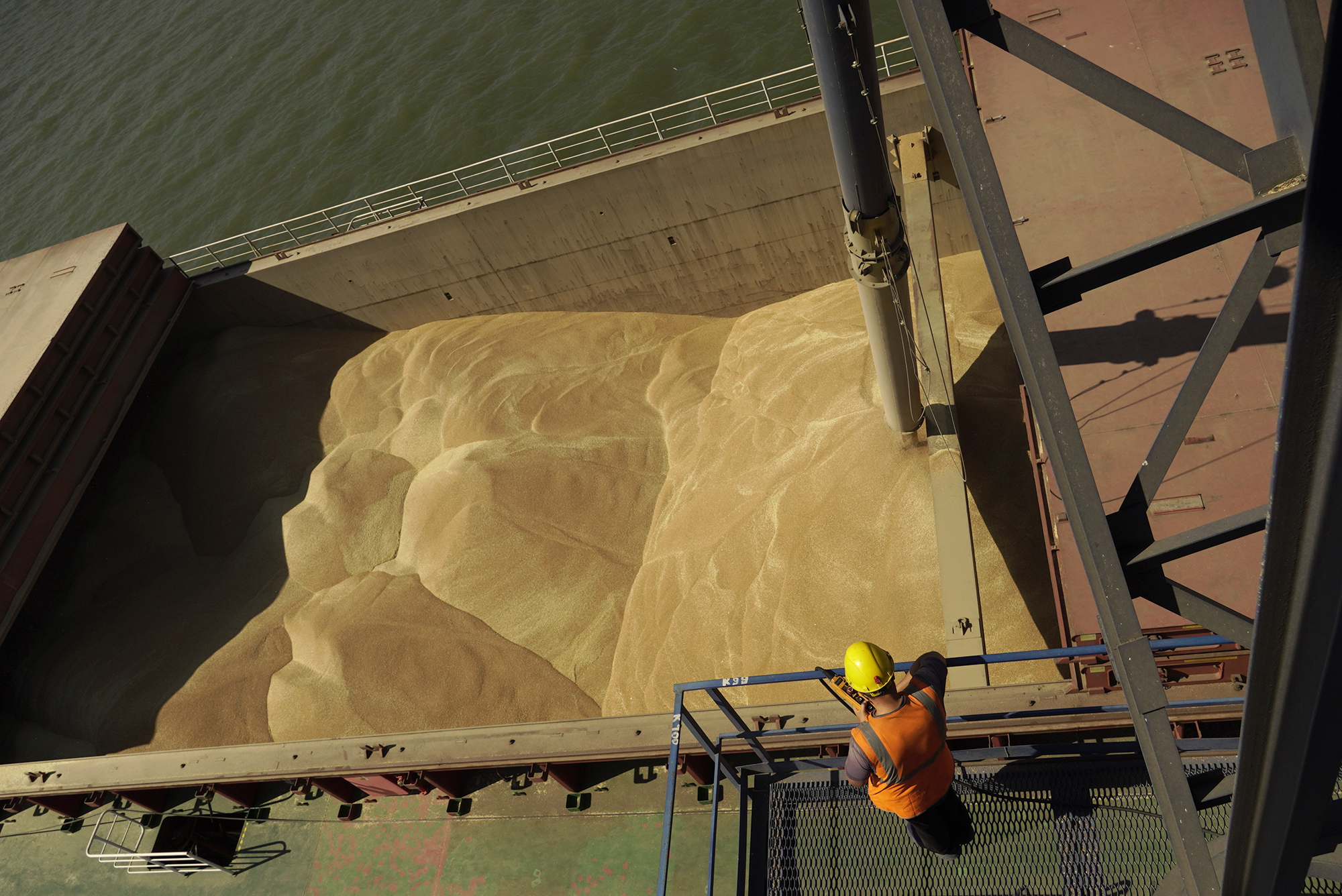
How Russia is building a food empire on stolen Ukrainian grain (Photo: Getty Images)
According to Vladyslav Vlasiuk, there are already practical examples showing how this pressure affects decisions regarding vessels. In the case of the dry cargo ship Caffa in Sweden, the situation has moved toward real legal action — including the confiscation of the vessel. This demonstrates that sanctions enforcement is becoming stricter.
Another example is the situation involving the vessel Panormitis in Israel. Public pressure and diplomatic efforts resulted in the ship being unable to unload its cargo. This sends a signal to the market that the risks are becoming very real.
At the same time, reactions differ: some countries refuse to accept such cargoes, while others continue imports, Vlasiuk acknowledged.
“There needs to be a systematic strengthening of sanctions — with a focus on vessels, operators, shippers, and buyers — as well as secondary restrictions against everyone involved in trading stolen Ukrainian grain,” he added.
A need for a systemic response
Reducing Russian influence on agricultural markets is in the long-term interest of the civilized world.
The Kremlin seeks to control global bread prices in the same way it spent decades trying to manipulate gas prices.
“As painful as it is to admit, the Russians have turned food into the same lever of influence as oil and gas. In Africa, for example, they have become one of the region’s key players — and it is not only about supply volumes, but about an entire political architecture they have built,” Artem Hudkov told RBC-Ukraine.
He heads a state-owned company created specifically to support Ukraine’s agricultural expansion into Africa.
In this strategy, food becomes a tool not only for making money, but also for buying votes at the UN or provoking migration crises in Europe through artificial food shortages in Global South countries.
In this sense, pushing Ukraine out of its traditional markets is an attempt to eliminate one of the few players capable of disrupting such plans.
For now, however, the problem is that global production volumes have not increased, while the world’s population continues to grow and needs to be fed.
“Even African countries that publicly support us and stand on our side are forced to buy agricultural and food products from Russia,” Hudkov said.
Non-market tools are also proving highly effective.
“Our enemy uses food as a tool of influence, sometimes implementing an ‘all or nothing’ policy. In other words, if a particular African country wants to buy even a small amount of agricultural products from Ukrainian exporters, Russia threatens to cancel its own export contracts,” he explained.
At the same time, there are simply no alternative supply volumes elsewhere at prices comparable to Russia’s. Ukraine cannot fully meet the food demands of large African countries.
“That is why the right question is not how to catch Russia cheating, but how to build our own trade diplomacy where Ukrainian business is not left competing against state machines on its own. Until that happens, the competition will remain unequal by definition,” Hudkov said.
Some results have already been achieved through a broad range of practical tools. These include cooperation through economic departments at embassies, participation in trade exhibitions, and assistance in resolving problematic issues.
“Among the concrete results of diplomatic support, in 2025 alone, together with the State Service on Food Safety and Consumer Protection, we opened 19 new markets for Ukrainian agricultural products. In 2026, Algeria, Côte d’Ivoire, Georgia, and Vietnam were added. Overall, more than 300 directions are currently being worked on,” Ukraine’s Foreign Ministry told the publication in response to an inquiry.
Ahead, Ukrainian trade diplomacy faces a new — and likely the toughest — challenge yet: the autumn planting season in the Global South. Constant disruptions in fertilizer supplies through the Strait of Hormuz caused by tensions in the region have already led to shortages of agricultural chemicals for African and Asian farmers.
This will inevitably reduce local harvests and increase demand for imported wheat. In such circumstances, price will once again become the main argument. The Kremlin will undoubtedly exploit this window of opportunity by offering stolen grain at dumping prices to countries on the verge of food crises.
For Ukraine, this means the battle for Southern markets is entering a more acute phase. Kyiv will now need not only to expose Russia’s dishonest trade practices, but also to offer the world an alternative at a time when every dollar of discount offered by the occupiers may matter more than international solidarity.
Quick Q&A
— Why do countries in the Global South continue buying grain stolen by Russia?
The main factor is price dumping. Russia offers discounts of $30–40 per ton because it does not bear the actual production costs on occupied lands. For poorer countries in Africa and the Middle East, such savings are critical for maintaining internal stability and keeping bread prices low.
— What schemes does Russia use to legalize grain looting?
Russia uses a “shadow fleet” of vessels with switched-off AIS tracking systems and falsifies shipping documents by listing legal Russian ports instead of Crimea or Mariupol. Grain is also transferred from one ship to another in open waters to break the logistics chain.
— Are there real mechanisms for punishing buyers of stolen harvests?
Ukraine and its international partners are using vessel seizures in European ports and canceling insurance policies through leading P&I clubs. Companies purchasing such grain also risk secondary US and EU sanctions, which could effectively block their ability to conduct international financial operations.
— How does the Middle East conflict affect global grain prices in 2026?
Escalation around the Strait of Hormuz has caused fertilizer shortages because many supplies pass through this route. That is reducing harvests in Asia and Africa, creating additional food shortages that Russia is exploiting to expand its grain influence and political leverage.