Grain of discord. What sparked new scandal between Ukraine and Israel


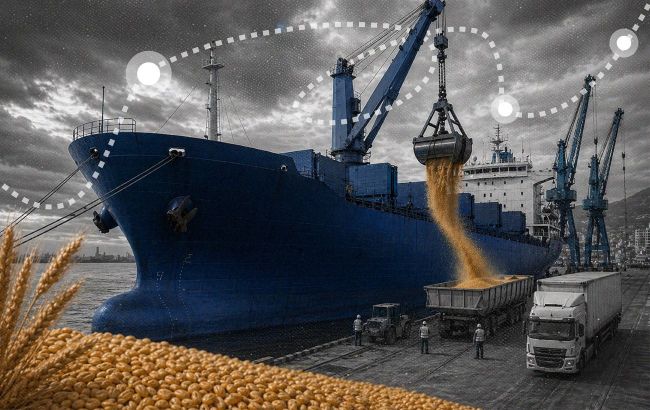 Stolen grain (collage: RBC-Ukraine)
A diplomatic scandal has erupted between Ukraine and Israel over the purchase of stolen grain from temporarily occupied territories.
RBC-Ukraine explains what happened, why Kyiv is outraged, how Tel Aviv is responding, and what could come next.
Key points:
- Cause of the scandal: In March and April, the vessels ABINSK and Panormitis arrived at Israel’s port of Haifa carrying shipments of stolen Ukrainian grain.
- Kyiv's response: Ukraine’s Foreign Ministry summoned Israel’s ambassador and issued a formal protest, stressing that trade in looted goods is unacceptable.
- Zelenskyy's ultimatum: Ukraine is preparing a sanctions package targeting carriers and intermediaries involved in Russia’s criminal schemes.
- Tel Aviv's position: Israel’s Foreign Ministry says it has not received official evidence, and the wheat itself is not under sanctions, allowing trade to continue.
- Risks for relations: A real crisis could emerge once sanctions are imposed on Israeli companies, as grain trade directly finances Russia’s aggression.
Grain dispute
In March, Ukraine recorded several cases where grain taken by Russia from occupied territories was sold to Israel.
On April 16, the vessel ABINSK arrived at Israel’s port of Haifa carrying a shipment of Ukrainian wheat. This week, a second vessel from Russia, Panormitis, also reached Israel and is currently waiting to unload.
An investigation by Israeli outlet Haaretz suggests that such deliveries have become systematic in recent years. Since 2023, at least two ships carrying stolen grain have arrived in Israel, and at least one of them has been unloaded.
Russia uses various schemes to export stolen grain, including both a shadow fleet and vessels not subject to sanctions.
The mechanism involving Israel was explained by the Commissioner of the President of Ukraine for Sanctions Policy, Vladyslav Vlasiuk.
"Vessels ASOMATOS, ABINSK, and PANORMITIS enter markets after transshipment in the Kerch Strait area, where the grain is mixed. According to available data, about 30% of such cargo comes from occupied territories," Vlasiuk said.
According to an RBC-Ukraine source familiar with the situation, the main reason for Israel’s involvement is simple: the low price of such grain, as Russia has long been selling it at a significant discount.
Starting from March 23, Ukraine repeatedly warned Israel that any trade involving stolen grain is unacceptable. On April 28, the Foreign Ministry summoned Israel’s ambassador and handed over a formal note of protest.
Ukrainian President Volodymyr Zelenskyy said Kyiv had taken all necessary diplomatic steps to prevent such incidents, but tougher decisions would follow.
"Ukraine is preparing a relevant sanctions package that will cover both those directly transporting this grain and the individuals and legal entities attempting to profit from this criminal scheme," Zelenskyy said.
The European Union has also responded firmly. The EU has signaled its readiness to impose sanctions on third countries, including Israel, according to The Times of Israel.
Conflicting evidence
Israel’s Foreign Minister Gideon Sa’ar said his country would act in accordance with its laws, but noted that Ukraine has not yet provided official evidence to justify detaining the cargo.
"You did not even submit a request for legal assistance before turning to the media and social networks," Sa’ar wrote on X.
At the same time, Ukraine’s Foreign Ministry says Kyiv had been in contact with Tel Aviv regarding the vessel ABINSK starting from March 23.
On April 14, the foreign ministers of both countries discussed the issue. The following day, Ukraine provided Israel with materials from the Prosecutor General’s Office requesting international legal assistance.
As an informed RBC-Ukraine source emphasized, the evidence was prepared in full legal compliance. However, the Israeli side effectively ignored it, later claiming that the documents were incomplete and submitted too late.
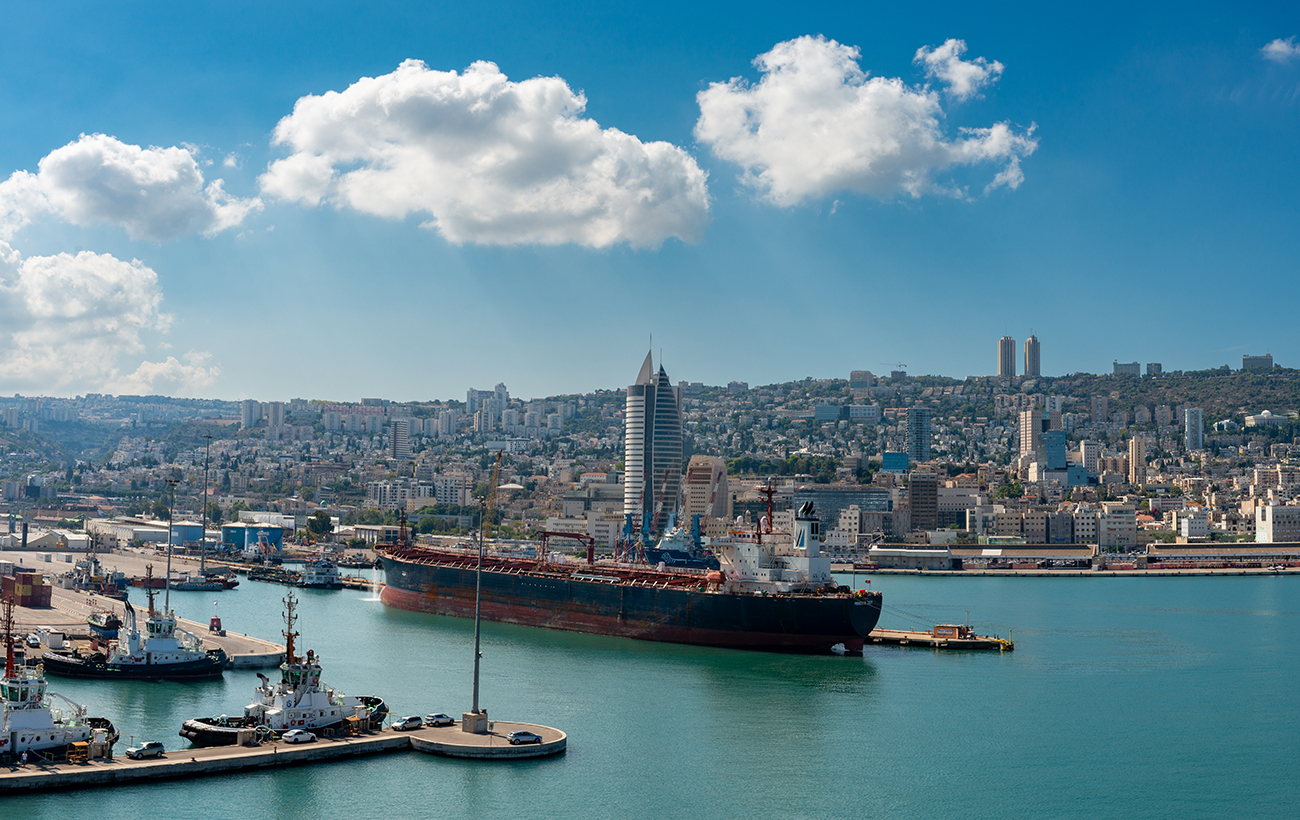
Photo: Port of Haifa (Getty Images)
Overall, Tel Aviv appears to be focusing more on the formal aspects of the issue than on its substance.
"Russian wheat is not a sanctioned product. Even though Israel has not joined the sanctions, we generally adhere to the sanctions regime, but wheat is not subject to restrictions," a senior Israeli source told RBC-Ukraine.
Moreover, some rather unusual theories have also emerged from the Israeli side. The source linked Kyiv’s increased focus on stolen grain to a law on liability for antisemitism recently signed by Ukraine’s President.
According to this claim, Zelenskyy allegedly faced a wave of backlash "from antisemites" afterward and decided to "balance it out" by criticizing Israel.
What's next
Despite this, a real crisis in relations between Kyiv and Tel Aviv could arise once Ukraine imposes sanctions on Israeli companies and individuals, as already announced by President Zelenskyy, unless Israel takes effective steps to prevent the supply of stolen grain.
Now the Ukrainian side is finalizing the collection and preparation of all necessary documents and evidence regarding the vessel Panormitis.
"We are asking the Israelis to temporarily detain this vessel (which is currently waiting to unload). We need about a week to prepare a court decision and all the required documents, fully in line with procedure," a source familiar with the situation said.
According to the source, this time Ukraine has engaged lawyers and is acting strictly within the framework of Israeli law.
"In other words, this time we are proving that the importer violated Israeli legislation," the source said, expressing hope that the vessel will either be turned away or seized.
At the same time, Israel remains an important partner for Ukraine, with many areas of cooperation.
"We are frank with everyone, even with our friends and partners. We consider Israel a partner and a friend - I want to stress that clearly. But we are frank with them, because this trade is funding our enemy," said Ukrainian Foreign Ministry spokesperson Heorhii Tykhyi.
In addition, it is crucial to block Russia’s ability to sell Ukrainian agricultural products from occupied territories. As Tykhyi noted, such goods are supplied not only to Israel, but also to Egypt, Türkiye, and Algeria.
Quick Q&A
– Which vessels brought stolen Ukrainian grain to Israel?
– The main vessels at the center of the scandal are the bulk carriers ABINSK and Panormitis. The latter entered the port of Haifa in late April 2026 despite warnings from Ukrainian diplomats about the illegal nature of the cargo.
– How does Russia conceal the origin of grain from occupied territories?
– Russia uses a transshipment scheme in the Kerch Strait area, where Ukrainian wheat is mixed with Russian grain. According to experts, at least 30% of such shipments consist of looted produce.
– Why isn’t Israel detaining vessels carrying stolen goods?
– Official Tel Aviv says wheat is not on the sanctions list, and Ukraine has allegedly not provided sufficient evidence to justify seizing the cargo. The country says it continues to follow formal legal procedures despite political pressure from Kyiv.
– What sanctions is Ukraine threatening over the grain scandal?
– President Zelenskyy has announced plans to develop a package of restrictions targeting ship owners, logistics companies, and intermediaries. The sanctions will apply to anyone directly or indirectly profiting from the sale of stolen goods from temporarily occupied territories.