'Druzhba' bid: Why Russian gas still matters for Ukraine and when transit may end


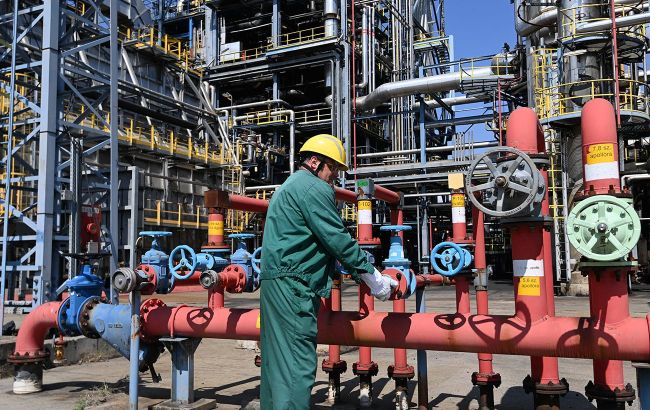 Worker at a Hungarian oil refinery processing crude from the Druzhba pipeline (photo: Getty Images)
The story of the shutdown of the Druzhba oil pipeline has come to an end — Hungary will receive the long-awaited Russian oil, while Ukraine will receive money from the European Union.
Read in the RBC-Ukraine material why, in the fifth year of the full-scale war, Europe continues to buy Russian oil and how long this will last, how Ukraine’s financial stability depended on Druzhba, and why not everyone in Europe approved of Kyiv’s approach to this situation.
Key points:
- Transit resumed. On April 22, Ukraine resumed pumping Russian oil through the Druzhba pipeline after a nearly three-month suspension caused by the attack.
- Transit may be suspended again. A full ban on imports of Russian energy resources into the EU takes effect in 2027. In that case, oil transit will stop unless Hungary and Slovakia secure special exemptions for themselves.
- Druzhba repairs carried out in a short timeframe. The infrastructure was restored in just three months. However, the facility remains vulnerable to further attacks.
- €90 billion EU loan unblocked. Ukraine achieved its main goal. The EU approved a loan decision that had been blocked by Hungary. The first tranche could arrive as early as June.
After a nearly three-month pause, on April 22, Ukraine resumed the transit of Russian oil to Hungary and Slovakia. This became possible after repair works on the Druzhba oil pipeline were completed.
On April 22 at 12:35, Ukrtransnafta (the state-owned operator of Ukraine’s oil pipeline system - ed.) began pumping oil through the pipeline for further delivery to EU countries. Slovak Economy Minister Denisa Saková said the first physical delivery of oil is expected on Thursday morning.
The Druzhba oil pipeline, which supplies Russian oil to Europe, was damaged during Russian strikes on January 27, 2026.
At that time, a drone hit one of the largest oil storage tanks. Pumping units, compressors, and other equipment essential for transit were taken out of service. There was also a risk of an environmental disaster due to the possibility of the oil stored in the tank igniting.
Given the force majeure situation, the Ukrainian side decided to suspend oil transit until repair and restoration works were completed.
Repair of Druzhba carried out in a short timeframe
Given the scale of the damage, experts estimated that a full repair cycle would take more than a year. However, it was completed in just three months. Still, not everything required has been restored yet.
Only the equipment needed to ensure current transit under the risk of renewed attacks has been repaired. A new storage tank has not yet been built. According to the head of Naftogaz of Ukraine, Serhii Koretskyi, it should be constructed underground for safety reasons and in line with NATO standards.
Russian oil is transited through Ukraine under a contract between Ukrtransnafta and Transneft, signed in 2019. The main consumers of the oil are refineries of the Hungarian company MOL, located in Hungary and Slovakia.
Until last year, this oil was also supplied to the Czech company Orlen Unipetrol, which is owned by the Polish Orlen Group. However, in March 2025, the Czech side refused Russian oil in favor of Azerbaijani supplies. As a result, transit volumes fell by 14% to 9.73 million tons per year, compared to 11.36 million tons in 2024.
Before the January shutdown, daily transit volumes averaged 26,000 tons. They were evenly split between Slovakia and Hungary. Current daily volumes have not been disclosed, but they are expected to increase as MOL refineries seek to compensate for the downtime.
Why Russian oil is still being supplied to the EU
The European Union imposed an embargo on Russian oil in 2022, granting exemptions to Hungary, Slovakia, and Czechia. These countries were expected to find alternative supply routes to fully phase out Russian oil.
While Prague found an alternative almost a year ago, Budapest and Bratislava have still not switched to supplying oil via the Croatian Adria pipeline.
Hungary and Slovakia only turned to Croatia for assistance with oil supplies in February this year, after transit through Druzhba was interrupted.
How long will transit last?
It is still unclear how long Russian oil transit through Ukraine will continue. The exemption for Hungary and Slovakia is open-ended. However, the EU has decided to completely end purchases of Russian energy resources starting in 2027.
If this commitment is implemented, the exemptions for Hungary and Slovakia will cease to apply, and Ukraine could stop oil transit in as soon as eight months.
President of the European Commission Ursula von der Leyen (photo: Getty Images)
Until now, Kyiv has not dared to take such a step, although under the Association Agreement, it could have suspended transit during wartime. Kyiv has been fulfilling the contract between Ukrtransnafta and Transneft, which is valid until 2030, and did not want to enter into a conflict with the EU, which made an exception in its decision for Hungary and Slovakia.
It is still unclear whether these countries will seek to extend their right to buy Russian oil until the end of the transition period.
Hungary’s future prime minister Péter Magyar, while supporting EU initiatives, takes a pragmatic stance on Russian energy resources. For Hungary, purchasing oil and gas from Russia is more profitable than buying from other suppliers.
Robert Fico has already stated that Slovakia will file a lawsuit over the ban on Russian gas imports.
€90 billion loan unblocked
By resuming oil transit through Druzhba, Ukraine achieved its main goal — the EU was able to adopt a decision to provide a €90 billion loan. This decision had previously been blocked by Hungary.
After the transit was suspended in January, Hungary’s then Prime Minister Viktor Orbán issued an ultimatum to Kyiv — "no oil, no loan."
However, on the very day transit was resumed, the EU managed to reach a final decision on the €90 billion loan. The 20th package of sanctions against Russia, which Hungary had also been blocking, was also approved.
The EU is now expected to finalize the exact amount of funds allocated for this year and the next, define their areas of use, and set the loan conditions.
The funds are planned to be directed both toward the purchase of military equipment and to budget expenditures. The Ukrainian government hopes that approval will also be given to use them for payments to military personnel and for energy sector recovery efforts.
The first loan tranche is expected to be disbursed as early as the beginning of June.
According to sources in the Ukrainian government cited by RBC-Ukraine, Ukraine is expected to be able to cover its budget expenditures independently until the summer.
Druzhba politics
The story of Druzhba acquired a clear political dimension almost from the very beginning. This was largely driven by Viktor Orbán, who made the fight against "Ukrainian influence" a central theme of his election campaign.
In addition to blocking Ukraine’s EU integration, after the suspension of oil transit through Druzhba, the Hungarian prime minister also latched onto another sensitive issue for Ukraine — the €90 billion loan from the European Union.
At the same time, Orbán essentially reversed his own earlier decision not to block the loan, which he had agreed to under pressure from other European countries in December last year. This time, he blocked a purely technical amendment at the last moment, without which the unanimous approval of funds for Ukraine would still have been impossible.
The situation escalated to the point that the EU even began looking for backup options for emergency financing for Ukraine, for example, in the form of bilateral loans from individual wealthy European countries. This was especially relevant given that there was no certainty Orbán would lose the April elections in Hungary.
However, unlike many similar cases, it would be inaccurate to say that in the Druzhba story Kyiv and Brussels were unequivocally on one side, while Orbán (with the moral support of his Slovak ally Robert Fico) was on the other.
From Kyiv’s perspective, the situation was seen in reverse: the loan should not be granted after the repair of Druzhba, but rather the opposite — Europe must first provide ironclad guarantees that the money will be available, and only then should oil start flowing again through the pipeline.
"We ask, 'Do you guarantee that Orbán will unblock the €90 billion then?' They respond vaguely. We ask again, 'What is the problem?!' They say, 'You must unblock Druzhba'… But Orbán had already been blocking the €90 billion before that," a government source told RBC-Ukraine in early March, describing the situation.
According to various foreign sources cited by the outlet, this approach was not well received either in Brussels or even in the capitals of countries that are fully supportive of Ukraine. The same applied to the refusal to allow EU inspectors (specifically EU inspectors, not "tourists" from Hungary) to access the site of the Druzhba damage, citing secrecy and security concerns.
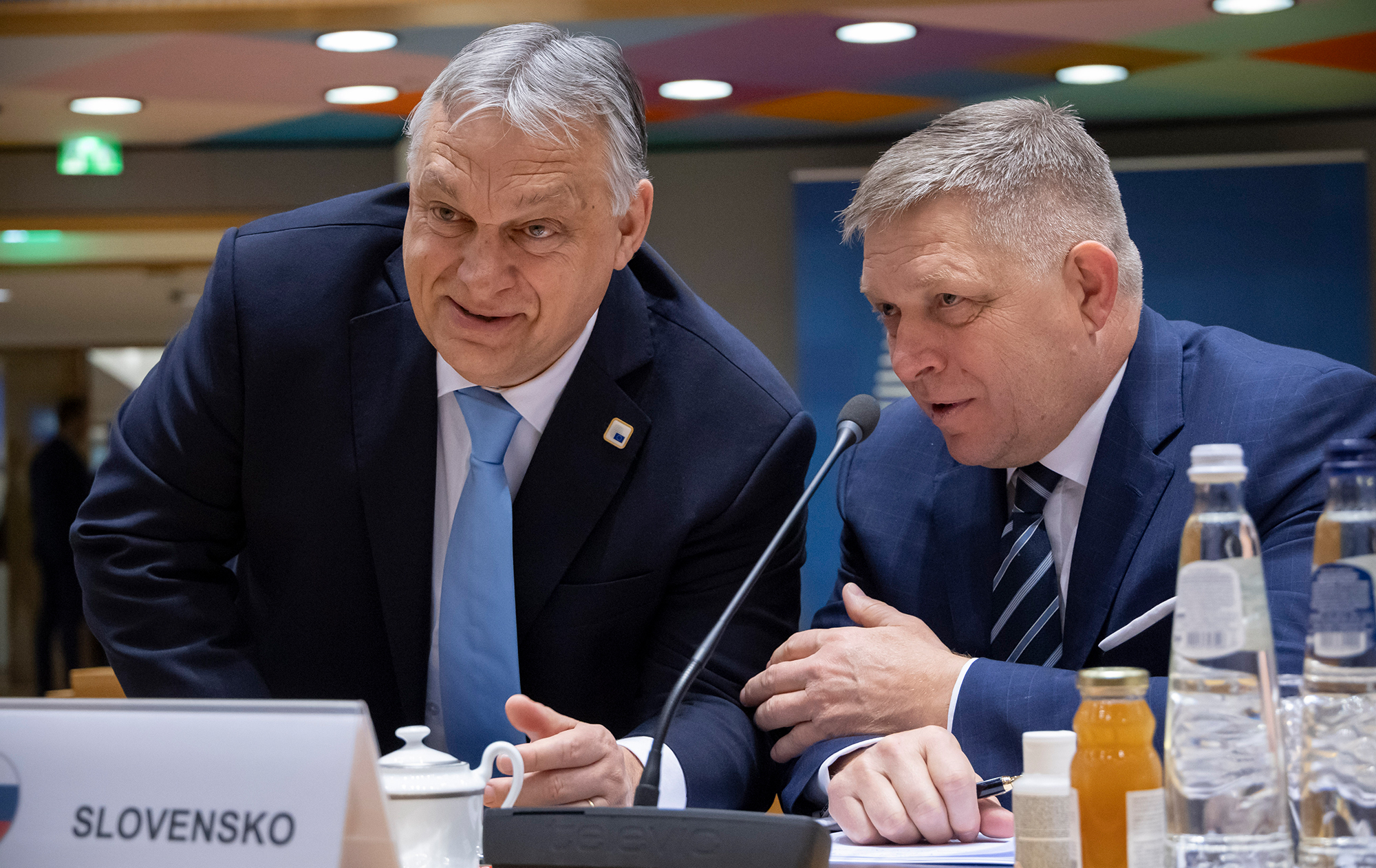
Viktor Orbán and Robert Fico (photo: Getty Images)
Viktor Orbán’s crushing election defeat has undoubtedly improved the overall situation. And although two and a half weeks remain before Péter Magyar officially takes office as prime minister, Hungary’s outgoing leadership decided not to further rattle Ukraine’s nerves. Still, it warned that the final lifting of the veto would take place only once the first oil through Druzhba physically reaches Hungary.
That is expected to happen tomorrow morning, meaning that the decision on the loan is also expected to be formally finalized tomorrow in Cyprus at the informal summit of EU member state leaders attended by Zelenskyy.
At the same time, Orbán’s team could not resist portraying this as the result of a "Hungarian strategy," namely the blocking of the European loan.
Ukraine had hoped that resolving the Druzhba issue would also help remove another Hungarian veto — on opening negotiation clusters as part of further EU integration. But for that, Kyiv will evidently have to wait for Magyar to officially take office, and also carry out some non-public work with other EU countries.
Quick Q&A
- Why was oil transit resumed specifically on April 22?
By that date, Ukraine had completed emergency repairs to the Druzhba pipeline, which had been damaged in an attack back in January. Although full restoration of the damaged storage facilities was expected to take a year, key equipment was repaired in three months to resume supplies to Europe.
- How is the pipeline’s restart linked to the €90 billion loan?
Hungary used transit as leverage: Viktor Orbán blocked financial assistance to Ukraine, issuing the ultimatum "no oil, no loan." As soon as pumping resumed, the EU formally approved the allocation of funds and adopted the 20th sanctions package.
- What was the political standoff between Kyiv and Brussels about in this story?
The sides disagreed over the sequence of steps: Ukraine demanded guarantees on the release of funds before repairs were completed, while Brussels and friendly capitals pushed for the pipeline to restart immediately. The non-public dispute was further aggravated by Kyiv’s refusal to allow EU inspectors access to the site, citing secrecy concerns.
- What does Ukraine plan to spend the EU funds on?
The first tranche is expected in June. The funds are to be directed toward critical needs: procurement of military equipment, payments to servicemembers, covering the budget deficit, and restoring energy infrastructure damaged by Russian attacks.