Zelenskyy on every corner: How Orbán turned Ukraine into a campaign weapon


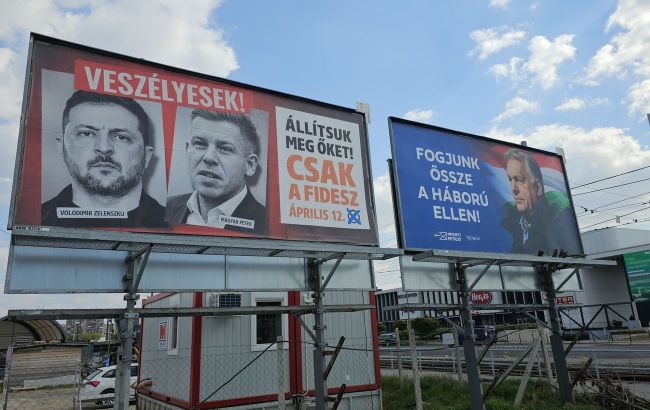 Election campaigning in Hungary (All photos: Milan Lelich / RBC-Ukraine)
Hungarian Prime Minister Viktor Orbán has made Ukraine the central theme of his election campaign. Consequently, there are even more portraits of Volodymyr Zelenskyy on the streets than of Orbán himself.
What outdoor campaigning looks like ahead of today’s vote — read and see in RBC-Ukraine’s report from Budapest.
Key points:
- Ukraine as the main enemy. Viktor Orbán has built his campaign on contrasting Hungary with Ukraine and Volodymyr Zelenskyy personally. In his rhetoric, he claims Budapest should have nothing to do with the war and refuses to send money, weapons, or resources to Kyiv.
- Linking Zelenskyy with the opposition. The authorities use the image of the Ukrainian president to discredit their opponent, Péter Magyar. On mass campaign posters, they are depicted together as “dangerous criminals,” promoting the idea that the opposition allegedly plans to turn Hungary into a “Ukrainian colony.”
- Different agendas and the battle for the streets. While Orbán scares voters with external threats, Péter Magyar gathers rallies of tens of thousands, focusing on criticism of corruption and declining living standards. Even the opposition tries to distance itself from the war topic, promising not to send troops to Ukraine.
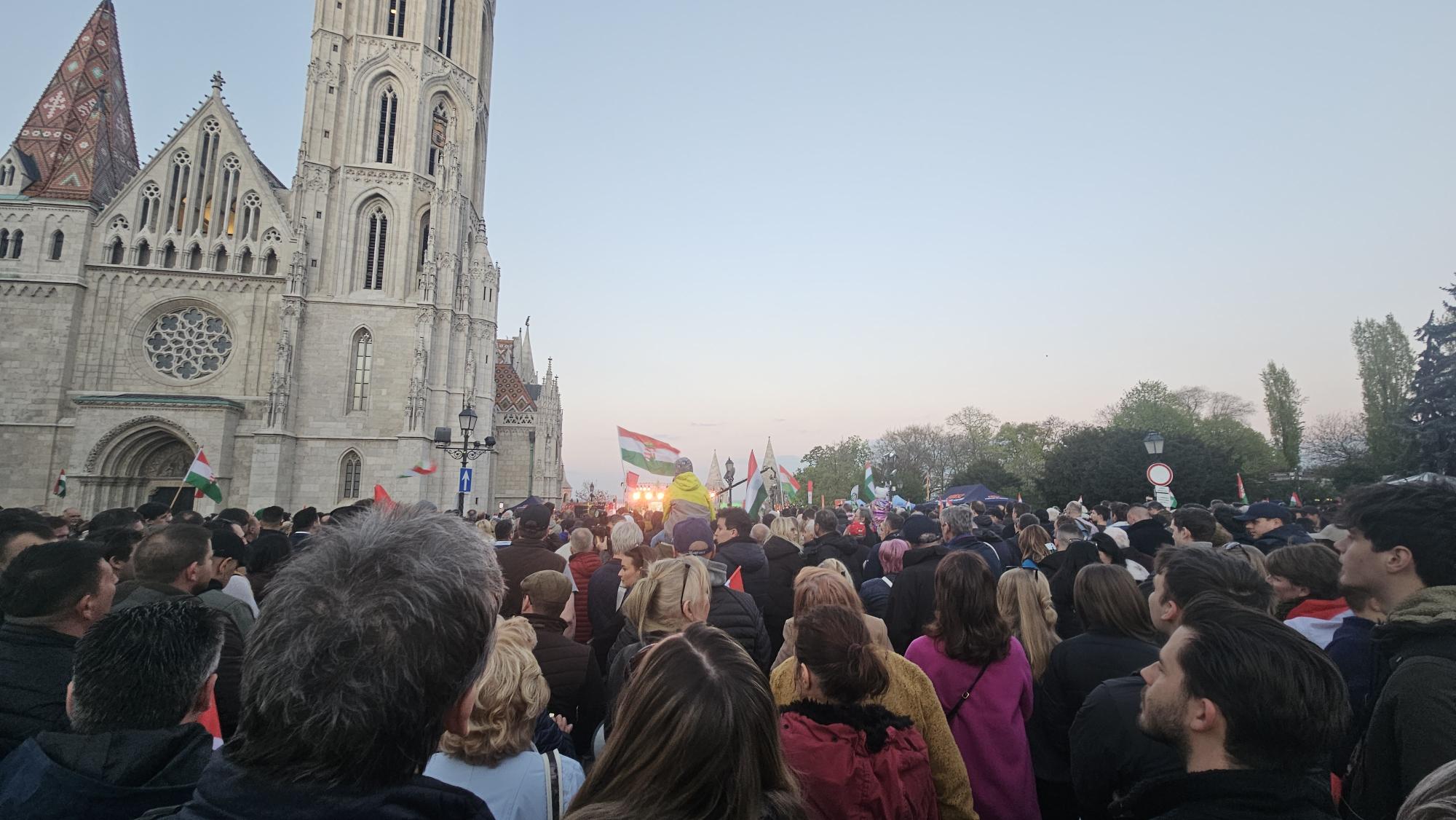 Viktor Orbán’s rally in Budapest on April 11 (photo: Milan Lelich / RBC-Ukraine)
“We will not give our children to Ukraine, we will not give our money, and we will not give our weapons,” Prime Minister Viktor Orbán says from the stage at the final rally of his campaign in Budapest on April 11.
Ukraine is undoubtedly the main topic of this speech and hundreds of previous ones. To understand what Orbán is talking about, it is not even necessary to know Hungarian — it is enough to hear the key words “Ukraine,” “Zelenskyy,” and “háború” (“war”).
The crowd periodically interrupts Orbán’s speech with chants of “Ria, ria, Hungária!” and “Go, Fidesz!”. However, not everyone is shouting — quite a few skeptical Hungarians also came to the final rally, listening to Orbán’s speech with ironic smiles.
From inside, the gathering does not look that large — several thousand people in a city of one and a half million.
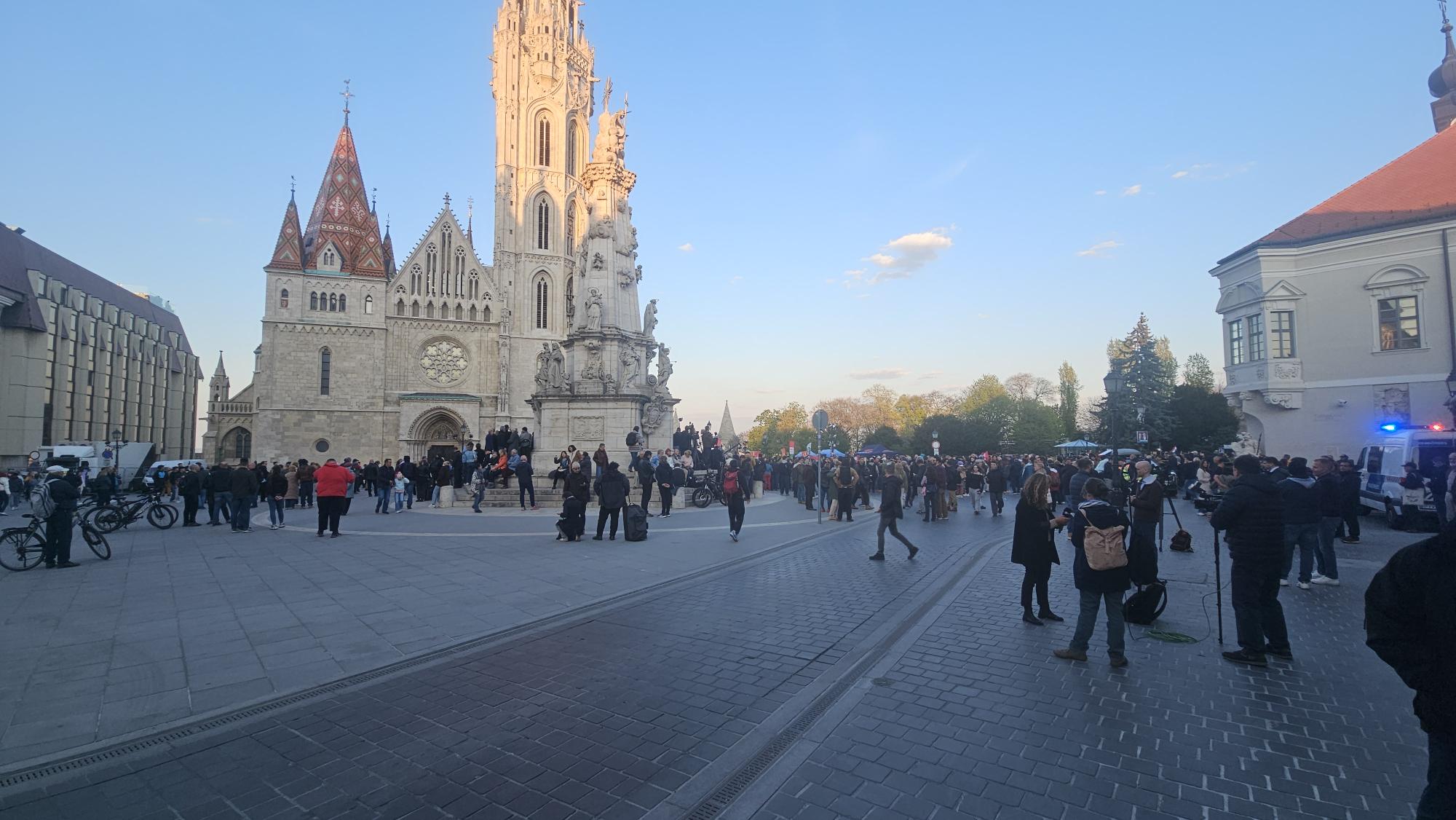 Viktor Orbán’s rally in Budapest on April 11 (photo: Milan Lelich / RBC-Ukraine)
However, from above, from drones flying over the crowd, the picture looks quite impressive. A well-chosen location — in the historic part of Buda, with narrow streets and no large open spaces. Even so, at a rally held at the same time in Debrecen, opposition leader Péter Magyar gathered more people.
Orbán returns to the topic of Ukraine again and again, mentioning the blocking of the €90 billion loan, the Druzhba oil pipeline, the closure of Hungarian schools in Zakarpattia, and, of course, the war — with which Hungary, in his words, should have nothing to do.
It is easiest to defeat an enemy who does not even suspect that they are at war with you. Using this approach, in previous elections Orbán successfully “repelled aggression” from migrants, George Soros, European bureaucrats, the LGBT community, and others, securing a parliamentary majority for his Fidesz party. For 16 years in a row.
This time, Ukraine has been assigned the role of the enemy. But any enemy is better personalized, so the embodiment of the deadly threat hanging over Hungary has become Volodymyr Zelenskyy personally.
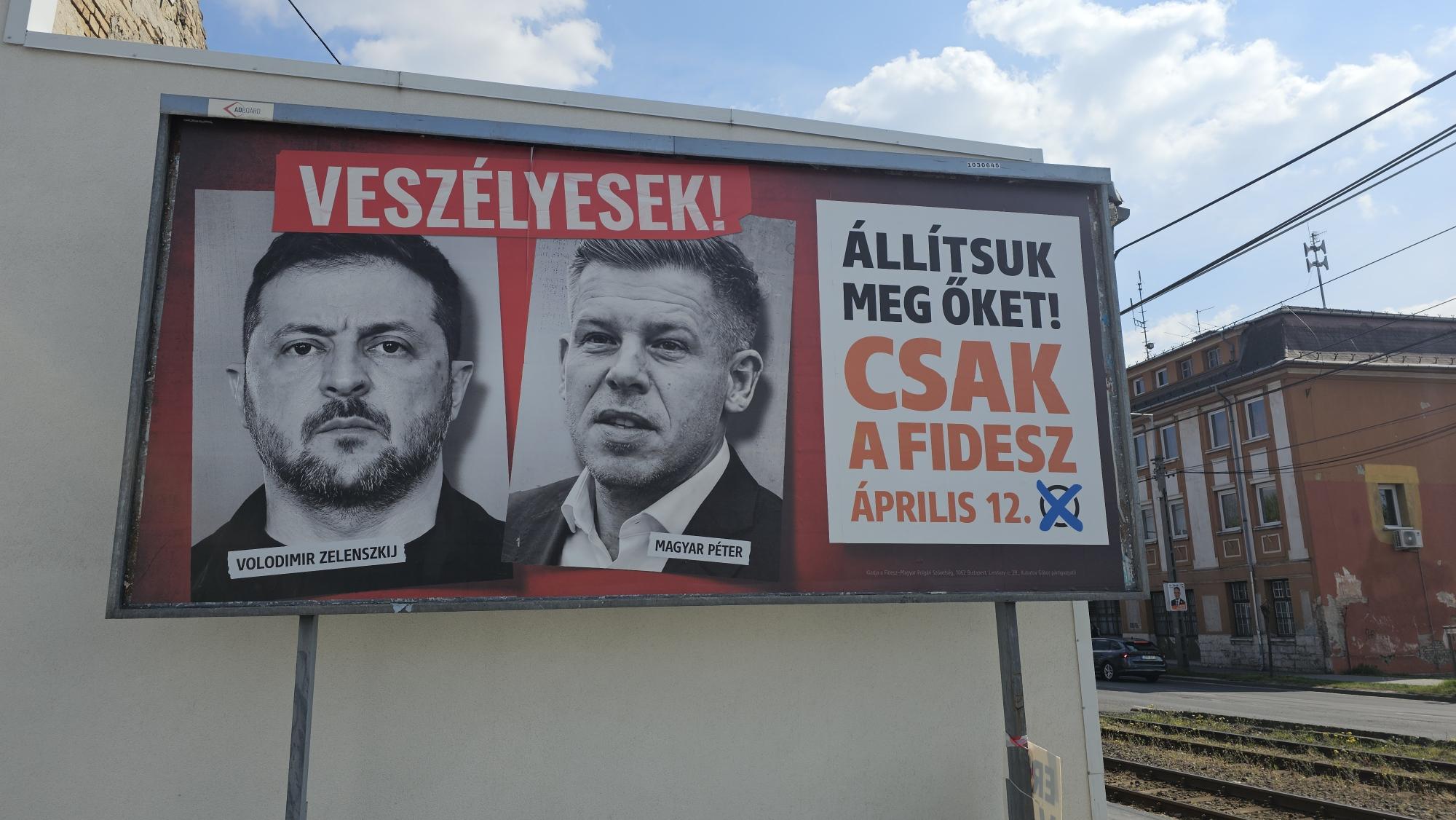 Poster “They are dangerous!” with Volodymyr Zelenskyy and Péter Magyar (photo: Milan Lelich / RBC-Ukraine)
There are not just many posters with the Ukrainian president in Budapest — there are indecently many. During the campaign, several waves of Orbán’s outdoor advertising have changed. At times, Zelenskyy was depicted laughing with the caption “Let’s not let him have the last laugh.” At others, Zelenskyy, European Commission President Ursula von der Leyen, and Péter Magyar were shown pouring Hungarians’ money into a golden toilet.
Toward the end of the campaign, the entire country was covered with posters depicting Zelenskyy and Magyar as criminals photographed in a police station with the caption “They are dangerous!”
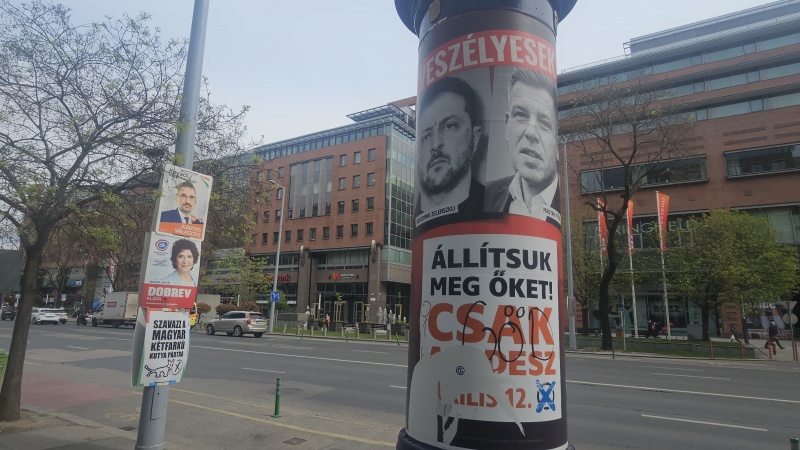
Poster “They are dangerous!” with Volodymyr Zelenskyy and Péter Magyar (photo: Milan Lelich / RBC-Ukraine)
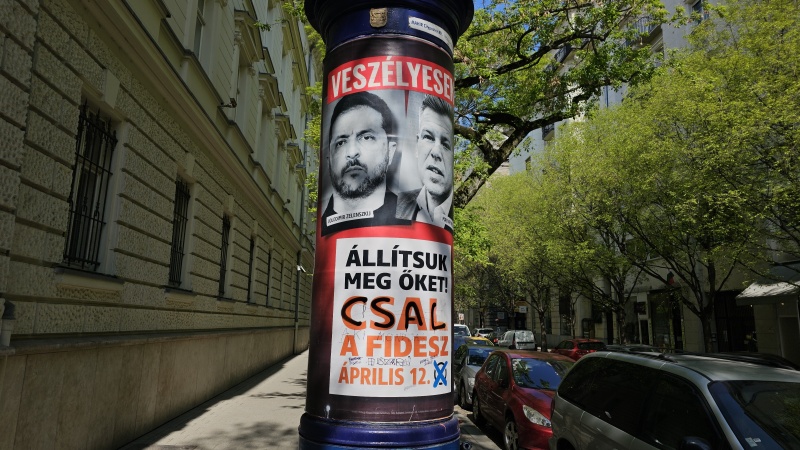
Poster “They are dangerous!” with Volodymyr Zelenskyy and Péter Magyar (photo: Milan Lelich / RBC-Ukraine)
Next to these posters appears Orbán himself, calling on Hungarians to “unite against the war,” whatever that may mean.
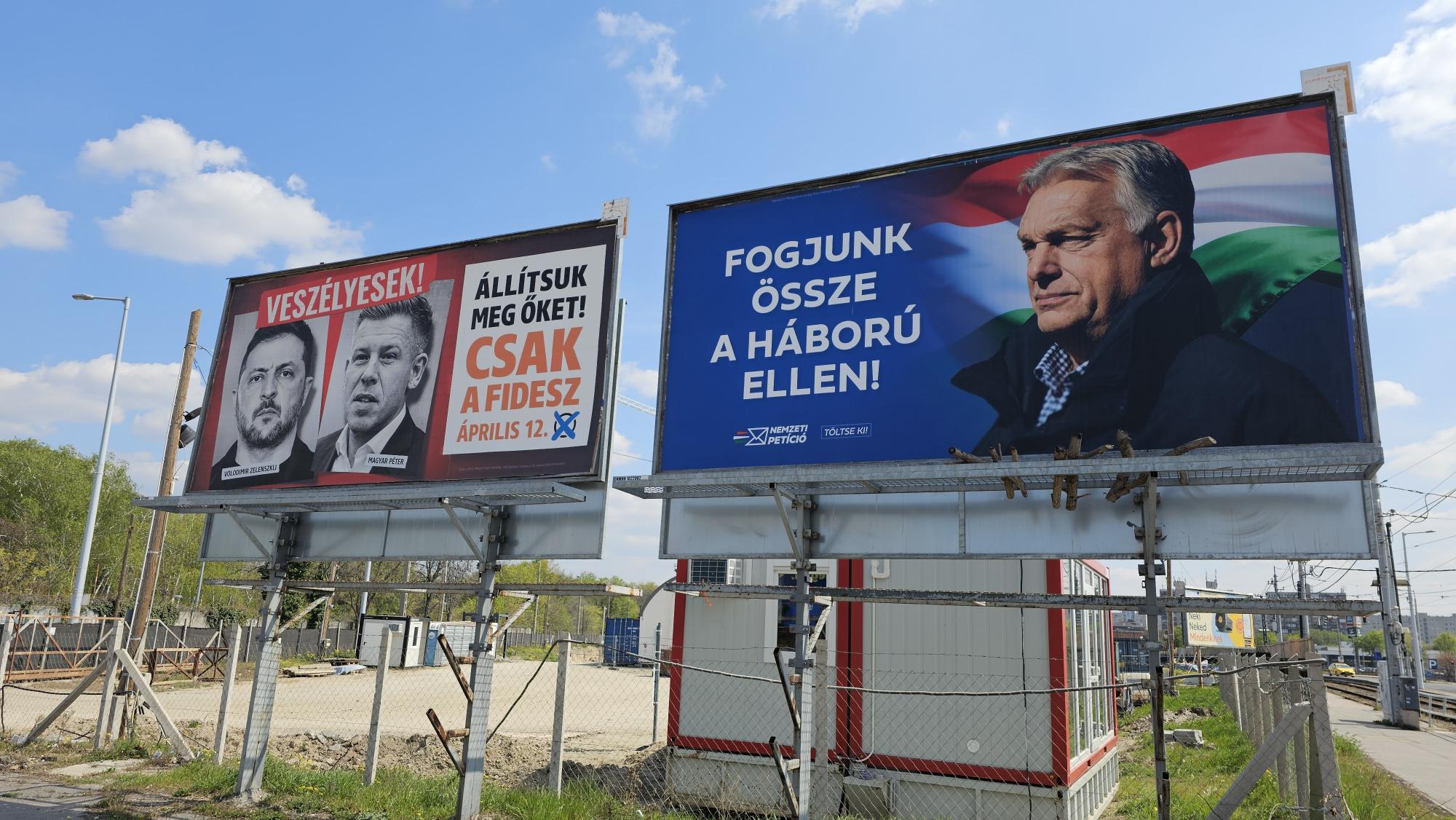 Orbán's agitation (photo: Milan Lelich / RBC-Ukraine)
Zelenskyy and Magyar look at Hungarians from everywhere: billboards, poster columns, and street poles.
In the historic center of Budapest, with its low-rise buildings, there is limited space, but a bit farther from the center, in residential and industrial areas, the Zelenskyy–Magyar tandem can even be seen on the walls of apartment blocks.
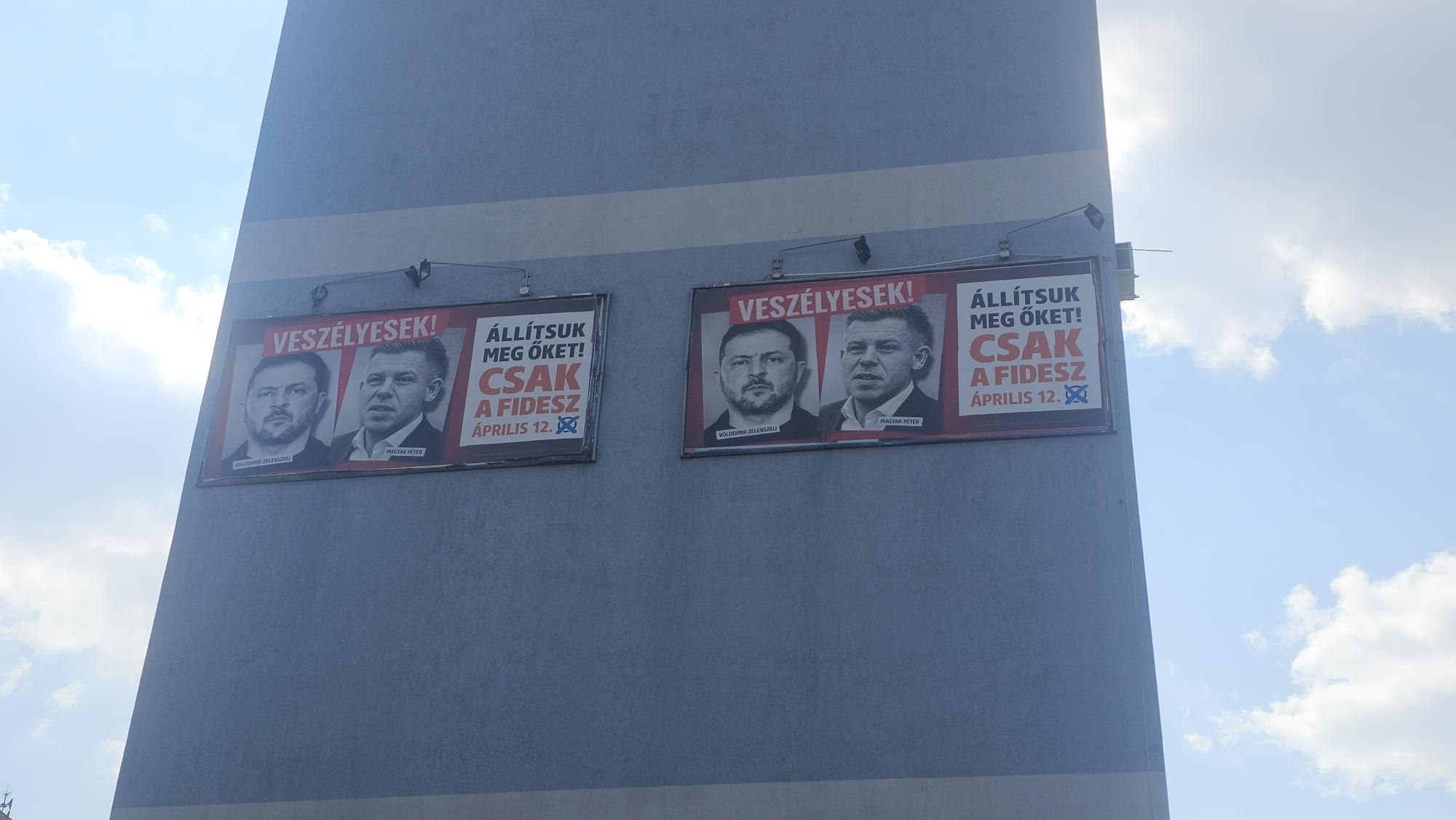 Orbán's agitation (photo: Milan Lelich / RBC-Ukraine)
Their joint appearance in ruling party advertising is no coincidence. Attempts to link Magyar and his Tisza party with Ukraine are the core of Orbán’s campaign. In his rhetoric, the Hungarian opposition and the Ukrainian authorities act together, with Magyar playing the role of a tool of cunning Ukrainians who dream of “turning Hungary into a Ukrainian colony.”
Magyar does not devote attention to Ukraine or the Russia-Ukraine war in his speeches at all. He is fully focused on criticizing corruption, the healthcare system, rising prices, and so on.
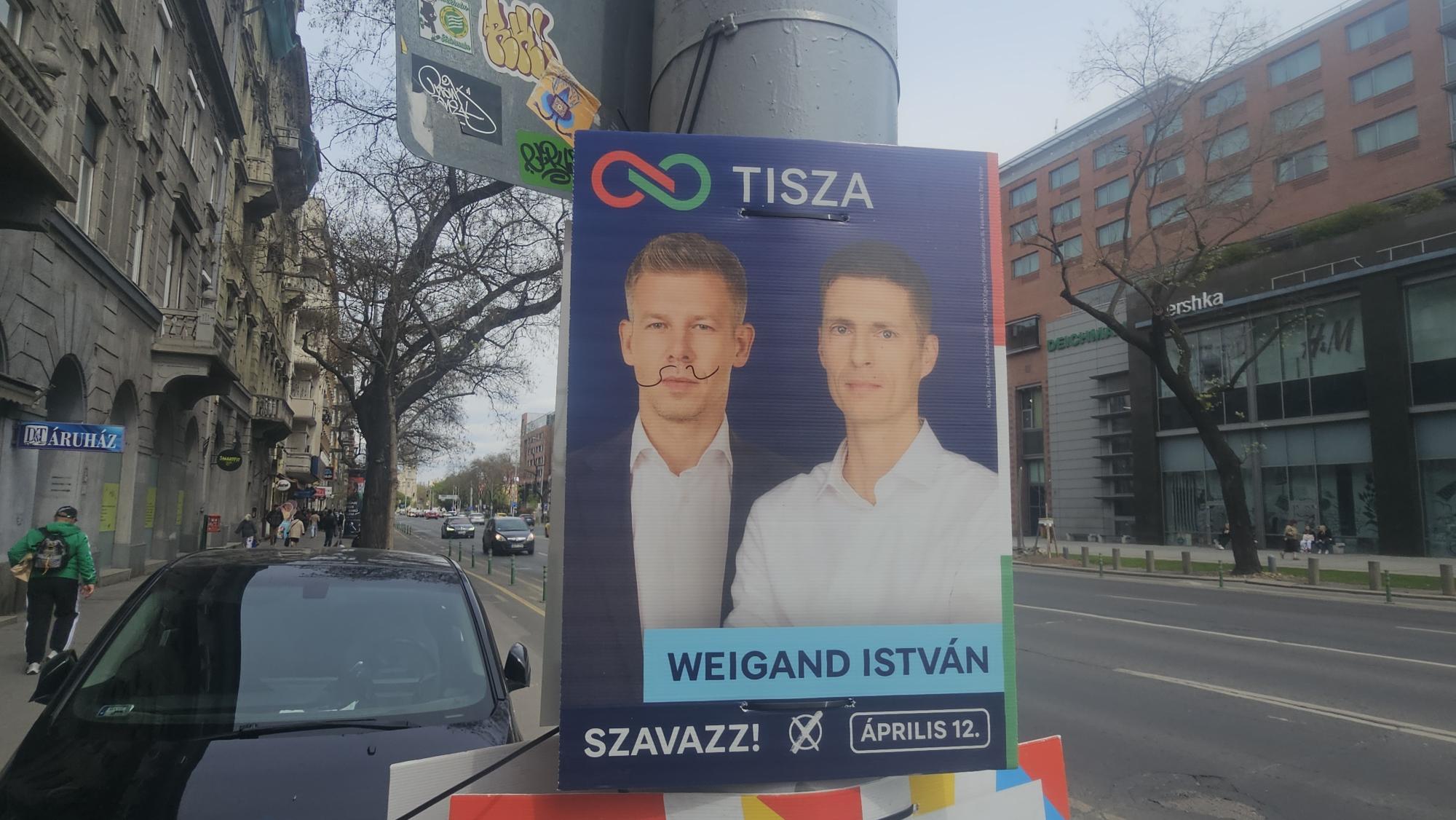 Campaign poster of the Tisza party (photo: Milan Lelich / RBC-Ukraine)
The only geopolitical point in his speeches is devoted to the close ties between Orbán and the Kremlin. He even calls the current authorities “Russian puppets.” He also promises not to send troops to Ukraine and opposes Ukraine’s accelerated accession to the European Union.
There is also plenty of Magyar’s advertising in the city (although many times less than Orbán’s), but it is quite standard. Usually, it features Magyar himself and the Tisza party candidate for the respective single-member district.
Despite the high intensity of rhetoric from both the authorities and the opposition, the campaign itself is quite peaceful and without violence (the detention of Ukrainian cash collectors is an exception). Even at Orbán’s events, where his opponents often come, everything is usually limited to verbal skirmishes.
Instead, a “quiet war” is actively underway — the defacing of opponents’ outdoor advertising.
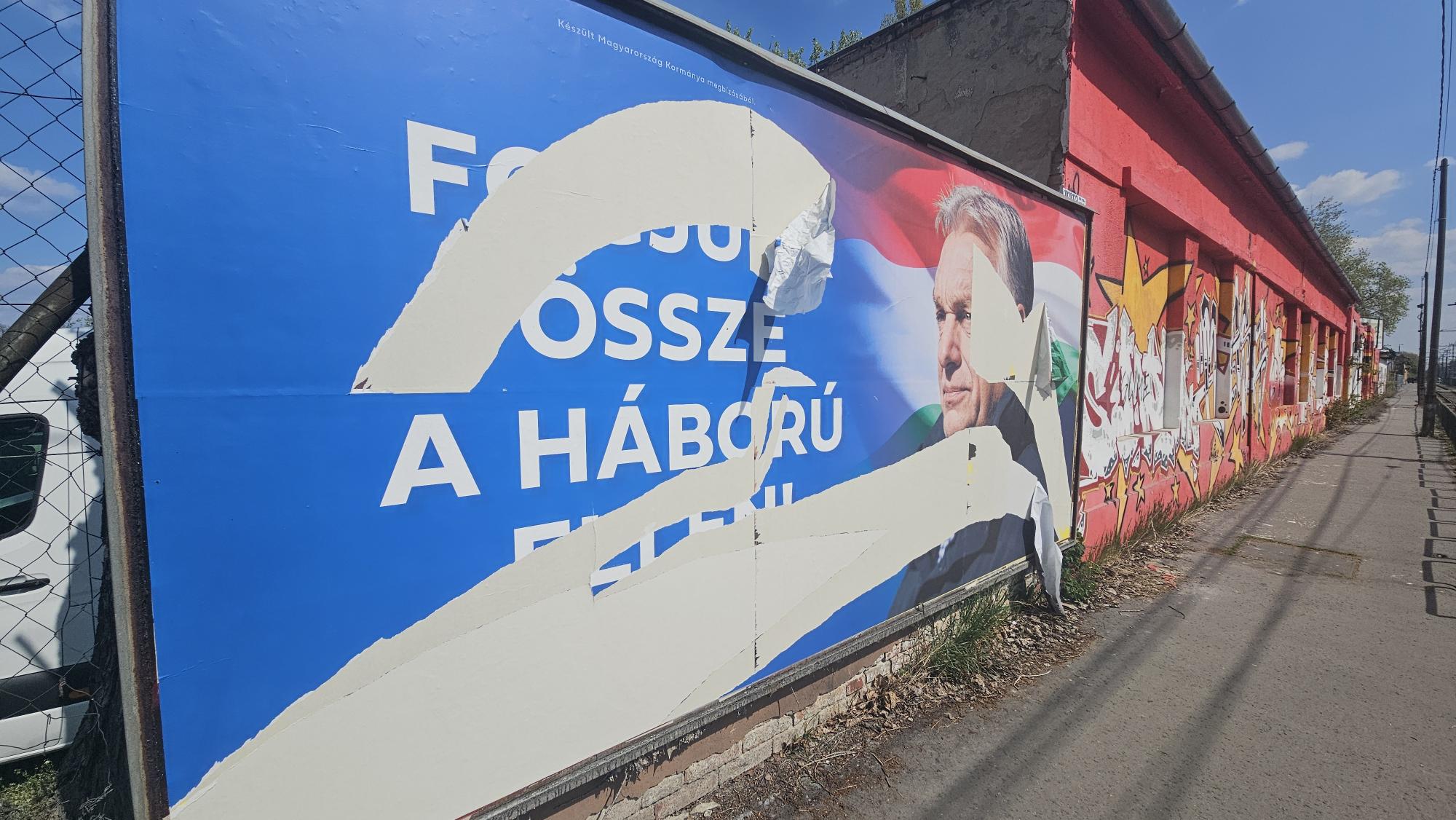 Sometimes the message can be understood even without knowing Hungarian (photo: Milan Lelich / RBC-Ukraine)
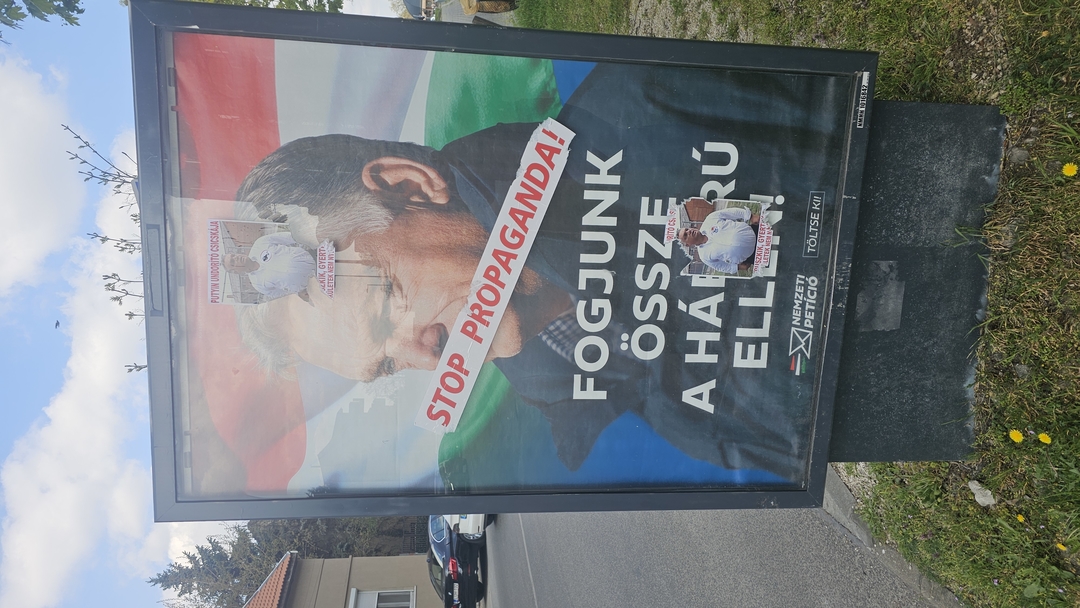
Sometimes such knowledge is still needed (photo: Milan Lelich / RBC-Ukraine)
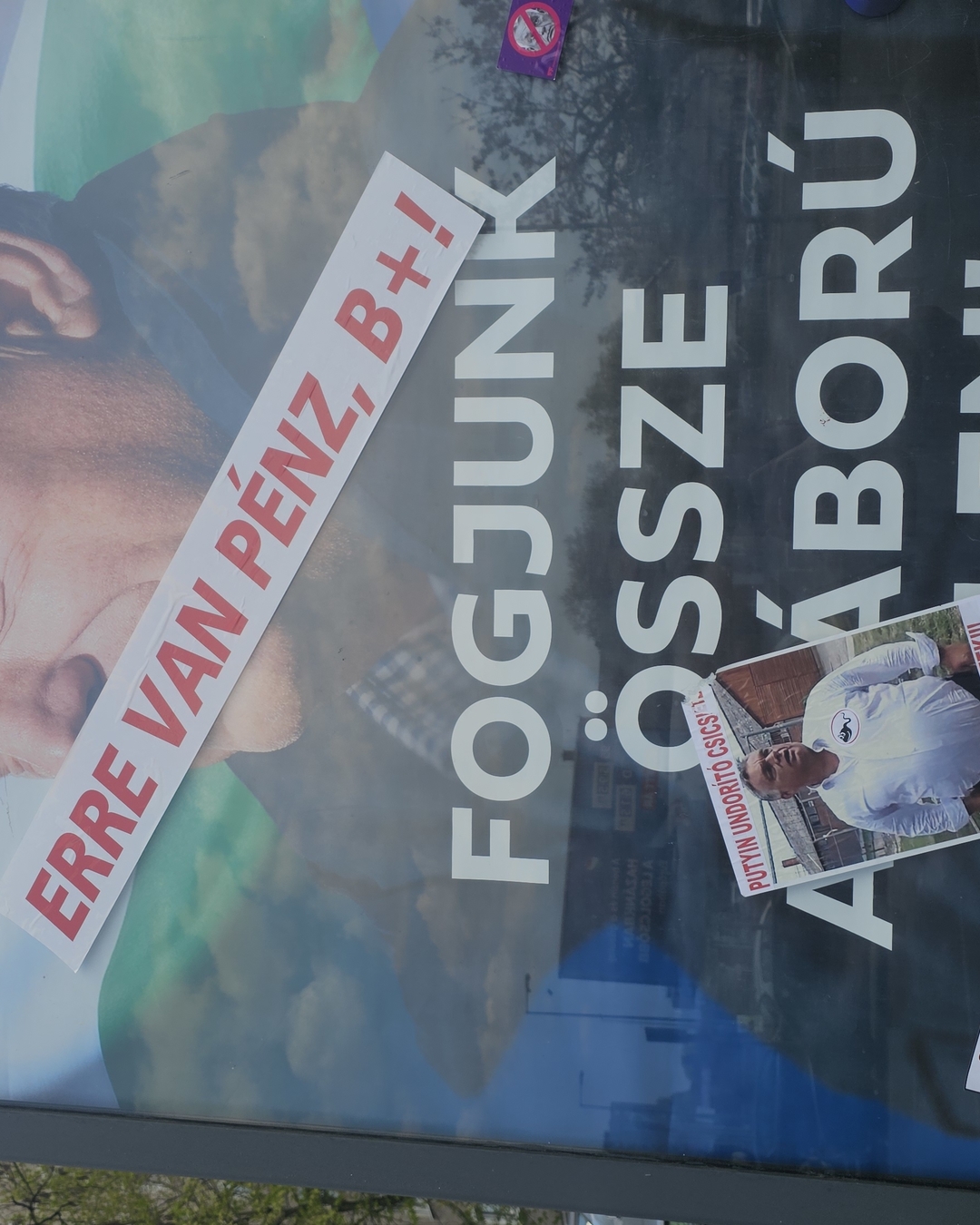 Sticker over an Orbán poster: “Putin’s ugly bitch” (photo: Milan Lelich / RBC-Ukraine)
The leader of the Mi Hazánk party, László Toroczkai, is also often targeted, with small mustaches drawn on him. And this is not just an ordinary childish prank, but one with meaning.
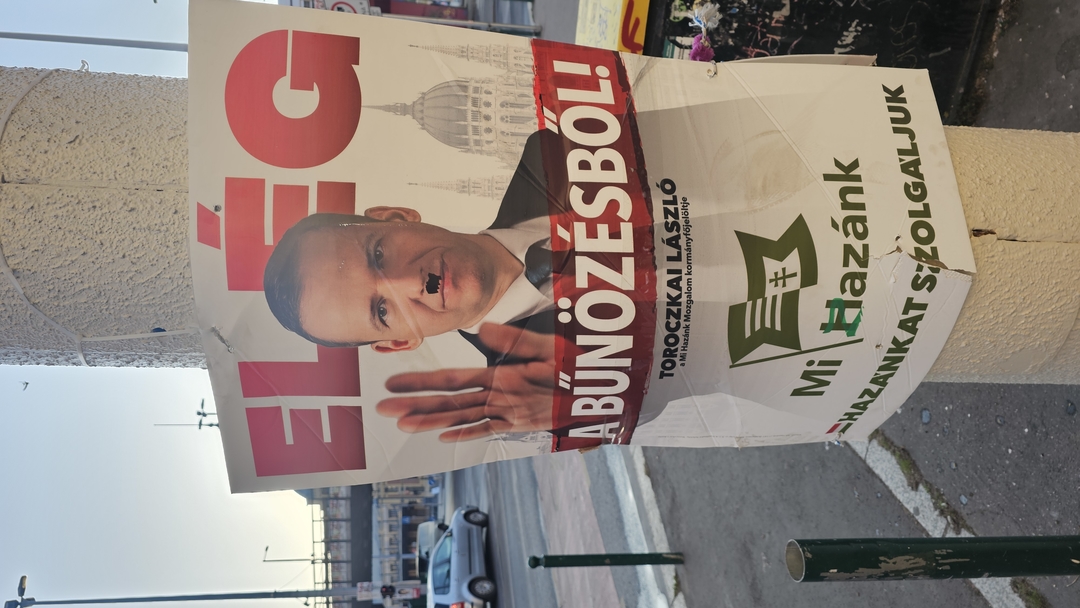
Mi Hazánk party advertising (photo: Milan Lelich / RBC-Ukraine)
Mi Hazánk is a far-right party, often described as neo-Nazi (for example, they make claims to Ukraine’s Zakarpattia), which has some chance of entering parliament alongside Fidesz and Tisza.
Against the backdrop of the “dangerous” Zelenskyy and Magyar and the standard “party candidate” and “party leader next to candidate” posters, the advertising of the Two-Tailed Dog Party stands out — a parody anti-system project from the very beginning, which, however, is based on left-wing ideology, supports Ukraine, and even has a few percent of support (though it will almost certainly not enter parliament).
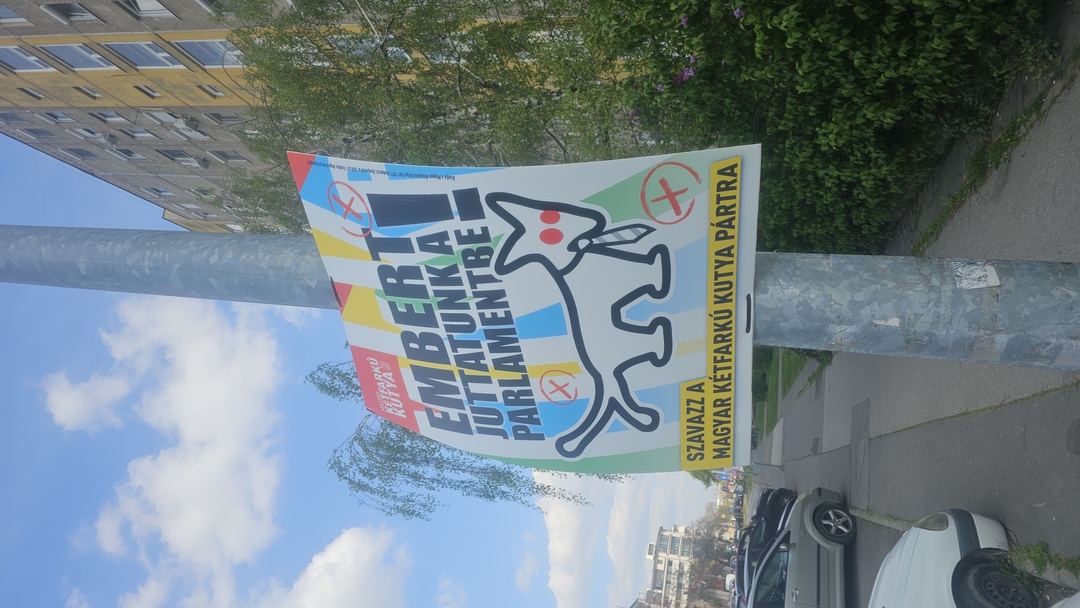
Campaign of the Two-Tailed Dog Party with the text “We sent a person to parliament” (photo: Milan Lelich / RBC-Ukraine)