Trump team removes Israel from Iran negotiation process, NYT says

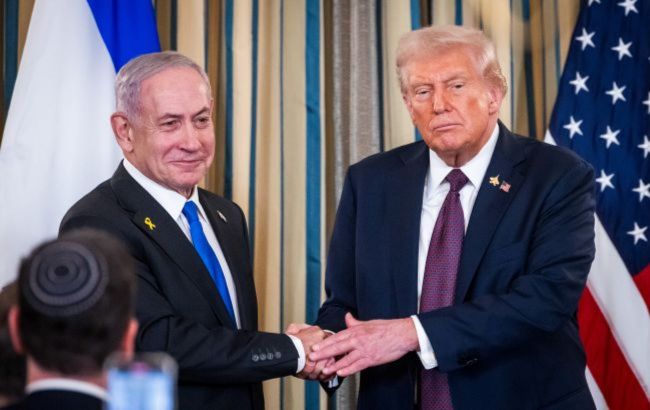 Israeli Prime Minister Benjamin Netanyahu and US President Donald Trump (photo: Getty Images)
The administration of US President Donald Trump has decided to sideline Israel from negotiations with Iran. The reason was Prime Minister Benjamin Netanyahu's overly optimistic assessments, which ultimately proved unfounded, The New York Times reports.
Background and results
Netanyahu was not only present in the Situation Room with Trump on the eve of the February 28 attack on Iran but also led discussions in which he predicted that a joint US-Israeli strike could potentially lead to the collapse of the Islamic Republic.
However, several weeks later, after those optimistic assurances proved false, the situation changed dramatically.
According to two Israeli Defense Ministry officials, the Trump administration distanced Israel so much from the process that the country's leaders were almost completely excluded from US-Iran ceasefire negotiations.
Israeli officials, now facing an information gap from their closest ally, have been forced to gather intelligence on US-Iran contacts through ties with regional leaders and diplomats, as well as through their own surveillance inside the Iranian regime.
What this could mean
The shift from what was effectively the cockpit to economy class could have serious consequences for Israel, and especially for Netanyahu, who faces a difficult reelection battle this year.
The outlet says Netanyahu has long presented himself to voters as a kind of "Trump whisperer" capable of securing and maintaining the US president's support.
In a televised speech at the start of the war, he portrayed himself as a peer to the US president, assuring Israelis that he spoke with Trump "almost every day," exchanging ideas and advice, and "deciding together."
That was how, in February, he drew Israel into the war while pursuing an ambitious goal he had sought for decades — permanently stopping Iran's pursuit of nuclear weapons.
When the war began with devastating strikes against the Iranian leadership, it also appeared possible that another goal — regime change — could be achieved. However, many within the Trump circle had always considered that idea unrealistic.
Soon, US and Israeli priorities began diverging more sharply, especially after Iran closed the Strait of Hormuz, triggering a sharp rise in oil prices and pushing Trump to agree to a ceasefire.
Israel, meanwhile, found itself facing the reality that its three main objectives remained unattained. At the start of the war, Netanyahu had sought regime change, the destruction of Iran's nuclear program, and the elimination of Iran's missile program. None of those goals was ultimately achieved.
Israeli concerns
Given Israel's exclusion from the negotiations, the issue of the Iranian ballistic missile arsenal may no longer be on the agenda. As a result, any future agreement may fail to improve upon the 2015 deal, which Netanyahu criticized because it did not address the missile capabilities of Iran.
In addition, Israel now has other concerns about the possible framework of a US-Iran agreement, including the lifting of sanctions against Tehran.
Other details available
Recently, CNN published a report stating that US President Donald Trump and Israeli Prime Minister Benjamin Netanyahu had diverged in their views on the future of the war with Iran.
In particular, the United States was expected to resume strikes on Iran this week, but Trump instead announced a halt to attacks, citing requests from allies in the Gulf. This came amid ongoing negotiations.
Netanyahu, however, believes negotiations will not produce results, especially given Iran's refusal to give up enriched uranium. He is convinced that delaying strikes only benefits Tehran. Amid this, Netanyahu pushed for the resumption of military action.