EU approves start of membership negotiations with Ukraine and Moldova

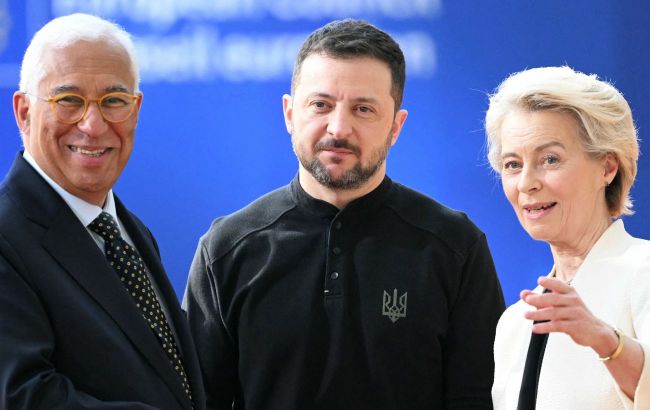 Photo: President of the European Council António Costa, Ukrainian President Volodymyr Zelenskyy, and European Commission President Ursula von der Leyen (Getty Images)
European Union countries have agreed to launch accession negotiations with Ukraine and Moldova, according to European Commission President Ursula von der Leyen on Twitter (X).
"Today, the European Union took a major step forward. All Member States agreed to open the first accession negotiations cluster with Ukraine and Moldova," she said.
According to Ursula von der Leyen, the first intergovernmental conference, scheduled for Monday, June 15, will open the first cluster covering the fundamentals of the accession process. It encompasses the core values and principles on which the EU is built, from the rule of law to strong democratic institutions.
"This is a recognition of the determination, courage and hard work shown by both countries in advancing reforms, even in the face of immense challenges. And a signal that the EU’s offer of peace, stability and opportunity is unmatchable. Enlargement is a strategic choice," she stressed.
Costa and Metsola react
The "green light" for opening accession negotiations with Ukraine and Moldova was also confirmed by António Costa, President of the European Council.
Meanwhile, Roberta Metsola, President of the European Parliament, emphasized that the move highlights the efforts of both countries and their commitment to European values despite Russia’s aggression, threats, and intimidation.
Ukraine's EU accession talks
EU leaders decided to open accession negotiations with Ukraine back in late 2023. The only leader who did not support the decision was then-Hungarian Prime Minister Viktor Orbán.
Since then, no negotiation cluster within the accession process has been opened. Such a move required unanimous approval from all EU member states, and Hungary had opposed it.
Earlier this year, Hungary's parliamentary elections were won by the Tisza Party. Péter Magyar replaced Orbán as prime minister. Following this, Kyiv and Budapest reached an agreement on the issue of national minority rights in Ukraine, which had been Hungary's main condition for advancing Ukraine's EU accession process.
As a result, Budapest lifted its blockade on the effective start of Ukraine's accession negotiations with the European Union.