Ukrainian forces increase attacks on Russian-held areas, ISW breaks down the purpose

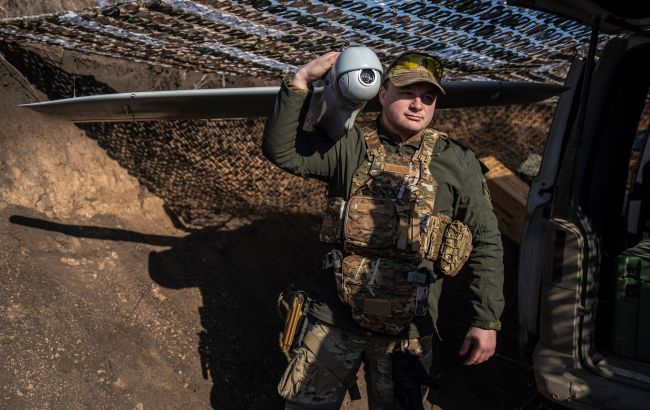 Photo: Ukrainian forces intensified strikes on Russian targets in occupied territories to disrupt the offensive (Getty Images)
The Ukrainian Defense Forces are increasing their capability for medium-range strikes on Russian military targets in occupied territories to disrupt Russia's planned spring-summer offensive, according to the Institute for the Study of War (ISW).
According to ISW, on the night of March 14, Ukrainian forces carried out strikes on a number of Russian military targets at medium range in both Russian territory and occupied areas of Ukraine.
Analysts note that medium-range strikes are usually carried out at a depth of approximately 20 to 120 kilometers from the front line, but Ukrainian forces were able to strike deeper into Russian territory.
The General Staff and Ukraine’s Special Operations Forces reported that Ukrainian troops struck an Iskander-M ballistic missile launcher preparing to launch missiles at Ukraine from occupied Vyshneve (about 209 kilometers from the front line) and a storage facility for Iskander missile systems near occupied Kurortne in Crimea (about 217 kilometers from the front line).
In addition, the General Staff reported a strike on the Russian Nebo-U radar station near occupied Hvardiiske in Crimea (approximately 198 kilometers from the front line).
The Drone Forces also announced on March 13 that operators carried out strikes on five Russian Pantsir-S1 air defense systems near Belgorod (about 30 kilometers from the front line).
The Defense Forces also struck:
- a storage facility for S-300 surface-to-air missile systems near occupied Sadove in Donetsk region (one of several settlements located 80–85 kilometers from the front line);
- a Russian military drone command post near Vuhlehirsk (approximately 40 kilometers from the front line);
- command and observation posts in Hrafskyi and Kermenchyk.
The Defense Forces also reported strikes on a Russian repair center and storage facility near occupied Andriivka and troop concentrations near Novomykolaivka (Zaporizhzhia region), as well as on a Russian logistics and equipment depot near Berdyansk.
Analysts note that Ukrainian forces are intensifying their medium-range strike campaign, targeting logistics sites, military equipment, and enemy personnel.
These attacks could complicate Russia’s preparation for the spring-summer offensive, as most strikes are directed at Russian forces in eastern and southern Ukraine, where the Russian army has concentrated its main offensive efforts in recent weeks.
Strikes on Russian targets
On the night of March 14, Ukrainian forces struck the Maykop airfield in the Russian Republic of Adygea, hitting infrastructure targets.
That same night, Ukrainian troops carried out additional strikes on Russian territory, hitting the Afipsky oil refinery and the port infrastructure at Kavkaz.
In addition, special operations units struck Iskander operational-tactical missile launchers based in occupied Crimea with drones. The enemy was preparing to attack Ukrainian cities from these systems.
On March 11 and the night of March 12, the Defense Forces carried out powerful strikes on Russian military targets in occupied areas.
On March 10, Ukrainian forces successfully hit the microelectronics plant Kremniy-El in Bryansk, Russia, with Storm Shadow missiles.
Earlier, Ukrainian defenders also carried out a series of successful strikes on Russian targets, attacking S-300 radar systems and Buk-M3 missile systems.
In addition, the Ukrainian Armed Forces destroyed a storage, preparation, and launch base for Shahed drones in the Donetsk airport area using ATACMS and SCALP missiles.