NATO's eastern flank strengthens defenses for new threat scenario — Politico

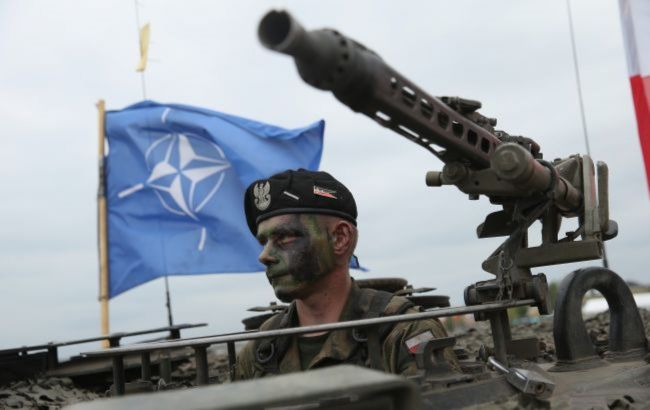 Eastern NATO flank overhauls its defenses (photo: Getty Images)
Eastern NATO countries are building fortifications, expanding their armed forces, and preparing to withstand the first days of a potential war with Russia largely on their own, Politico reports.
Journalists from the Axel Springer Global Reporters Network visited three of Europe's most vulnerable eastern frontiers: Finland's forested border with Russia, Poland's fortified line with Kaliningrad and Belarus, and Lithuania's edge near the Suwałki Gap.
Their goal was to assess how prepared these countries are for a possible Russian attack on the Alliance.
According to the authors, Europe races to reinforce its eastern flank against a threat that many Europeans no longer believe Washington can handle. US President Donald Trump has questioned longstanding security guarantees and has sought to reduce the American military presence in Europe.
The outlet notes that since returning to office in 2024, Trump has repeatedly questioned Washington's commitment to NATO Article 5, the collective defense clause for the Alliance under which an attack on one member is considered an attack on all.
The uncertainty deepened after the war in Iran, when members of the US administration threatened to reconsider America's NATO membership after European allies declined to join the conflict.
Meanwhile, satellite imagery shows that Russia has expanded its military presence along its border with Finland and other EU countries by building new barracks and deploying additional military equipment.
Swedish military intelligence chief described the buildup as preparation for a possible confrontation with NATO.
Finland: Facing first attack alone
Finland's 1,343-kilometer border with Russia is the longest land border of NATO with Moscow. The border crossing has remained closed since 2023.
"Russia is a superpower, and we're a small country. You have to be careful when you sleep next to a bear," said Col. Matti Pitkäniitty, commander of the North Karelia Border Guard District.
Finnish lawmaker Jukka Kopra, who previously chaired Parliament's Defense Committee, said Helsinki is not relying on an immediate Article 5 response.
"We're happy to be in an Alliance, but we still understand that we will take the first blow alone, before NATO's Article 5 is activated," he said.
One of Finland's greatest military assets, the report says, is its geography: dense forests, deep snow, subzero temperatures, and limited daylight during winter.
In May, Finland held the Northern Star 26 and Karelian Sword 26 drills, during which troops from France, the United Kingdom, and the United States trained to operate under such conditions.
Last year, Finland joined Poland and the three Baltic states in withdrawing from the Ottawa Convention banning anti-personnel mines. Officials argued that Russia never joined the treaty and is already using such weapons in Ukraine.
Poland: Eastern Shield, record-sized military
In November 2024, Polish Prime Minister Donald Tusk unveiled the first section of the Eastern Shield fortification project in the village of Dąbrówka near the Kaliningrad border.
"I don't have to explain to anyone that this border must be guarded exceptionally carefully," he said at the time.
The project includes anti-tank ditches, infantry trenches, concrete barriers, bunkers, drones, thermal imaging systems, and minefields along Poland's 800-kilometer border with Belarus and the Kaliningrad region. According to the Polish Defense Ministry, the full project is expected to cost about €10 billion.
The Eastern Shield forms part of the broader eastern flank deterrence line, which is planned to stretch from Finland to Romania.
At the same time, Politico notes that some sections of the Eastern Shield remain more of a future vision than a completed reality. Large stretches still lack visible fortifications, while anti-tank obstacle hedgehogs stored near Dąbrówka have yet to be deployed despite Tusk's visit.
Development of Poland's SAN counter-drone system accelerated after 19 Russian drones entered Polish airspace.
NATO fighter jets shot them down using missiles launched from F-16s and F-35s—an interception that cost millions of euros against drones worth only a fraction of that amount.
The SAN system is intended to allow Poland to defend itself against drones without relying on fighter aircraft.
Lithuania, Baltic countries: Up to two weeks without reinforcements
Lithuanian Armed Forces Commander Gen. Raimundas Vaikšnoras said he considers a surprise Russian attack unlikely because NATO's surveillance and early warning systems make it difficult to conceal large-scale troop movements.
Lithuania monitors railway hubs and logistics centers while responding to Russian and Belarusian military exercises with its own drills.
Unlike Finland and Poland, however, the Baltic states have little room to maneuver. Lithuania, Latvia, and Estonia are too small and too close to Russia and Belarus to trade territory for time. Their only land connection to the rest of NATO is the roughly 65-kilometer Suwałki Gap.
Near the Lithuanian village of Lavoriškės, a warning sign reads: "Do not risk your safety—do not travel to Belarus. You may fail to come back." The border is lined with razor wire and concrete dragon's teeth blocks designed to stop tanks.
These fortifications are part of the Baltic Defense Line, a joint project by Estonia, Latvia, and Lithuania that includes anti-tank ditches, bunkers, defensive obstacles, and minefields.
Retired US Army Europe commander Ben Hodges warned that in the worst-case scenario—if NATO were caught off guard and Poland were unable to assist the Baltic states—they might have to fight for up to two weeks before reinforcements from more distant allies could arrive.
German and Lithuanian officials insist such a scenario would not come without warning. They argue that any Russian attack would be preceded by visible military preparations, giving NATO time to deploy reinforcements at an early stage.
Notably, in the fall of 2025, Russian drones entered Polish airspace in large numbers for the first time. During the night of September 10, 19 drones crossed into the country.
F-35 pilots stationed in Poland shot them down using missiles costing about €400,000 each.
In November 2024, Minister Tusk announced the launch of the Eastern Shield project—a network of fortifications along 400 kilometers of Poland's border with Russia and Belarus.
In March 2025, Poland, Lithuania, Latvia, and Estonia announced their withdrawal from the Ottawa Convention banning anti-personnel mines, citing the military threat posed by Russia.