G7 eyes new support package that could reshape Ukraine's battlefield strategy

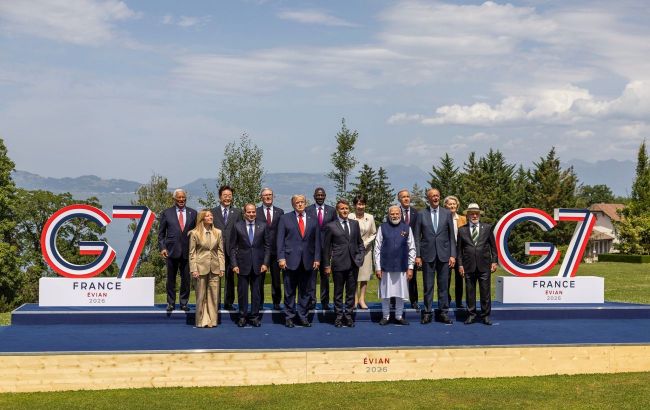 Photo: Leaders of the Group of Seven countries at the bloc's summit in France (x.com/G7)
The leaders of the Group of Seven (G7) countries have issued a joint official statement on the geopolitical situation in the world. The main focus of the document was the strengthening of military and economic support for Ukraine amid its successes on the front lines, according to the official G7 leaders' communiqué.
Air defense, long-range missiles, and domestic weapons production
The G7 heads of state expressed solidarity with the Ukrainian people, who are suffering from regular Russian strikes on critical infrastructure and cultural heritage. They specifically noted Ukrainians' resilience and the progress of the Armed Forces of Ukraine on the battlefield.
"We, the Leaders of the G7, stand united in our unwavering support for Ukraine in defending its freedom, sovereignty, and territorial integrity. We reaffirm our solidarity with the Ukrainian population suffering from attacks on their critical infrastructure and cultural heritage. We commend Ukraine for its resilience and progress on the battlefield in recent months and emphasize there is now a new momentum," the statement reads.
To accelerate this new momentum on the front, the G7 countries have agreed on the following steps:
- Strengthening the skies: Ukraine will urgently receive increased supplies of air defense systems, additional anti-aircraft systems, and interceptor missiles.
- Strikes deep into enemy territory: The G7 will significantly increase the transfer of long-range capabilities to the Ukrainian army.
- Military production: The leaders are ready to consider the possibility of transferring special licenses to Ukraine, which would allow for the legal and large-scale production of foreign weapons directly at Ukrainian plants.
As a separate point, the G7 leaders highlighted Ukraine's preparation for the upcoming winter, promising to allocate additional funds and equipment to ensure the country's energy resilience.
Blow to Russia's gas station and the Trump factor
The G7 has officially committed to increasing economic pressure on the Kremlin's war machine. Western leaders plan to introduce a new powerful sanctions package targeting Russia's oil and gas sectors.
Interestingly, the economic strike against Russia became possible due to the changing situation in the Middle East:
"We commit to increase the pressure on the Russian war economy. In this context, we will strengthen our sanctions, including those on the oil and gas sectors. We consider this the right moment to proceed with additional measures, as President Trump has delivered a deal that we support in reopening the Strait of Hormuz," the G7 leaders emphasized.
Since Iranian oil is returning to the global market, the West has gained the ability to fully tighten the screws on Russian fuel exports without the risk of a global energy crisis.
US President Donald Trump has officially announced the end of hostilities between the US and Iran. Thanks to this, the Strait of Hormuz has reopened to civilian vessels, and Tehran has committed to ceasing all attacks on oil tankers in exchange for the lifting of the financial blockade.
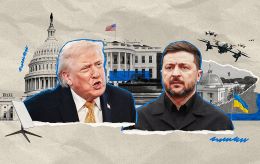
At the same time, the American leader is preparing a great surprise for Vladimir Putin. During the G7 summit in France, Trump demonstrated an unexpected willingness to increase pressure on the Kremlin to end the war in Ukraine and proposed a kind of geopolitical barter with tough conditions to his European allies. The tightening of sanctions pressure was also supported by other partners, who announced new restrictions against Russia's energy sector.
As noted by Vladyslav Vlasiuk, the Ukrainian President's Commissioner for Sanctions Policy, the new sanctions package demonstrates a systematic approach to weakening Russia's military machine, as the restrictions are aimed not only at weapons manufacturers. In particular, Brussels has already prepared the 21st EU sanctions package, which affects key sectors of the Russian economy — energy, financial services, trade, cryptocurrency, and fishing.