Oil prices rising, Russia gaining: How Middle East war is playing to Putin's advantage


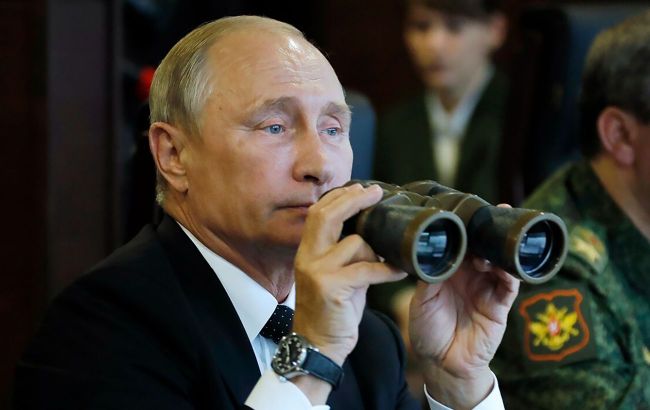 Russia's revenues from energy exports may increase due to war in Iran (photo: Russian media)
The crisis in the energy market caused by the war in the Middle East has been ongoing for almost three weeks. Oil and gas prices have risen sharply during this period. Russia expects additional profits and may increase energy exports due to the easing of US sanctions.
More details on the situation in energy markets — in the RBC-Ukraine report.
Key points:
- Energy crisis. The blockade of the Hormuz Strait caused a sharp increase in oil and gas prices.
- Russia gains. The easing of US sanctions and redirection of Russian oil supplies to India bring Moscow additional billions of dollars.
- Short-term measures. Global strategic oil reserves may reduce prices.
- Oil price up to 200 dollars. Without the restoration of supplies through the Hormuz Strait, the oil deficit will grow.
Contrary to Donald Trump's statements that the US has almost achieved victory in the war with Iran, the real situation in the region remains extremely tense and far from a final resolution.
Operation Epic Fury has been ongoing for almost three weeks. Initially, Trump planned to complete it within a month. But the timeline for resolving the conflict remains uncertain.
Trump says that in Iran, there is "practically nothing left to target", and war can be ended at any moment when he decides. However, Tehran does not recognize defeat and continues counterattacks. The New York Times writes that the US ''has no apparent plan for bringing about the demise of the Iranian regime.'' In the Trump administration, they believe conflict is unlikely to end before September.
Energy crisis continues
The war in Iran has triggered a large-scale energy crisis from the first days. The main reason was the disruption of oil and gas supplies through the Hormuz Strait, which accounts for 20% of global oil exports. Currently, only tankers from countries friendly to Iran can pass through this route. For all others, it is closed.
Due to the inability to export oil, Saudi Arabia, Iraq, and Kuwait were forced to cut production by more than 10 million barrels per day, as their storage facilities are full. Without the restoration of maritime transport, losses will continue to grow.
Oil deficit and uncertainty around developments in Iran have caused a significant increase in energy prices. Since February 28, Brent crude has risen by nearly 40%. Prices increased from 73 to almost 106 dollars per barrel.
The price of Russian Urals crude has increased by nearly 70% and, in recent days, exceeded 110 dollars per barrel, depending on source and payment terms. Considering that the Russian budget was based on an expected oil price of 59 dollars per barrel, revenues from its sale, even if volumes do not grow, may almost double during the crisis period. Liquefied gas has also become more expensive. Spot LNG prices in Asia jumped by 35–40%. In the EU, the increase reached 30%. The price of one thousand cubic meters of gas now reaches 630 euros.
On March 19, after Iran's missile strikes on the world's largest liquefied natural gas plant in Ras Laffan (Qatar), gas prices in Europe jumped to 770 euros per 1000 cubic meters.
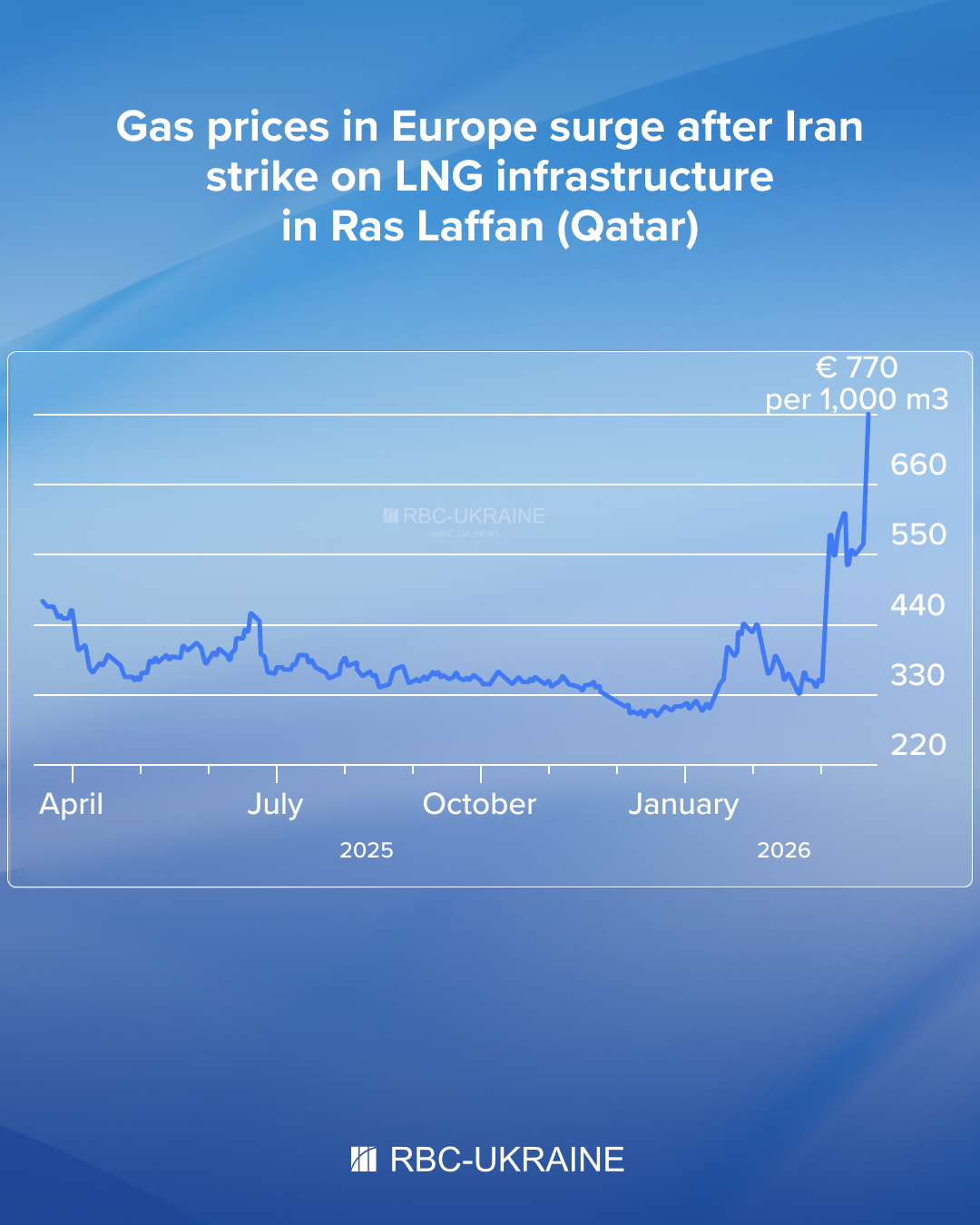 European gas prices surge after Iran strike (photo: RBC-Ukraine)
Russia remains at an advantage
Russia has become one of the main beneficiaries of the conflict in Iran. ''So far, there is only one winner in this war – Russia,'' said President of the European Council António Costa.
According to him, Moscow is receiving new resources to finance the war against Ukraine due to rising energy prices. ''It profits from the diversion of military capabilities that could otherwise have been sent to support Ukraine,'' he added.
Rising oil prices do not scare Trump for now. Price of 100 dollars per barrel, in his view, is a small price for peace and security. He hopes that a quick end to the war will return the market to previous levels. At the same time, he is still using restraining tools.
On March 10, Trump announced the easing of sanctions on Russian oil. The US introduced a 30-day waiver for India to accept Russian oil that was already on tankers at sea at the moment the decision was made.
As a result, tankers with Russian oil were redirected from China to India. Indian refineries, after the easing of sanctions, have already purchased about 30 million barrels of Russian oil to avoid shortages due to reduced supplies from the Middle East.
However, the expected effect of sanctions easing did not materialize. Oil prices dropped by only 10 dollars for a few days, and then again exceeded 100 dollars.
Director of the Institute of World Policy, Yevhen Mahda, believes that Trump will look for partners to reduce tension in the oil market as quickly as possible. The US will now look for partners for this. Oil deficit affects all economies,'' he said in a comment to RBC-Ukraine.
Partners may include countries with large oil reserves. The US itself has significant strategic reserves. They are also held by Japan, China, South Korea, and Qatar.
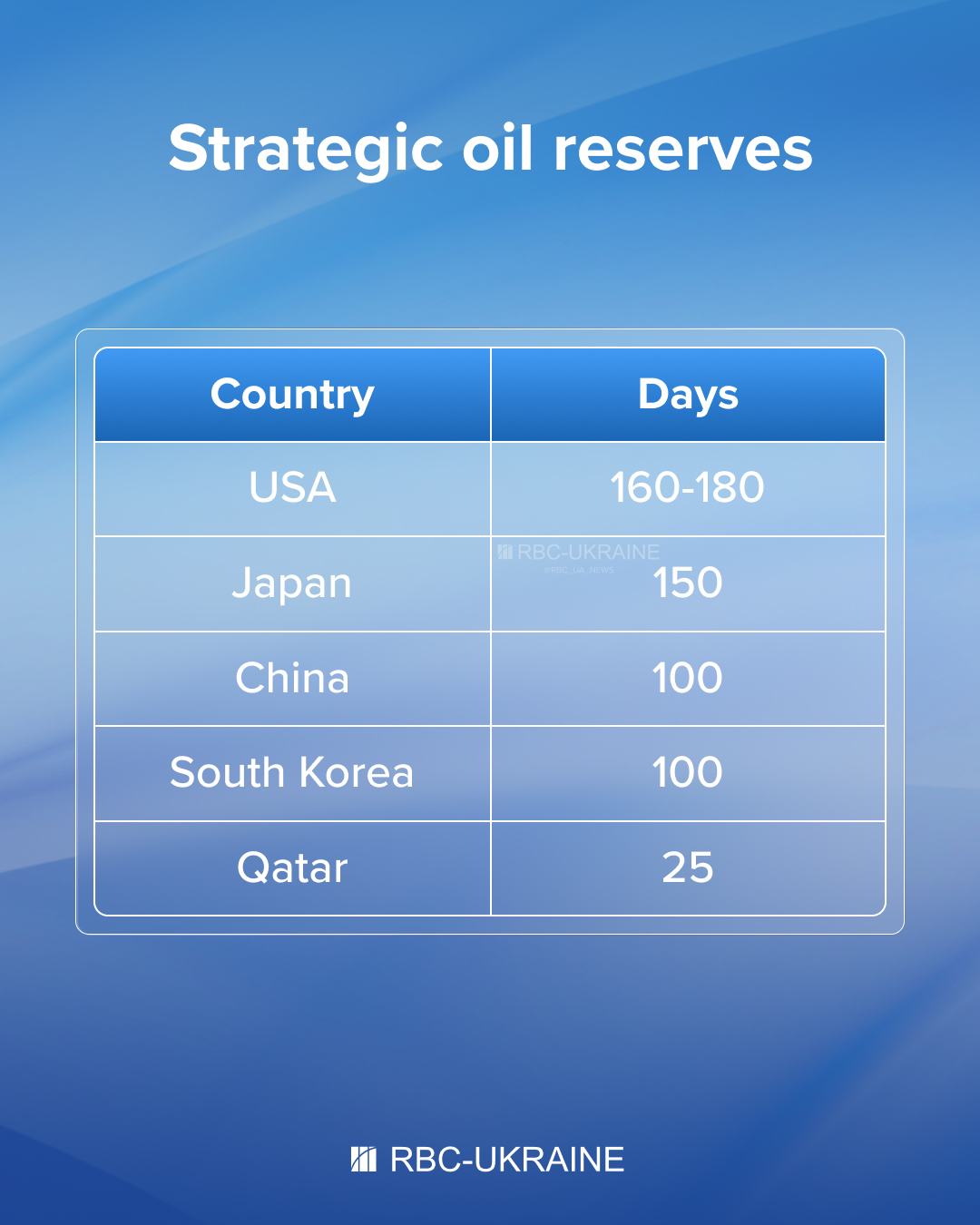 Global strategic oil reserves and coverage in days (photo: RBC-Ukraine)
Use of their reserves may temporarily cool the oil market. Countries of Asia and Oceania have already started supplying additional volumes of oil to the market in mid-March. EU countries and the US plan to do this by the end of March and the beginning of April 2026.
In total, 32 member countries of the International Energy Agency unanimously agreed to provide the market with 400 million barrels of oil from their emergency reserves to stabilize the market.
Before prices begin to fall, additional revenues of Russia from increased supplies and rising oil prices may amount to billions of dollars, said President of Ukraine Volodymyr Zelenskyy. ''Just this one easing from America could give Russia about $10 billion for the war. This certainly does not help peace,'' he said, commenting on the US decision to ease sanctions.
Russia's daily revenue due to rising oil prices may increase to 150 million dollars, the Financial Times reported. According to estimates of the publication's experts, by the end of March alone, Russia may receive a total of 3.3 to 4.9 billion dollars in excess profits if the average price of Russian oil is within 70–80 dollars per barrel.
In addition, income from sales of Russian LNG will increase, which accounts for 13% of European consumption.
For now, however, the Russian economy has not yet felt excess profits. As Reuters reports, in March, revenues to the Russian budget from oil and gas taxes will decrease by 52% compared to the same month of 2025. This will happen because energy prices are taken into account for the previous month. Russia will feel the effect of the price increase only in April.
If war with Iran drags on for several months, the use of oil reserves by countries will not help, believes Ukraine's presidential commissioner for sanctions policy, Vladyslav Vlasiuk.
"This will give a short-term effect. Reserves, for example, in the UAE will last for about 25 days. A similar situation is in key consumers in Southeast Asia — reserves there will also last for some time. Then the market may face a deficit, which will push prices to the level of 150–200 dollars per barrel,'' he said in a comment to RBC-Ukraine.
At the same time, further easing of sanctions against Russia, which the US may additionally undertake, will not save the situation. "Russia accounts for only 4–5% of global oil supplies. Hormuz Strait — about 33%,'' said Vlasiuk.
Thus, without opening of this strait, which is called the valve of the global economy and lifeline, it will be difficult to overcome the crisis situation.
Meanwhile, to saturate the market, the US is considering the possibility of lifting sanctions on Iranian oil that is already loaded on tankers and is at sea. This was stated by US Treasury Secretary Scott Bessent.
This concerns about 140 million barrels. This oil is sold to China at a discount. ''If we go through as we plan to unsanction the Iranian oil, that oil will go up to a market price, and it will end up in places other than China,'' The Washington Post quotes Bessent.
Quick Q&A
Why have oil and gas prices risen sharply?
The main reason for the price increase is the war in Iran and the disruption of supplies through the Hormuz Strait, through which 20% of global oil passes.
How does Russia benefit from conflict?
The easing of US sanctions and the redirection of Russian supplies to India bring Moscow additional billions of dollars. In addition, rising oil prices increase Russia's income from LNG, which accounts for about 13% of European consumption.
When will Russia feel the effect of the price increase?
According to experts, in March, Russian budget revenues will decrease due to accounting for previous prices, and the effect of rising oil and gas prices will appear only in April.
Will countries be able to stabilize the market?
Large strategic oil reserves of IEA member countries (400 million barrels) will temporarily reduce prices, but without opening the Hormuz Strait, the deficit will remain, and oil prices may reach 150–200 dollars per barrel.