Putin's new game: Kremlin uses Middle East chaos to ramp up energy pressure


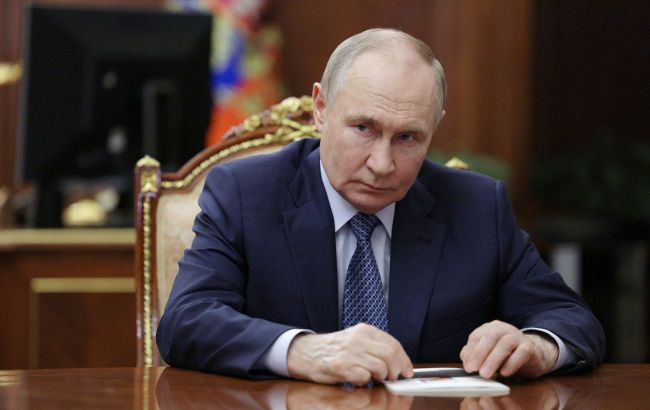 Photo: Putin begins gas pressure campaign against Europe (Getty Images)
The prolonged conflict in the Middle East could reshape the global energy market. Vladimir Putin appears to have sensed the opportunity and has already begun pressuring the European Union with gas leverage.
RBC-Ukraine explains whether Russia can destabilize the situation and how it could affect gas prices.
Price surge. The war in the Middle East has pushed oil prices up by about 15% and gas prices by 60%.
EU strategy. In the European Union, discussions about maintaining purchases of Russian gas could intensify.
Russian pressure. Moscow is trying to use the Middle East crisis to increase its influence on the European energy market.
Energy prices spike amid Middle East war
Due to the war in the Middle East, energy markets — including Europe’s — have seen a sharp rise in oil and gas prices. Since February 28, oil prices have increased by nearly 15% to $84 per barrel, while gas prices have jumped by 60% to €550 per 1,000 cubic meters.
The main reasons include a nearly 50% drop in tanker traffic through the Strait of Hormuz, effectively cutting off supplies from the Persian Gulf, and the shutdown of LNG production facilities in Qatar. According to officials in Doha, it may take at least a month to restore liquefied natural gas production.
Predicting how the situation will evolve remains difficult, according to the International Monetary Fund (IMF). Much depends on how long military operations in the Middle East continue.
A prolonged conflict could become a major stress test for the global economy, IMF Managing Director Kristalina Georgieva warned. The potential shocks may vary widely in form and scale.
“This is a time of more frequent and more unexpected shocks,” she said. “In most cases, we cannot predict their exact nature, but we can try to prepare for them.”
The IMF also expects the crisis to significantly impact energy prices, economic growth, and inflation.
India and China could increase Russian energy imports
The escalation in the Middle East and resulting disruptions in energy supplies are pushing some countries to increase purchases from Russia.
Oil trade routes are already shifting. This week, two tankers carrying about 1.4 million barrels of Russia’s Urals crude are expected to unload at Indian ports, even though they were initially headed further east, Bloomberg reports.
“The war in the Middle East and the effective closure of Strait of Hormuz are now raising the prospect of crude shortages, and processors in the South Asian nation appear to be turning back to Russian barrels,” the agency noted.
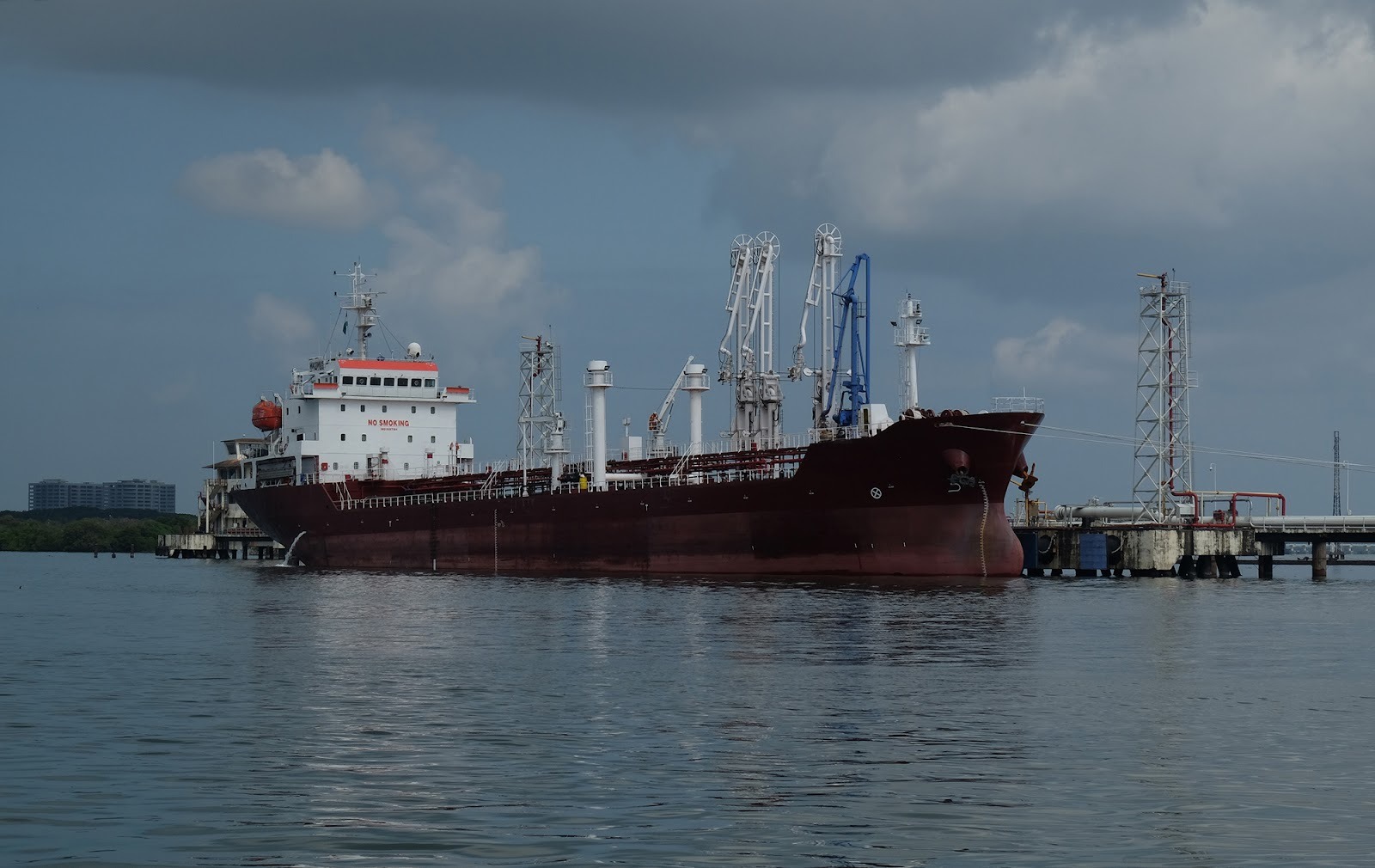
India increases purchases of Russian oil (Photo: Getty Images)
China, however, has not yet increased imports. According to Reuters, Beijing stocked up on large volumes at low prices before the Chinese New Year and is waiting for clearer signals about how the conflict will develop. Chinese officials hope for a quick end to the war and lower prices.
The United States is also aware of the risks and has taken emergency measures. The US Treasury has allowed companies to purchase Russian oil stored on sanctioned tankers for delivery to Indian refineries. The permit lasts three days and aims to maintain steady global oil supplies.
US Treasury Secretary Scott Bessent also hinted that sanctions on Russian oil could be temporarily eased.
“This short-term measure will not provide significant financial benefit to the Russian government, as it allows only transactions involving oil already at sea,” he said.
During a planned visit to Beijing in mid-March, Bessent intends to raise the issue of increasing Chinese purchases of American oil instead of Russian supplies.
If the Middle East crisis lasts months rather than weeks and the market experiences energy shortages, neutral countries may begin negotiating increased energy imports from Russia, said Maksym Hardus, a communications expert at Razom We Stand.
“India will likely increase purchases from Russia. Japan, which depends heavily on energy imports from Persian Gulf countries, may do the same. We should also consider South Korea, Thailand, Indonesia, and Singapore,” Hardus noted.
He added that Turkey, which had replaced Russian oil imports with Iranian supplies, might return to Russian sources if Iranian energy facilities come under attack.
Europe remains relatively calm
For now, Europe is not showing serious concern over rising energy prices. EU markets have not yet felt the impact of reduced supplies from the Middle East.
Gas storage levels in the EU were around 30% at the beginning of March — about half of last year’s level. However, officials say this does not yet cause major concern.
The gas injection season is approaching, and the European Commission said there is currently no reason to expect difficulties in refilling storage.
“EU countries informed that they do not observe any immediate security of supply risks,” the Commission said.
Austria’s Federal Minister for Energy, Wolfgang Hattmannsdorfer, speaking in Kyiv on March 5, confirmed that the war in Iran has not yet significantly affected the European market.
“The price spikes are mainly driven by anxiety,” he said. “We will monitor the situation, but there is no need to worry about rising prices at this stage.”
Austria currently has sufficient gas reserves.
“Our storage facilities are filled to 36% of annual demand, even though we are nearing the end of the winter season. By the end of March, reserves will be around 28–30%. We are well supplied with gas,” the minister said.
Putin escalates tensions
Vladimir Putin recently suggested that Russia could stop supplying energy resources to the EU even before the planned ban on Russian gas imports takes effect in 2027.
“Other markets are opening now. And perhaps it would be more profitable for us to simply stop supplies to the European market right now? Move to the markets that are opening and establish ourselves there?” he said.
The idea of “leaving on its own” is not just a preventive plan by Russia but an attempt to complicate the situation on the EU market amid fears linked to the conflict in the Middle East. Such signals increase tension on the market and give additional momentum to price growth. Putin likely hopes for a prolonged Middle East conflict and an opportunity to pressure the market.
Politico also wrote about the possibility that the war in Iran could continue. Citing documents it reviewed, the outlet reports that the conflict could last at least 100 days, or even longer.
Although the share of Russian gas in EU imports has fallen from 40% to 13% since 2022, the remaining volumes would still affect prices if supplies were suddenly halted.
Russia is currently supplying the EU mostly not with pipeline gas but with LNG. Oil supplies had been flowing only through the Druzhba pipeline, which is currently under repair after shelling.
In the short term, it would be difficult to find an alternative to Russian supplies. At the same time, dissatisfaction is already emerging in the EU over the growing share of American gas on the market. Austria, which has abandoned Russian gas, now buys up to 60% of its supply from the United States and is already warning about a new dependency.
“We have fallen into another dependency (on the US). And we are saying we need diversification,” said Austrian Energy Minister Wolfgang Hattmannsdorfer.
In such a situation, the likelihood increases that attitudes within the EU toward abandoning Russian fuel could change, Hardus believes.
“If the crisis drags on for several months, movements will intensify in Europe to increase purchases from Russia — not only oil but also gas — and revise the strategy of phasing out Russian energy resources,” he said.
Hardus suggested that public advocates of such a campaign could include Robert Fico and Viktor Orbán. However, other countries that already buy Russian LNG — including Belgium, France, Spain, and possibly Germany — may also quietly be interested.
Energy expert Volodymyr Omelchenko considers such a scenario unlikely.
“Most leaders in the European Union are reasonable people. They understand that buying oil and gas from Russia means financing a future war against themselves. I don’t think they will do that,” he said in a comment to the outlet.
At the same time, he did not rule out that statements supporting Russian energy supplies might appear.
“The EU is quite infiltrated by Russian influence. But that does not mean that leading countries such as Germany, France, Italy, Poland, and others will change their position. Putin’s speculation and threats based on a situation that will likely change soon will not work,” Omelchenko said.
Former adviser to the president of Ukraine and economist Oleh Ustenko noted that financial markets so far do not indicate serious threats from the Middle East conflict.
“Markets and the financial world believe the situation is under control. It may be prolonged, but it will not drag on for many months,” he said, adding that the relative calm on markets confirms this.
If the more optimistic forecasts come true and the conflict ends within a few weeks, energy prices will stabilize, possibly at a slightly higher level than before February 28.
For now, the EU still plans to follow through with its strategy of abandoning Russian energy resources. As scheduled, a ban on short-term contracts for the supply of Russian LNG to the EU will take effect on April 25.
Officials in Brussels say Russia’s attempt to “leave on its own” before sanctions are imposed is effectively an admission that it has lost the European market.
Quick Q&A
Why have oil and gas prices risen sharply?
Prices increased amid the escalation of the conflict in the Middle East. Tanker traffic through the Strait of Hormuz has dropped by nearly 50%, limiting oil supplies from the Persian Gulf countries. At the same time, LNG production capacity in Qatar has been suspended. As a result, since the end of February oil prices have risen by about 15%, while gas prices in Europe have jumped by 60%.
Could the war trigger a global energy crisis?
Much will depend on how long the conflict lasts. The IMF warns that a prolonged war could become a serious test for the global economy. Inflation may accelerate and economic growth could slow down.
Could the crisis increase imports of Russian energy resources?
India is already increasing purchases of Russian oil amid a potential supply shortage. China has so far taken a wait-and-see approach. If the crisis drags on, a number of Asian countries may step up purchases of energy resources from Russia.
Is there a risk of an energy crisis in Europe?
For now, European authorities do not see a direct threat to energy supplies. Although gas storage levels in the EU are currently significantly lower than a year ago, the gas injection season is approaching, and the European Commission believes there should be no problems filling storage facilities.