Dollar surges, fuel prices spike: How Middle East war's hitting global economy


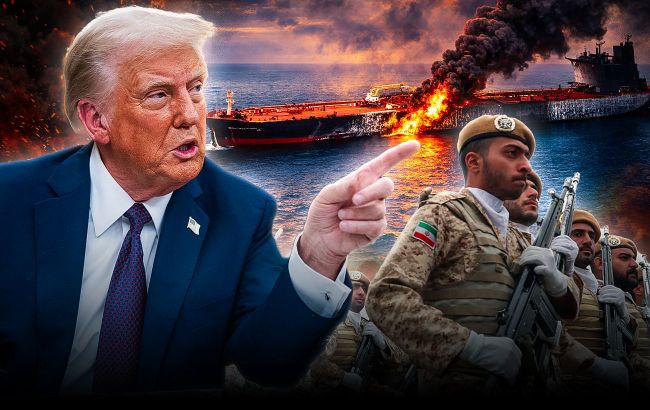 Iran war already affects prices in Ukraine and globally (collage by RBC-Ukraine)
Military operation by the United States and Israel against Iran has already hit the key artery of global trade — the Strait of Hormuz, through which 20% of world oil passes. Oil prices have risen sharply, tankers have stopped, and insurers are leaving the region.
Will this become the beginning of a new global energy and inflation wave, and will Ukraine feel it? RBC-Ukraine tries to answer these questions.
Key points:
- Trump says the operation may last longer than one month. This means forecasts could only worsen. The US promises to continue strikes on Iran.
- Gas imports are unchanged for now. Naftogaz continues buying gas in Europe at previously fixed prices.
- Fuel prices are rising in Ukraine. For Ukraine, events in Iran have already resulted in higher prices at gas stations and a stronger dollar.
- Global markets are already reacting. Oil and gas prices have increased, and insurance companies are canceling coverage.
- Strait of Hormuz. Its blockade could lead to a surge in energy and food prices.
- Military operations against Iran create risks for the global economy not only because of rising oil prices but also due to the blockade of transport corridors, the collapse of insurance markets, and global inflation.Risk of global economic shock.
United States Secretary of State Marco Rubio said that the most devastating strikes against Iran are still ahead. They will continue until Washington finishes its operation and achieves its goals. At the same time, it is difficult to predict how long hostilities will continue.
Military operations by the United States and Israel against Iran have become a new potential factor of instability for the entire global economy. Earlier, during periods of escalation of conflicts in the Middle East, the main focus was on risks to oil and gas supply. Now, the consequences are much broader. They affect transport corridors as well as financial and insurance markets. Leading maritime insurance clubs have announced the cancellation of war risk coverage for vessels in the Persian Gulf and nearby waters starting from March 5, 2026.
The Strait of Hormuz, through which 20 percent of global oil supplies worth almost 500 billion dollars pass, is effectively blocked. Natural gas, chemicals, and fertilizers are also transported through this route. Therefore, blockade of strait could cause shortages and an increase in global prices not only for oil and gas but also for food.
Another consequence of the operation is the disruption of transport connections. Most international airlines (Lufthansa, British Airways, Emirates, Qatar Airways, and others) have completely suspended flights to Iran and through its territory.
A similar situation has occurred in the region before. In the 1970s oil crisis already led to global inflation, economic recession, and revision of energy policy by many states. In 1973, Arab countries imposed an embargo on oil supplies to countries that supported Israel during the Yom Kippur War, including the United States and the Netherlands.
In 1979 cause of the crisis was the reduction of oil production in Iran due to the Islamic Revolution. "Today risks have a different nature, but the mechanism of impact remains similar," said head of the Committee on Financial and Banking Activities of the Federation of Employers of Ukraine, Bohdan Danylyshyn, in a comment to RBC-Ukraine.
If escalation of conflict around Iran lasts for months, rising oil and gas prices, disruptions of maritime transport through the Strait of Hormuz will inevitably lead to an increase in inflation in the global economy.
"Rising costs of transport, production, and logistics lead to an overall increase in prices for goods and services. In such a situation, central banks of leading economies, first of all the United States, the European Union, and China, will be forced to postpone easing of monetary policy," he said in a comment to RBC-Ukraine.
But for now United States plans that the operation, which has already received the name Epic Fury, will last no more than one month. In addition, Donald Trump has already said that it is ahead of schedule.
Expectations regarding oil prices and fuel prices at gas stations
Escalation of hostilities has forced oil tankers to drop anchor at the entrance and exit of the Strait of Hormuz. According to Reuters, on March 1, about 150 tankers stopped at a certain distance on both sides of the strait. Global insurance companies are refusing to insure vessels that will follow this route, Bloomberg reported.
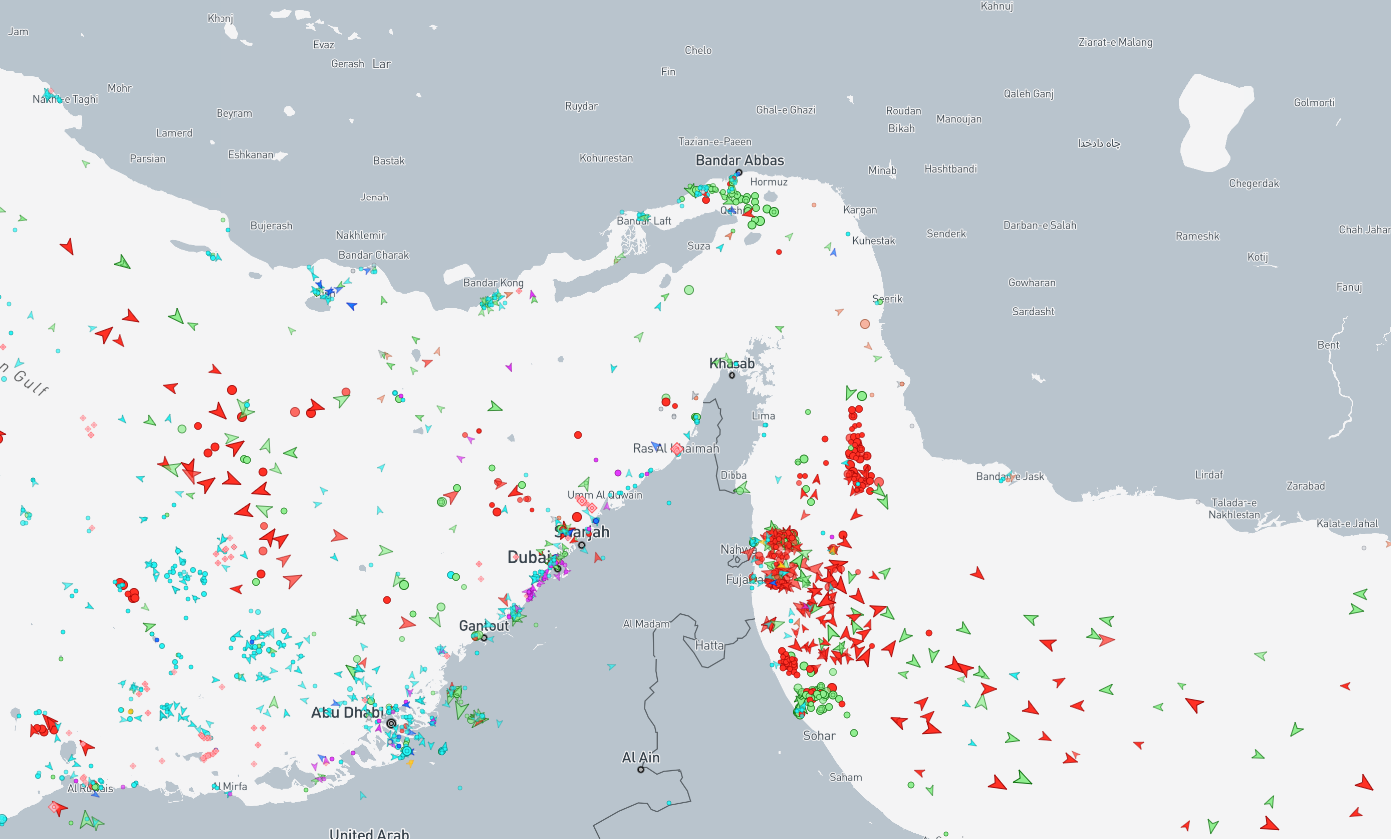
Groups of tankers carrying oil and liquefied gas have dropped anchor on both sides of the Strait of Hormuz (screenshot from the Marine Traffic website, which tracks movement of sea vessels as of the evening of March 3)
Iran had previously speculated about the possibility of closing the Strait of Hormuz but did not take decisive action. The current situation has become exceptional, since the regime of ayatollahs has already taken responsibility for attacks on three oil tankers, Bloomberg reported.
Against this background, at the opening of trading on the London exchange Intercontinental Exchange on Monday (March 2), the price of benchmark Brent crude oil had already risen by 13 percent compared with the previous trading session (February 27), to 81.5 dollars per barrel.
Growing global uncertainty is also affecting the European fuel market, from which Ukraine imports petroleum products.
"European refiners depend on the Persian Gulf region. All markets are nervous because there is a risk of supply destabilization," Serhii Kuiun, director of consulting company A-95, said in a comment to RBC-Ukraine.
Such price growth is a defensive reaction of the market, Kuiun believes, adding that prices will not continue to rise and their decline will be observed. After the end of hostilities in Iran, the oil price could fall to 60 dollars per barrel, an expert added.
If the situation in the Persian Gulf lasts not weeks but months, consequences will be felt across the world. "However, even in such a case, I do not think price will rise to 100–150 dollars per barrel,” Honchar says.
He adds that similar forecasts by investment banks in the United States always accompany global shocks and are aimed at earning money from a temporary surge in oil prices.
At present, there is no shortage of oil on the global market, while demand for raw materials remains relatively weak. "If the situation does not last for months, then after rising prices will not only return to previous levels but may even decrease further," Mykhailo Honchar believes. As of the evening of March 2, the price of Brent had already fallen to 78 dollars per barrel. However, on March 3, it rose again amid uncertainty to 83 dollars.
Former adviser to the President of Ukraine, Oleg Ustenko, gives a similar forecast. "Oil price rose slightly above 80 dollars but has already rolled back," he said in a comment to the publication. At the same time, he did not rule out that some volatility may remain in the short-term perspective.
Ustenko believes that players in the oil market had anticipated the emergence of conflict and had already incorporated corresponding risks into their prices. Precisely because of this, price increase remains relatively restrained.
Trump does not need high oil prices
The Strait of Hormuz is a key transport artery not only for the neighbors of Iran but also for the Islamic Republic itself, which exports all its oil through this route. Any authority in Iran, as well as China, as the main buyer of Iranian raw materials, is interested in restoring the movement of tankers in strait.
At the same time, the United States and Israel are not targeting Iranian oil infrastructure. Trump does not need long-term high oil prices because this would increase the cost of fuel in the United States itself, while the White House administration would like to boast about low prices per gallon of gasoline before the congressional elections that will take place in the autumn of this year.
"Situation does not look as catastrophic as many different traders and banks are trying to portray, since they want to earn from an increase in oil prices, as well as Iranian and Russian propaganda, which have political motives," Honchar concluded.
Another indication in favor of further stabilization of oil prices was the decision by the Organization of Petroleum Exporting Countries and partners to increase production quota for April by 206 thousand barrels per day. Eight countries joined this decision, including Russia. The aggressor country and Saudi Arabia have the largest shares in the structure of growth of oil supplies to the global market next month. Moscow and Riyadh will export 9.6 and 10.2 million barrels per day, respectively.
Impact on the cost of imported gas
About 20 percent of global exports of natural gas transported by tankers in liquefied form (liquefied natural gas) also pass through the Strait of Hormuz, according to Bloomberg data. Moreover, the second largest exporter of liquefied natural gas in the world, Qatar, sells its resources through this strait.
Quotes for liquefied natural gas at the Dutch gas hub Title Transfer Facility, which is a benchmark for the European gas market, increased by more than 20 percent compared with Friday. As of March 3, they reached 660 dollars per 1000 cubic meters.
Ukraine imports all gas from the European market. National Joint Stock Company Naftogaz of Ukraine has not yet provided a comment on the impact of the price increase on the cost of imports. However, sources of publication in the market said that for now, there will be no increase in costs for gas purchases. "Naftogaz imports gas at a price that was fixed earlier," the source said.
Reaction of the currency market and inflation risks
Escalation of military conflict in the Middle East leads to investors starting to move from the stock market to safe havens such as gold, precious metals, the dollar, and United States government bonds, Oleksandr Martynenko, head of the corporate analysis department of investment group ICU, commented to RBC-Ukraine.
Evidence of this is the growth of the spot dollar index published by Bloomberg. On March 2, this indicator increased by 1 percent to 98.5 dollars. This is the largest one-day increase since May last year. At the same time Swiss franc and the Japanese yen are losing value against the United States currency, since both Switzerland and Japan are net importers of hydrocarbons.
The situation in the Middle East has affected the Ukrainian currency market indirectly. During March 2–4 official exchange rate of the dollar increased by 26 kopecks to 43.46 hryvnias. This happened because demand for currency increased from traders who deal in petroleum products.
"Ukrainian traders decided to buy dollars in expectation of a further increase in prices. This created demand for currency and led to the growth of the exchange rate, which has been continuing for the second day in a row," a source of RBC-Ukraine on the interbank currency market said.
The National Bank of Ukraine and the Ministry of Economy have not yet provided forecasts to RBC-Ukraine about the further economic impact of events in Iran on the exchange rate, fuel prices, and overall economic situation in Ukraine.
Negative impact for world and positive impact on Russia will be minimal
All experts interviewed by RBC-Ukraine believe that the United States will try to finish the operation in Iran within one month. In that case, negative consequences for markets, including the oil market, will be minimal.
"If everything goes according to the plan of Americans, and in several days or weeks they pressure Iranians, then prices for energy commodities will quickly roll back and may even fall further on expectations of an increase in supply from Iran," Oleksandr Parashchii, head of the analytical department of Concorde Capital, told RBC-Ukraine.
Otherwise, everything will depend on the duration of hostilities. "If they last longer, the consequence will be high prices for oil and other energy resources (gas, coal). Then the situation will be difficult for us. Russians will feel much better, although they are not in a negative position even now. Of course, risks of acceleration of global inflation will also increase," Parashchii said.
Russia has, in fact, already received the potential to increase oil revenues. However, this will not last long, and the amount of profits will not grow significantly.
According to the forecast of Ustenko, if the oil price rises to 100 dollars per barrel, Moscow could receive more than 5 billion dollars per month in additional revenues, even if the main buyer of Russian raw materials — China — increases the discount.
"As for additional revenues of Russians, I would now estimate about 3–5 billion dollars per month. If possible oil price is taken at 100 dollars, which means an increase of about 50 percent. China will not increase the discount by such an amount. Therefore final price will still change in favor of Russia," Ustenko said.
Thus, for now level of negative economic consequences of the United States operation in Iran appears limited and short-term. But this is only if the operation fits within one month.
At the same time, the latest statements indicate that the conflict may last somewhat longer.
On Tuesday night, Reuters reported that the Israeli military said a new wave of strikes on Tehran had begun. Trump said that the military campaign against Iran may last longer than four weeks.
"We haven't even started hitting them hard," the President of the United States said. Later, White House press secretary Karoline Leavitt said that Washington aims to destroy Iran's missile arsenal, naval forces, and guarantee that Tehran will never possess nuclear weapons.
In turn, Iran said it will attack any vessel that attempts to pass through the Strait of Hormuz. This scenario of further developments may still change. Accordingly, the forecast of possible consequences may also change, and not in a positive direction.
Quick Q&A:
What is happening in Iran and why is it important?
Military operation by the United States and Israel against Iran has led to strikes on oil infrastructure and stopped traffic through the Strait of Hormuz — a route through which about 20 percent of global oil and a significant share of liquefied natural gas pass. This creates a threat to the global supply of energy resources to world markets.
Has the oil price surge already happened?
Brent quotations rose sharply amid the escalation but later partially rolled back. The market is not yet pricing in a long-term crisis, expecting conflict to remain limited in time.
Will fuel become more expensive in Ukraine?
Fuel in Ukraine has already started becoming more expensive due to negative expectations about developments in Iran. Price growth may continue, but it will be temporary.
Could the oil crisis of the 1970s repeat?
For now, there are no prerequisites: there is no global oil shortage, demand remains moderate, and countries of the Organization of Petroleum Exporting Countries have already decided to increase production.
How could Russia benefit from a war against Iran?
If conflict lasts longer, the world will face rising inflation and higher energy prices. Russia could receive additional short-term revenues from oil exports, but the effect will remain limited if prices do not stay at a high level.