Europe security shield set to shrink as US plans radical NATO change - Reuters

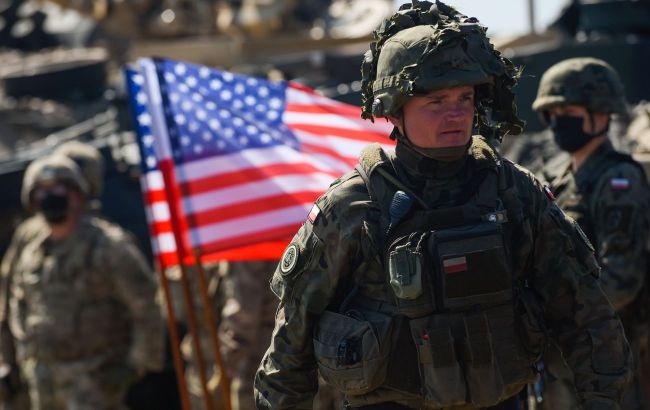 NATO military (Photo: Getty Images)
The administration of Donald Trump is preparing for a radical review of defense commitments to Europe. The US intends to significantly reduce the number of military forces it provides to the Alliance for responding to large-scale conflicts, reports Reuters.
As early as this week, likely on Friday at a meeting in Brussels, NATO allies will receive official notification, agency sources say. The US will reduce the pool of troops it usually keeps on standby in the event of a serious crisis. This concerns the so-called NATO Force Model, a special mechanism where each country determines its contribution to the defense of the Alliance.
The exact figures are kept secret, but Pentagon sources confirm that the reductions will be significant. Donald Trump has repeatedly demanded this because he wants Europeans to pay for their own security themselves.
The timeline for transitioning to the new troop levels is also unknown yet. The Pentagon has not announced a schedule. However, the team of Elbridge Colby, head of the Pentagon's policy office, is already working on a new strategy. Colby is the chief ideologue behind the revision of relations with NATO.
"Nuclear umbrella" will remain
Despite the reduction of conventional forces, the US is not withdrawing completely. Nuclear weapons will remain the main deterrent. Elbridge Colby has confirmed this publicly, and Washington will continue to protect allies from the nuclear threat. However, Europeans will largely have to fight on the ground with their own forces.
What are the relations between the US and NATO like now?
Currently, they could be described as cold, since in his second term Trump began criticizing allies for their small military contributions to the Alliance. After that, almost all countries increased defense spending to at least 2% of GDP.
Poland spends the most — 4.2%. Even the small Baltic countries have increased spending to between 3.4% and 4%. Interestingly, major powers like Canada and Spain have chosen to limit themselves to 2% of spending — on par with Albania or Belgium, which are territorially smaller.
In general, by 2035, Alliance countries are supposed to raise defense contributions to 5% of GDP. But Spain, as usual, has wriggled out of this as well and does not believe it has to pay 5%.
However, this is not enough for Trump, and he recently announced the withdrawal of some troops from Germany. This is more related to his poor relations with Chancellor Merz, though the timing is certainly telling.