Western alliance divided over Iran war as Trump blames allies

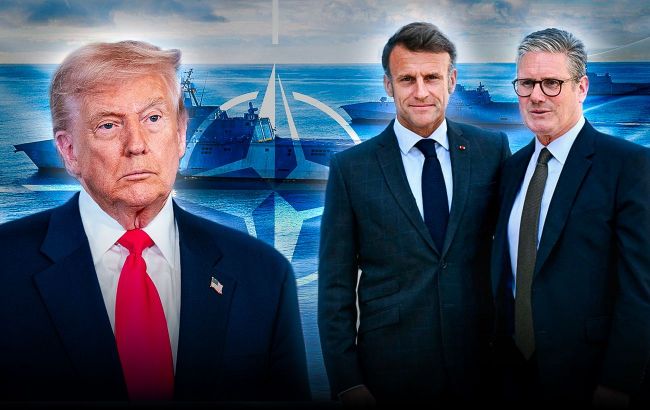 Donald Trump, Emmanuel Macron, and Keir Starmer (collage: RBC-Ukraine)
The US and Europe are once again at odds over the war in Iran. This time, it is not just Trump — European leaders are also speaking openly and bluntly.
RBC-Ukraine explains why and how the White House has clashed with Europe again, and how this reflects much deeper divisions within NATO.
Key points:
- European pushback: Leading EU countries (France, Germany, Poland) have, for the first time, presented a united front, refusing to become involved in a war whose objectives they consider unclear.
- Trump's logic: The White House accuses Europe of "unfairness," arguing that while the US helped Ukraine, it is not receiving support in Iran, ignoring its previous isolationist policies.
- Trust crisis: US President Donald Trump warned of a threat to NATO’s future due to European allies' refusal to assist in breaking Iran's blockade of the Strait of Hormuz.
- Strategic autonomy: The conflict once again raises questions about the EU's ability to exist without the US defense umbrella, although a full break is currently impossible due to technological dependence.
"If there's no response or if it's a negative response I think it will be very bad for the future of NATO," US President Donald Trump said in mid-March, commenting on the American request for European assistance in unblocking the Strait of Hormuz.
Four weeks have passed since the start of the US Epic Fury operation against Iran. The United States has effectively acknowledged its inability to handle the consequences alone, while American allies continue to reject attempts to involve them in the conflict.
Iranian crisis
On February 28, US aircraft began strikes on Iran. European countries showed little enthusiasm, limiting themselves to calls to "protect civilians" and "seek a peaceful solution." Many saw Europe's response as a display of habitual weakness and indecision.
This was particularly apparent against the backdrop of major American successes in the early days of the operation: Iranian air defense and air forces were actively destroyed, Supreme Leader Ali Khamenei was killed, along with a dozen other top Iranian officials.
It seemed that the United States was on the verge of triumphantly toppling another dictatorial regime. However, the conflict began to drag on and expand.
Iran launched "retaliatory strikes," targeting almost all of its Arab neighbors, and later declared a blockade of the Strait of Hormuz. The ripple effects of the US operation spread worldwide, driving up fuel prices. The United States proved unable to manage the situation alone, prompting President Trump to call on his allies for support.
Trump's appeal had its own logic. European countries are seriously affected by Iran's blockade of the Strait of Hormuz. Unlike the US, they do not have domestic sources of large-scale oil and gas production. European facilities have also been targeted by Iranian strikes.
However, European states refuse to become involved in this war in any form. This appears to be a conscious decision, reflecting a consensus across nearly all European capitals. It seems that Europeans have never been this categorical, and the reasons for their stance are deeply rooted.
How the US and Europe view the alliance
From the first days of his presidency, Donald Trump emphasized a new approach to US foreign policy. The United States now primarily pursues its own, rather than collective, interests. This principle applies even to its closest and oldest allies.
From Washington, there have been repeated statements that Europeans do not make a proportional contribution to maintaining the alliance. These statements were not entirely untrue, as most European countries, until recently, had relatively modest defense spending.
However, the current administration did not stop at calls to strengthen defense capabilities. In spring 2025, Trump launched a trade war against his European allies, shocked the world by inviting Vladimir Putin to the US, and eventually openly hinted at the annexation of Greenland — a territory of Denmark, a formal NATO ally.
The transatlantic alliance was being undermined by the actions of NATO's traditional leader — the United States. There are many reasons for this behavior, but the main one is the difference between the American and European visions of NATO's purpose.
President Donald Trump is generally skeptical about the value of alliances. They do not fit well with his vision of foreign policy as "business."
Vladyslav Faraponov, head of the "Institute of American Studies," believes that Trump never viewed NATO as an alliance potentially beneficial to the United States.
"They (the Trump administration) see NATO as an outdated instrument inherited by them, with which they can do nothing, because most Americans do not want to leave it," Faraponov told RBC-Ukraine.
This perspective largely symbolized Trump's first year in office, but now it seems to be showing cracks.
The expert notes that the precedent of unconditional support from US allies for overseas operations occurred only once — after the September 11, 2001, attacks. At that time, European countries joined the American coalition in Afghanistan, framing it as a joint mission against global terrorism and as an allied duty. However, the situation is different now.
"We helped with Ukraine, and they don’t help with Iran," The Washington Post quotes Trump as saying during a recent meeting with Irish Prime Minister Michael Martin.
The US president called this stance "very unfair," although, in essence, European actions simply reflect the principles currently guiding the United States.
The logic of "own benefit above alliances" has caught up with Trump, and he is evidently not pleased. The American president finds himself in a highly uncomfortable position — as a leader who now needs the help of his allies.
Meanwhile, Europe continues to deliberately distance itself from this war, both at the level of individual capitals and at the European leadership level in Brussels.
Politico reports the words of EU foreign policy chief Kaja Kallas, spoken at the March 16 session: "Europe is not part of this war. We have not started this war. And the political objectives are unclear," she said.
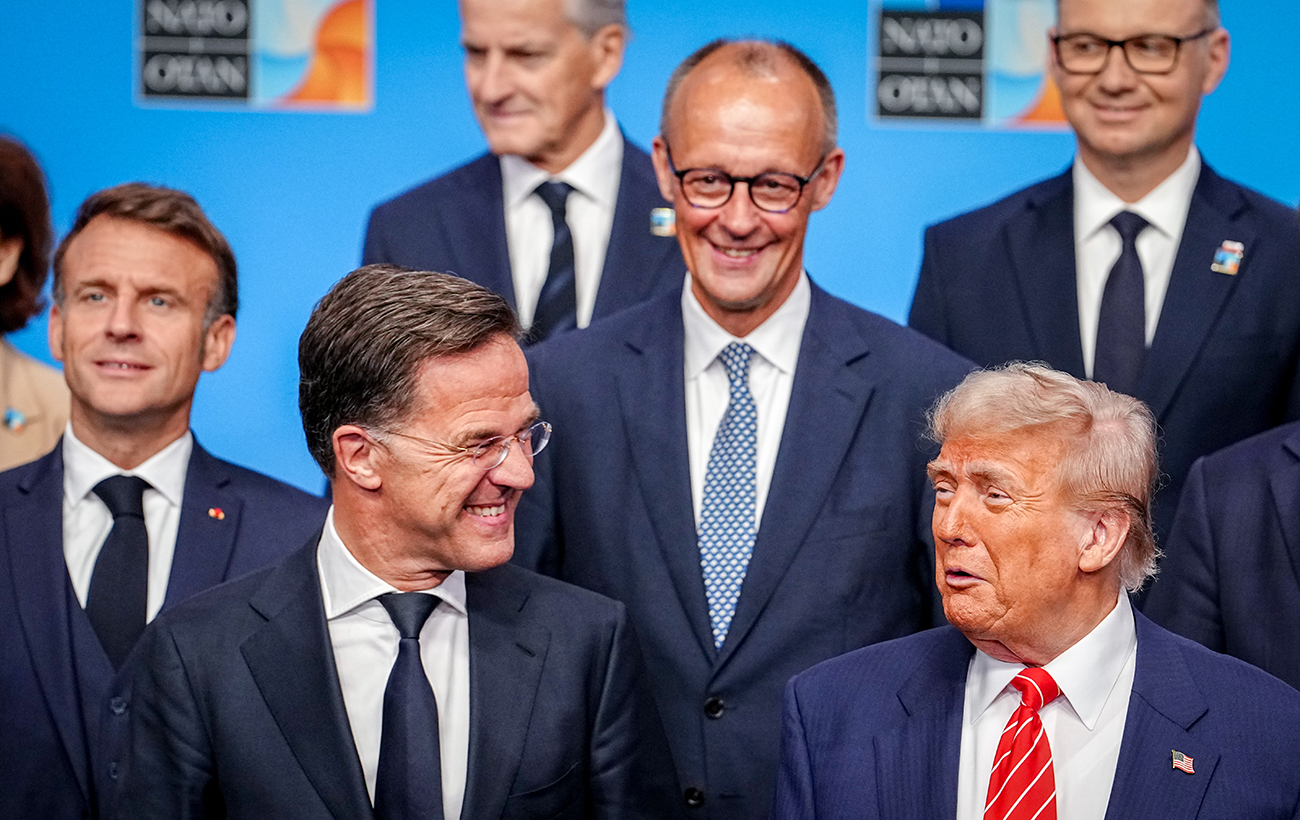
NATO Secretary General Mark Rutte and US President Donald Trump in the foreground during the Alliance summit in The Hague last year (photo: Getty Images)
Italy, France, Greece, and Spain delivered similar messages. UK Prime Minister Keir Starmer stated that the United Kingdom will not be drawn into a wider war.
Even countries like Poland, traditionally Washington's most steadfast transatlantic military partner, ruled out joining the American operation.
German Defense Minister Boris Pistorius even mocked Trump's calls in a somewhat ironic way. "What does Donald Trump expect from a handful of European frigates in the Strait of Hormuz that the mighty US Navy cannot achieve?" he asked rhetorically.
At the G7 foreign ministers' meeting, US Secretary of State Marco Rubio even publicly argued with European colleagues over the conflict involving Iran.
Trump asks, but without respect
The EU's unity in refusing to comply with Trump’s demands regarding the Strait of Hormuz marks the second collective "no" to the US president after the joint European stance defending Greenland in January this year.
For most of last year, Europeans were used to responding to crises imposed by Trump with forced placating smiles and repeated painstaking efforts to find and protect a fragile consensus. Yet it increasingly seems that patience has reached its limit.
European governments state that they do not want to enter a war they were not warned about, and where they do not see an endpoint. Public opinion also supports this stance. Reuters cites poll figures showing that 58% of Germans, 49% of Britons, and 68% of Spaniards oppose a war in Iran.
Another, somewhat less obvious reason is the US attitude toward Europe. For many months, Donald Trump threatened his European allies, claiming that America does not need them.
It even reached the point of outright disdain — when Trump said that the US military fought in Afghanistan alone. His words sparked widespread negative reactions at the time, as they devalued the European soldiers who fought and died in the war on terror.
Trump's harsh rhetoric finds little support even among politicians who initially approved the operation against Iran.
"I'm Keir Starmer's biggest critic, but the war of words coming from the White House is childish," recently said Kemi Badenoch, the current leader of the UK Conservative opposition.
Her party initially supported the operation against Iran, but Trump’s attacks on the British prime minister, citing allegedly weak British support for the Americans, caused irritation even among conservatives.
German Chancellor Friedrich Merz also initially approved the US operation, but now he actively defends Europe's non-intervention in this war. "NATO is a defensive alliance, an alliance for the defense of its territory," Politico quotes the German chancellor at a recent EU leaders' meeting.
"I therefore hope that we will treat each other with the necessary respect within the alliance," Merz added, apparently referring to Trump's aggressive statements.
Uncertain future of NATO
The US–European split is raising questions about the future of the transatlantic alliance, particularly for Europeans and their ability to exist without the United States.
The idea of so-called "strategic autonomy" for Europe is not new; its roots go back to the Cold War. However, it has gained renewed relevance now. The notion of European independence in security, economic, and energy matters has long been promoted by French President Emmanuel Macron. It also resonates with the ideas of Friedrich Merz and various European Union initiatives.
According to Viktoriya Vdovychenko, co-director of the "Future of Ukraine" program at the Cambridge University Center for Geopolitics, European states are likely to drift away from the US but will not be able to fully detach from it.
Europe remains dependent on certain American technologies, such as satellite systems. There are also "bottlenecks" in the defense industry that Europeans are currently unable to address. The expert also points to a certain political unreadiness.
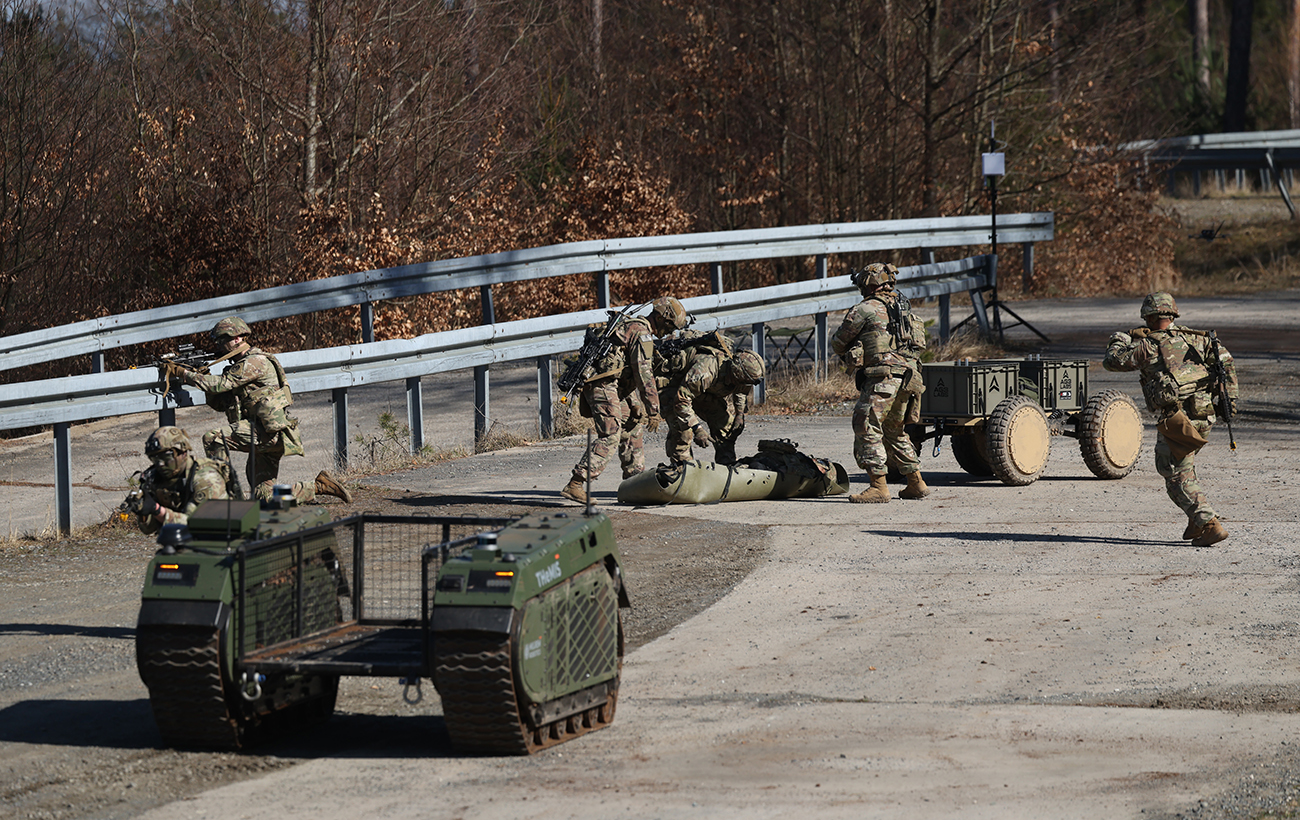
US military personnel during NATO exercises in Germany (photo: Getty Images)
"The problem is that no one likes the term 'strategic autonomy' because, to some extent, it implies the actual breakup of NATO," Vdovychenko told RBC-Ukraine. According to her, Europe understands the need for greater responsibility for its own defense, but all parties are interested in preserving NATO as a bloc.
Many hope to "outlast" Trump, waiting for a more constructive president to enter the White House. This could give the US–Europe alliance a chance for a second wind.
If this plan succeeds, NATO could eventually become a much stronger alliance. But the path to this brighter future runs through a prolonged period of crises and uncertainty.
Meanwhile, the Iran conflict is growing in significance, reactivating old tensions and further dividing international relations. Once again over the past year, threats and insults have come from Washington toward European capitals. Yet it seems fewer and fewer European leaders are willing to tolerate them calmly.
Europe undoubtedly needs the US to ensure its defense. However, the war in Iran has shown that the US also needs its allies. Mutual benefit is one of the simple principles that form strong alliances.
It seems, however, that the White House is unwilling to acknowledge this simple truth. Trump's words about a "very bad future for NATO" may remain just words — or they could result in reckless radical decisions with very long-term consequences. The American president has repeatedly demonstrated his willingness to take such actions.
But by constantly burning bridges with allies, Donald Trump may eventually find himself alone facing his enemies.
Quick Q&A:
– Why are the US asking for help now?
Despite the destruction of Iranian air defenses, the US fleet cannot guarantee the safety of shipping in the Strait of Hormuz alone. Trump is trying to share the burden of a war that is dragging on and affecting the global economy.
– Why does Trump accuse European allies of "unfairness"?
The US president believes that since Washington has long supported Europe's security (including in Ukraine), the EU should now reciprocate with direct participation in Operation Epic Fury. Trump directly links the Alliance's future to the willingness of allies to help the US break the Iranian blockade.
– How does Europe explain its refusal?
EU leaders emphasize that NATO is a defensive alliance, not a tool for foreign interventions. Additionally, European capitals are irritated by Trump's previous threats regarding Greenland and trade wars.
– What are Europe's expectations?
Alongside efforts to strengthen their autonomy from the US, Europeans hope to "outlast" Trump and wait for a more constructively minded president to enter the White House.