Trump pressured Europe with threat to stop weapons supplies to Ukraine, FT says

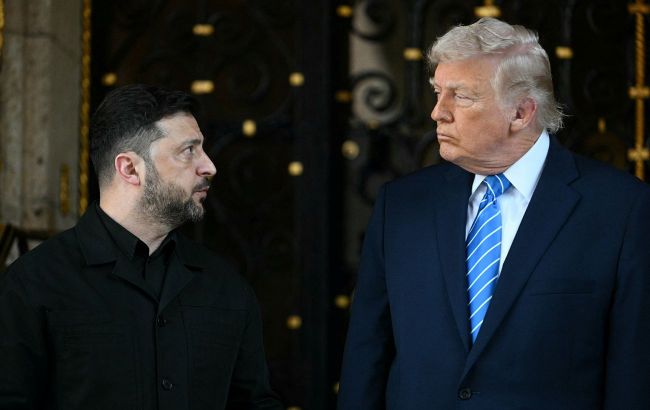 Photo: Ukrainian President Volodymyr Zelenskyy and US President Donald Trump (Getty Images)
US President Donald Trump threatened to halt weapons supplies to Ukraine if European allies did not join a coalition to reopen the Strait of Hormuz, the Financial Times reports.
How Trump pressured allies
After the United States and Israel carried out strikes on Iran in late February, Tehran effectively closed the Strait of Hormuz — a strategic route through which about one-fifth of global oil usually passes.
The Trump administration called on NATO navies to help restore shipping, but European capitals refused, calling the conflict "not our war."
In response, Trump threatened to cut off weapons supplies to Ukraine through the PURL mechanism (Priority Ukraine Requirements List) — a NATO program funded by European countries. As three officials familiar with the discussions told the FT, this forced allies to reconsider their position.
Role of the NATO chief and urgent statement
NATO Secretary General Mark Rutte played a key role in resolving the crisis. According to the sources, Rutte held several phone calls with Trump and US Secretary of State Marco Rubio, and also separately urged France, Germany, and the United Kingdom to make concessions.
"It was Rutte who insisted on the joint statement because Trump had threatened to withdraw from PURL and from Ukraine in general," one official said.
As a result, on March 19, a group of countries, including key NATO members, urgently issued a joint statement expressing their "readiness to contribute to appropriate efforts to ensure safe passage through the Strait of Hormuz." The statement was prepared in haste, so other countries joined it "afterwards."
White House reaction and further risks
Deputy White House Press Secretary Anna Kelly confirmed that Trump "made his disappointment with NATO and other allies clear."
"We’re there to protect NATO, to protect them from Russia. But they’re not there to protect us. It’s ridiculous," the President said during a recent cabinet meeting.
On Wednesday, Trump told Reuters that in an evening address to the nation, he plans to say he is "absolutely" considering the possibility of the United States leaving NATO.
Impact on aid to Ukraine
For now, US weapons supplies to Ukraine through the PURL mechanism have not been affected. Marco Rubio said on Friday that "nothing yet has been diverted." However, he did not rule out that in the future the United States could divert weapons intended for Ukraine to replenish its own stockpiles depleted by the war with Iran:
"If we need something for America and it’s American, we’re going to keep it for America first," he stressed.
Earlier, Ukrainian President Volodymyr Zelenskyy reported a positive conversation with the representatives of Donald Trump’s administration — Steve Witkoff and Jared Kushner.
Senator Lindsey Graham and NATO Secretary General Mark Rutte also took part in the talks.
According to Zelenskyy, Ukraine is preparing an updated document on security guarantees aimed at ensuring reliable protection against renewed Russian aggression and creating prospects for post-war reconstruction.
However, the prospects for a diplomatic settlement remain unclear. According to Bloomberg, the war in Ukraine could drag on for another one to two years due to the lack of a breakthrough both on the battlefield and in negotiations.
The US and Israeli strikes on Iran have absorbed much of Trump’s attention, while talks between Kyiv and Moscow have reached a deadlock.
The situation is further complicated by Washington’s stance on NATO. Trump has said he is seriously considering withdrawing the United States from the alliance, calling it a paper tiger.
Although a formal exit is difficult, the administration could undermine NATO’s operations, increasing uncertainty for European allies and, in particular, for Ukraine.