SIPRI sounds the alarm: Nine countries spark new nuclear arms race

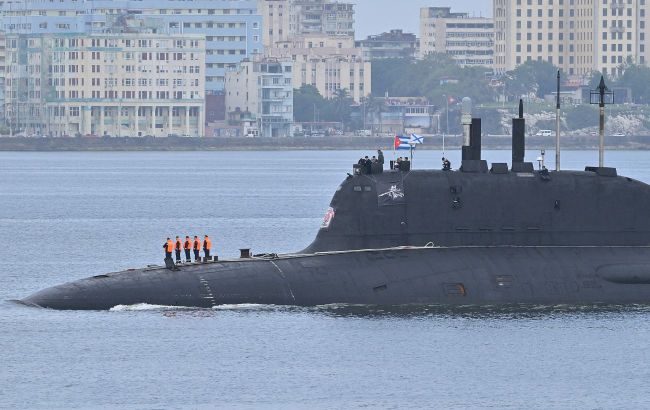 Photo: The Russian nuclear submarine Kazan (Getty Images)
The nine countries that possess nuclear weapons continued to modernize and expand their arsenals throughout 2025, according to the annual report of the Stockholm International Peace Research Institute (SIPRI).
How many nuclear weapons are there in the world?
As of January 2026, there were 12,187 nuclear warheads worldwide. Of these, 9,745 were in military stockpiles, meaning they were available for potential use.
A total of 4,012 warheads were deployed on missiles and aircraft. Between 2,100 and 2,200 of them were kept on ballistic missiles at a high state of readiness around the clock.
Who controls most of the world's nuclear weapons?
Russia and the United States together account for about 83% of the world's nuclear arsenal. Although their share is gradually declining, other countries are rapidly expanding their capabilities.
The nine nuclear-armed states are:
- United States
- Russia
- United Kingdom
- France
- China
- India
- Pakistan
- North Korea
- Israel
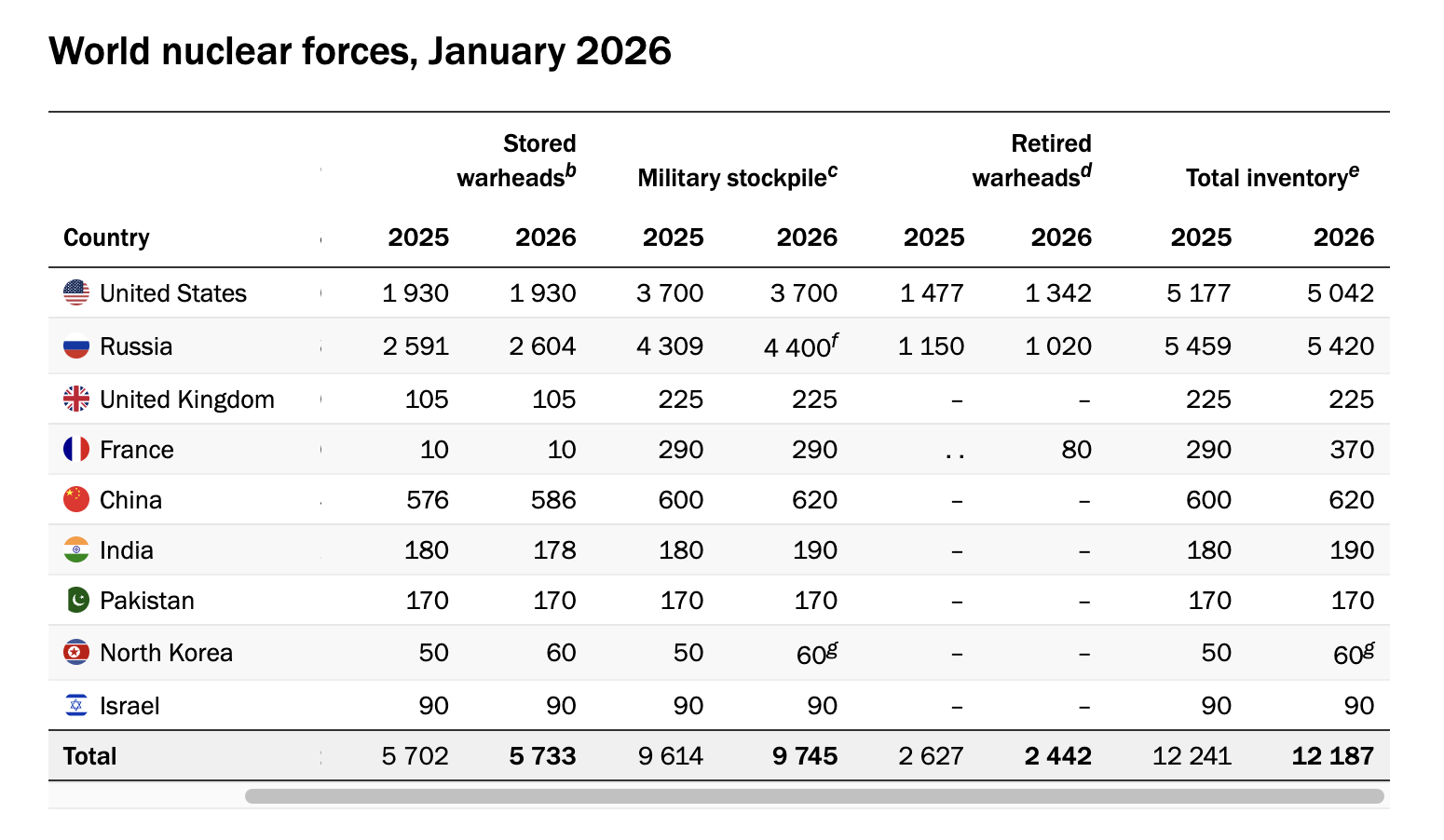 Photo: Global nuclear forces (screenshot from the SIPRI report)
China sees the fastest arsenal expansion
China's nuclear arsenal has already reached approximately 620 warheads. Beijing is building new missile silo fields and expanding its missile-launch infrastructure.
According to analysts, China could surpass 1,000 warheads by 2030.
Europe rethinks its nuclear strategy
France has announced plans to strengthen its nuclear capabilities. The United Kingdom is restoring an airborne nuclear role by acquiring F-35A fighter jets.
Within the European Union, discussions are increasingly focused on expanding NATO's nuclear deterrence umbrella, with the participation of Paris and London.
Russia modernizes its nuclear weapons, but not without challenges
SIPRI places a special focus on Russia, which continues to modernize its strategic forces despite sanctions pressure and the financial burden of the war in Ukraine.
In 2025, a test of Russia's Sarmat missile failed. At the same time, the Burevestnik cruise missile reportedly completed a successful test flight with a range of more than 14,000 kilometers after previous setbacks.
SIPRI also notes that Russia has begun constructing an advanced operational base in Belarus for its dual-capable Oreshnik intermediate-range ballistic missiles.
Oreshnik missiles equipped with conventional warheads have been used against Ukraine, most recently in May of this year.
Experts issue a warning
SIPRI Director Karim Haggag warns that the combination of emerging technologies, geopolitical tensions, and growing mistrust among states is creating "global disorder and insecurity."
Another major risk is the expiration of the New START treaty in 2026, one of the key nuclear arms control instruments between Russia and the US.
Recently, Bloomberg reported that North Korean leader Kim Jong Un visited a new nuclear materials production facility and called for further expansion of the country's nuclear capabilities.
NATO intelligence has monitored activities by Russia's Northern Fleet that may indicate Moscow is attempting to deploy nuclear missiles on the seabed.