NATO believes Russia may be developing underwater nuclear missiles

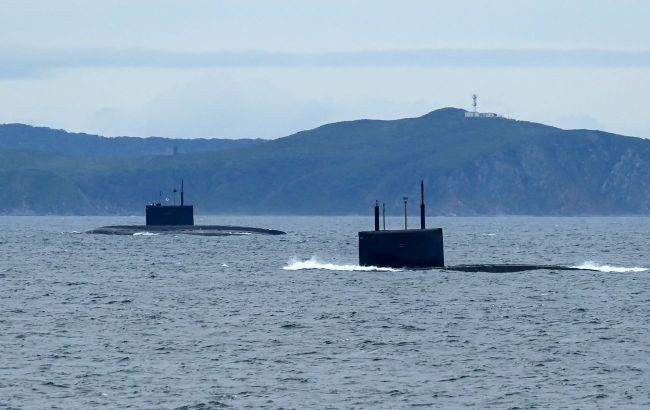 Photo: The missile tests may have taken place several years ago (Getty Images)
NATO intelligence has tracked activities by Russia’s Northern Fleet that may indicate Moscow is attempting to deploy nuclear missiles on the seabed, according to a report by Tagesschau, which draws on an investigation by two German television stations, WDR and NDR.
According to the program, journalists spent several months studying a secret project codenamed Skif. To understand the situation, they analyzed satellite imagery, studied scientific databases and historical documents from Russia, and spoke with military personnel and experts. In addition, the investigative journalists relied on NATO intelligence data.
"Russia may have been working for many years on deploying ballistic missiles at sea in a manner unknown until now... These launchers will be virtually impossible to detect and destroy," the investigation states.
Nuclear missiles
According to NATO intelligence, the Skif missile was developed specifically for a Russian military project. It is a modification of the Sineva missile, which is in service on Russian submarines.
The report states that these new missiles can be launched from the seabed and have a range of several thousand kilometers. Moreover, the first tests took place several years ago.
The missiles in question are capable of carrying nuclear warheads and can be deployed in specially designed silos or containers. They can be submerged to a depth of several hundred meters, and there is speculation that they can remain on the seabed for extended periods and, if necessary, be launched remotely.
According to NATO sources, ships such as the Zvezdochka and the Sarov submarine could be used to install the missile silos. They are located in the city of Severodvinsk on the coast of the White Sea.
Media reports note that the United States, the Soviet Union, and approximately 80 other countries signed a treaty in 1971 banning the deployment of nuclear weapons on the seabed. However, the catch is that the agreement applies only to international waters. In other words, the treaty does not prohibit the deployment of such systems in a country’s own territorial waters.
Other Russian actions
In October 2025, Kremlin leader Vladimir Putin visited one of the command posts of the combined arms group. The main topic of the visit was a report on the allegedly successful tests of the Burevestnik nuclear missile.
In November of that same year, Putin stated that Russia would begin preparations for full-scale nuclear tests. At the same time, Russian Defense Minister Andrei Belousov said he considered such preparations to be appropriate.