Russia's Kh-101 missiles become deadlier, debris analysis shows

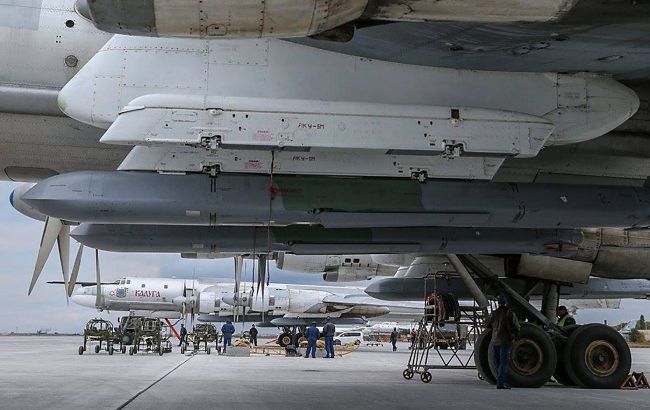 Photo: Russian Kh-101 missiles have been fitted with new warheads (Russian media)
Russia rolls out dozens of Kh-101 cruise missiles from its production lines every month, and they are used to attack Ukraine almost immediately, according to Colonel Oleksandr Zaruba, chief research fellow at the State Scientific Research Institute of Armament and Military Equipment Testing and Certification.
Straight off assembly line into combat
Russia produces between 40 and 50 Kh-101 cruise missiles per month. And it deploys them almost immediately. An analysis of recent strikes has shown that the attacks involved missiles manufactured just a few weeks ago.
How Kh-101 missile changed
The Kh-101 is not a new weapon, but it has undergone significant modernization. The missile has been substantially improved to make it harder to detect and destroy.
What exactly has changed:
- Updated body coating that absorbs radio waves—this makes the missile harder to spot and more difficult to shoot down
- Onboard protection system that activates automatically when the missile enters the range of air defense radars
- Missile launches decoys—both thermal targets and dipole reflectors—to fool Russian defense systems
- Redundant guidance system—in case one is jammed by electronic warfare measures.
"The weight of the warheads has increased from 450 kg to about 800 kg. The second warhead can be dropped or detonated at an altitude of 100–200 meters from the target. Production is estimated at 40–50 units per month. Therefore, given the recent strikes, it can be said that the missiles currently being used were manufactured just a few weeks ago," Zaruba says.
This was achieved by reducing the volume of the fuel tank—the freed-up space was used to increase the warhead’s payload. A shift from civilian chips to specialized microelectronics, which are procured through Asian countries, has also been observed.
Where do microelectronics come from
According to Zaruba, the vast majority of critical components are manufactured abroad.
"Up to 80–90% of critical microelectronics are produced by companies in the United States, Taiwan, Japan, Switzerland, the Netherlands, and Germany. These are primarily dual-use components. They can be used in the civilian sector or in the military sector. And they are procured through a network of intermediaries," Zaruba states.
In addition to missiles, Russia is increasing its use of modernized aerial bombs. Soviet models are used as a basis, which are converted into guided aerial bombs with a UMPC module. The use of cluster bombs has also been documented.
At the same time, an intermediate type of munition is being developed, a hybrid between a guided aerial bomb and a drone. Overall, the Russian military-industrial complex is significantly ramping up the production of air-attack weapons.
On the night of June 13, Russia attacked Ukraine with 118 strike drones of various types. Air defense forces shot down 110 of them, but hits were recorded on three targets.
The ISW explained the logic behind Russia’s threats to launch an Oreshnik missile strike. Analysts believe this stems from the Kremlin leader’s image problems following a series of setbacks in 2026.