Putin's Oreshnik missile threats driven by fear — ISW

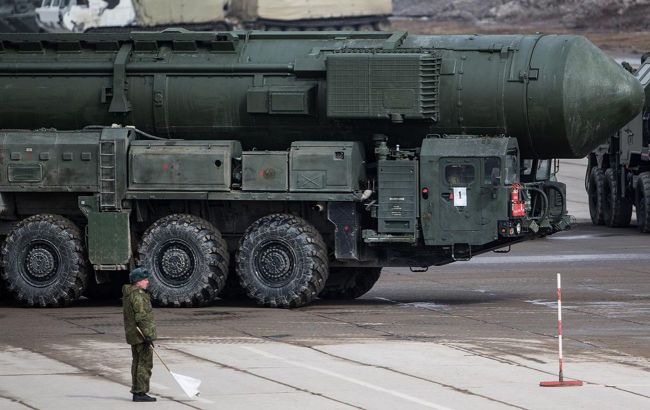 Photo: ISW explains Putin's objective behind this strike (Russian media)
Behind Russia’s threat to launch Oreshnik missiles at Ukraine lies a specific logic on the part of the Kremlin, according to the Institute for the Study of War (ISW).
Show of force after setbacks
In 2026, Russia suffered a series of image-damaging setbacks. Ukraine’s strike campaign against St. Petersburg and other Russian cities proved that Kremlin leader Vladimir Putin cannot reliably defend his own country. The scandal surrounding the Victory Day parade on May 9 was the culmination. Putin had to ask Zelenskyy for permission to hold the event in Moscow.
Against this backdrop, the Kremlin sharply intensified its long-range strikes on Ukraine. The possible launch of the Oreshnik is part of the same logic: to demonstrate strength where it has already been called into question.
Why specifically after Russia Day
According to the ISW, the decision to launch the Oreshnik again is an attempt to demonstrate power immediately after the June 12 Russia Day celebration.
At a meeting with soldiers, Putin spoke about the army’s technological progress, praising FPV drones, electronic warfare systems, and artificial intelligence. But at the same time, he was forced to admit: advances on the front are not happening as quickly as we would like. Not a word was said about Ukrainian counterattacks in the Zaporizhzhia and Dnipropetrovsk regions.
Launch threat
Russia has already launched the Oreshnik at Ukraine at least three times, twice in 2026. Now the Ukrainian Air Force has announced a high probability of a new launch from the Kapustin Yar test site in the Astrakhan region within the next 24 hours.
The US has shared information with Ukraine about the threat of an Oreshnik strike, a Ukrainian government source told RBC-Ukraine. There was no official confirmation from Washington at that time.
Meanwhile, US Secretary of State Marco Rubio congratulated Russians on Russia Day amid the missile threat, stating Washington’s commitment to a peaceful resolution of the conflict.