PAC-3 shortage hits Patriot: Can Ukrainian missile replace them?


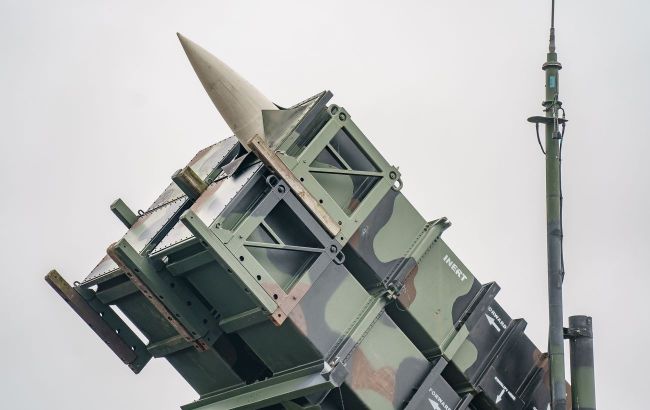 Photo: American PAC-3 missiles are in short supply (Getty Images)
Lockheed Martin has warned customers about supply issues with PAC-3 missiles for the Patriot system, which are critically needed by Ukraine as well. Meanwhile, successful tests of a Ukrainian anti-ballistic missile took place recently.
RBC-Ukraine looked into why production of the American PAC-3 missiles is limited and whether a Ukrainian missile could become an alternative to the Patriot.
Key points:
- Global PAC-3 shortage: Lockheed Martin cannot provide precise delivery timelines for Patriot PAC-3 missiles. The world was not prepared for large-scale warfare, and previous production volumes were too low.
- Ukrainian alternative: Fire Point is conducting tests of the FP-7.x anti-aircraft missile. It is being considered a much cheaper alternative to PAC-3 and is expected to become part of the pan-European Freya air defense system.
- Critical situation for Ukraine: Ukraine’s air defense is chronically short of American interceptors. Russia launches significantly more ballistic missiles than Ukraine receives PAC-3s.
-
Timeline for the new missile: Serial production of the FP-7.x is planned for August this year, with adoption into service expected in 2027. Full deployment of the system will require political will in Europe.
What is the problem with PAC-3 production?
Today, Lockheed Martin finds itself in a situation where it cannot provide customers with specific delivery timelines for PAC-3 missiles for the Patriot system. According to Brian Dunn, Vice President of the company’s Missile Systems division, new production capacity will clearly make it possible to meet the needs of many users in a shorter timeframe.
But how did the company end up in this situation? According to aviation expert Kostiantyn Kryvolap, the reason lies in the fact that the world was not prepared for the kind of conflicts taking place today.
In 2017, Lockheed Martin and Raytheon jointly produced about 150 missiles per year at a plant in Arizona. In 2018–2019, production increased to 200–250 missiles. By 2022, output had reached around 500 missiles. Today, production stands at approximately 650 missiles per year.
"Why this number? Because customers did not need large quantities of missiles, it was enough to simply equip existing systems. So they stocked a limited number of missiles and believed they were safe. 'Who would strike you if you have anti-ballistic weapons?' That was the thinking," Kryvolap explained in a comment to RBC-Ukraine.
Some of the largest buyers of PAC-3 missiles were Gulf countries, which came under Iranian strikes after the start of the US operation. According to Kryvolap, Saudi Arabia alone had about 750 missiles in its inventory.
Over the entire production history of PAC-3 missiles, Lockheed Martin and Raytheon have manufactured approximately 4,000–4,500 units.
"In other words, the production of these missiles was not developed on a large scale. The number of buyers and the level of use were relatively limited, and nothing indicated such a serious threat environment," the expert added.
He also noted that the United States had long refused to grant Europe a license to produce PAC-3 missiles. In particular, Germany had requested such a license; it already produces other Patriot missiles (PAC-2), which can intercept cruise missiles and aircraft. Instead, the US offered to provide Europe with its own protection against ballistic threats.
According to the expert, this approach allowed the US to maintain global monopoly control and prevent Europe from developing its own effective anti-ballistic capabilities.
PAC-3 missiles and Ukraine
American Patriot systems have become Ukraine’s only shield against Russian ballistic missiles. However, Kryvolap noted that they are critically insufficient for Ukraine’s air defense. He said that last year alone, the enemy launched around 650 Iskander ballistic missiles — more than the number of PAC-3 interceptors Ukraine received.
"In other words, we would still not have enough of these missiles. And this shortage is not a new issue — it has already become chronic," he said.
What is known about PAC-3 missiles:
- Ballistic missile interception: Designed to destroy Iskander, Kinzhal, and Zircon missiles using a direct hit-to-kill mechanism.
- High maneuverability: Reaches speeds of up to 6,170 km/h (with a mass of 218 kg) and features an active homing seeker, enabling autonomous interception of fast targets.
- Increased payload: One Patriot launcher can carry up to 16 PAC-3 missiles (compared to only 4 PAC-2 missiles).
- Range: The CRI variant can engage targets at distances of up to 45 km and altitudes of up to 12 km (the MSE version has even greater performance).
Can PAC-3 missiles be replaced?
Recently, the Ukrainian company Fire Point announced successful flight tests of its FP-7.x surface-to-air missile. According to the company, the missile is intended to become a low-cost alternative to the Patriot PAC-3 interceptor.
The Ukrainian missile is expected to become part of a pan-European air defense system called Freya. In addition to it, the system will include other components produced by European companies, such as radars, target detection and tracking systems, and command-and-control elements.
According to Kryvolap, Europe is capable of assembling an air defense system no worse than the American Patriot. However, Europe has so far lacked an effective indigenous anti-ballistic missile. In his view, the FP-7.x missile could become that missing final piece.
What is known about the FP-7.x missile:
- Main characteristics: Built from composite materials, it is 7.25 meters long and reaches speeds of 1,500–2,000 m/s.
- Range and guidance: It can engage targets at distances of up to 200 km and carries a warhead of up to 150 kg. It is equipped with a semi-active infrared homing seeker (being developed in cooperation with Germany’s Diehl Defence).
- Lower cost: The price of one interceptor is around USD 700,000 (compared to USD 3.8 million for PAC-3).
- Timeline: Serial production is planned for August this year, while adoption into service is expected in 2027.
According to Kryvolap, during June–July, Fire Point is expected to conduct flight tests of the FP-7 missile, and after receiving infrared homing heads from Germany’s Diehl Defense, testing of the FP-7.x version will begin.
He added that the entire Freya air defense system could be assembled by the end of the year in order to begin initial trials. The key factor, the expert emphasizes, is that Europe must find the political will to make it happen.
Read also: