Russia prepares new information operations to push Ukraine toward surrender

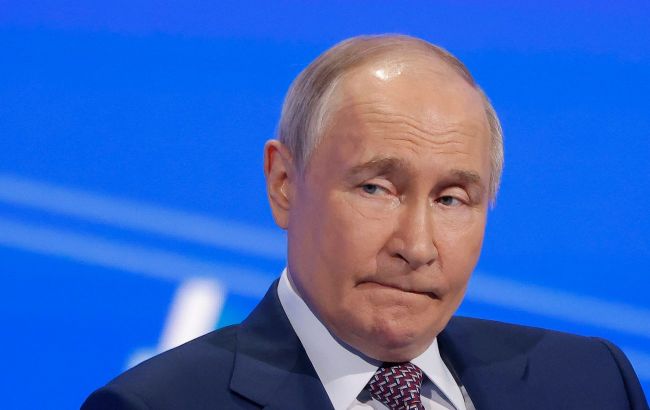 Russian President Vladimir Putin (photo: Getty Images)
This winter, Russia will spend significant resources on cognitive operations against Ukraine. The goal is to convince Ukrainian society of the inevitability of defeat and the necessity of capitulation, according to Andriy Kovalenko, head of the Center for Countering Disinformation of Ukraine's National Security and Defense Council.
"The main line of the Russians will be that they will try to convince Ukrainian society of the inevitability of defeat, the necessity of capitulation, and they will also promote division between the military, the authorities, and civilians," Kovalenko said.
According to him, the peak of enemy activity is expected during the winter. This will also be done to influence the diplomatic process.
The campaign will take place against the backdrop of Russia's inability to break through the front and the absence of any strategic results in the war.
Talks on ending the war and Putin's threats
Earlier, the Russian President Vladimir Putin stated that Russia "by any means" will seize Donbas as well as the southern and eastern regions of Ukraine.
He also accused Kyiv once again of prolonging the war. According to Putin, Russia had proposed that Ukraine "withdraw its troops from Donbas and not start military actions," but "Kyiv chose to fight."
The Russian president also stated that he had rejected part of the US peace proposals regarding Ukraine, and that the American peace plan now contains 27 points divided into four packages.
This statement came after US special envoy Steve Witkoff and US President's son-in-law Jared Kushner arrived in Moscow on December 2 to discuss the revised document with him.
After the meeting, Putin's aide, Yuri Ushakov, stated that no compromise had yet been reached, but the sides were ready to continue working.
At the same time, Ushakov's wording was interpreted as a rejection of the US peace plan by Putin. However, Kremlin spokesman Dmitry Peskov claimed the next day that this was supposedly not the case.