Russia could build Starlink rival to control drones within six months

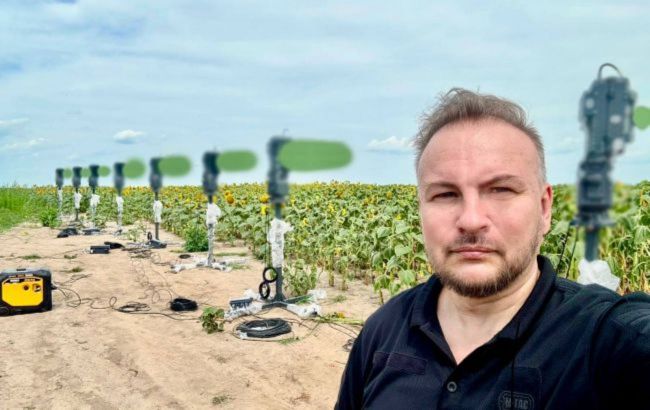 Ukrainian presidential adviser Serhii Beskrestnov (photo: t.me/serhii_flash)
Russia is deploying the Rassvet satellite network, which could enable real-time control of Shahed drones, other unmanned aerial vehicles, and low-cost missiles. Full coverage over Ukraine could be available in about six months, according to Serhii "Flash" Beskrestnov, a defense-technology adviser to Ukrainian President Volodymyr Zelenskyy.
Why Rassvet poses a threat
Beskrestnov called the Russian network the number one threat among all technological challenges posed by Russia, not only to Ukraine but also to Europe.
His estimates say Russia is learning to control the following in real time via satellite:
-
Shahed-type strike drones
-
Reconnaissance drones
-
Low-cost Bandеrol and Dan-M missiles.
Operators would then be able to guide drones and missiles directly, rendering the electronic warfare network Ukraine has built across the country ineffective.
"They will be able to attack the whole country in real time, and do it very precisely. This really will be a big catastrophe for everyone," Beskrestnov warned.
How much time Ukraine has
Russia does not yet have full coverage over Ukraine. When satellites pass over the country, they provide temporary connectivity for 30–40 minutes. According to the adviser, full coverage could become available in about six months.
Ukraine is preparing countermeasures, including sanctions. But the task is difficult: Russian engineers have tested jamming against operational Starlink systems, while Ukraine must develop defenses against a system that is not yet fully operational.
"By the time Russia starts using it to attack our infrastructure and us, we must already have developed the means, produced them in large numbers and deployed them for protection," Beskrestnov emphasized.
In early October, Russian company Bureau 1440 showed three terminals for Rassvet. These devices could control drones over Ukraine.
Russia launched the first 16 production satellites in the constellation into orbit in March. In late May, Beskrestnov said the satellites were operating in test mode, with no signs of military use at the time. He estimated that at least 200–250 satellites are needed for stable connectivity.
The second production launch took place on July 19. According to independent databases, the launch placed another 16 satellites into orbit. Moscow has promised that it will need more than 250 satellites for round-the-clock coverage.
At the same time, Russia is seeking civilian applications for Rassvet. Bureau 1440 and Russian Railways are preparing to provide satellite connectivity on 135 high-speed Sapsan and Lastochka trains. Another joint project with MegaFon combines a satellite terminal with a portable base station.