Experts weigh in on risks as Russia builds its own Starlink rival

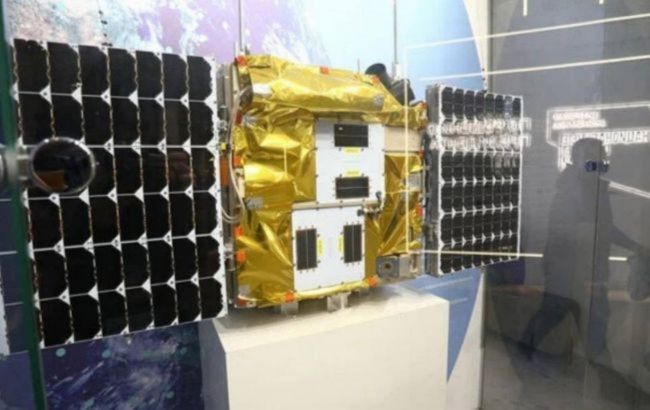 Russia tries to deploy its own satellite system (photo: @serhii_flash)
Russia deploys its own low-orbit satellite high-speed internet system — a Starlink-like network called Bureau 1440. The first 16 satellites, dubbed Rassvet, are already in orbit and are operating in test mode, reports electronic warfare specialist Serhii "Flash" Beskrestnov.
The expert explains that Moscow fully understands the importance of high-speed data transmission via low-orbit satellites, making the development of such a system only a matter of time.
The current status of the project is as follows: 16 Rassvet satellites are already in orbit, but stable communications would require at least 200–250 satellites.
Plans call for launching 300 satellites, followed by another 700. Serhii "Flash" notes that actual timelines and figures are constantly changing.
.jpg)
Russia endeavors to create its own Starlink-like network (photo: @serhii_flash)
.jpg)
Russia endeavors to create its own Starlink-like network (photo: @serhii_flash)
Are satellites dangerous right now?
In theory — yes, but only in a limited way. A single satellite passes over Ukrainian territory roughly once per day and can provide high-speed data transmission for about 6–10 minutes.
In a hypothetical scenario, Russia could equip Shahed drones with satellite terminals and plan an attack specifically during a satellite pass. However, from an operational standpoint, this would be extremely difficult.
"Flash" stresses that until there is a sufficient number of satellites in orbit to ensure stable connectivity, full-scale military use of the Rassvet system is not possible. If such use were to begin, it would likely be detected through satellite traffic analysis, intelligence data, or captured equipment.
Why Ukraine does not strike this project
The expert explains that the project currently shows no signs or confirmed evidence of military use, which is why no countermeasures have been taken against it.
He also dismisses the idea of Ukrainian drone strikes on Russian spaceports such as Plesetsk, Vostochny, or Baikonur, calling it "nonsense."
Earlier reports indicated that Russia tries to build its own Starlink-like system, but due to technical issues and a lack of necessary satellite infrastructure, it has not been able to provide an effective alternative. As a result, it continues to rely on smuggled Starlink terminals through third countries.
In January 2026, the European Union began deploying its own IRIS2 satellite network, valued at €10.6 billion, which is intended to serve as an alternative to Starlink and reduce Europe's dependence on the United States.