Russia unveils Rassvet terminals that could help control drones over Ukraine

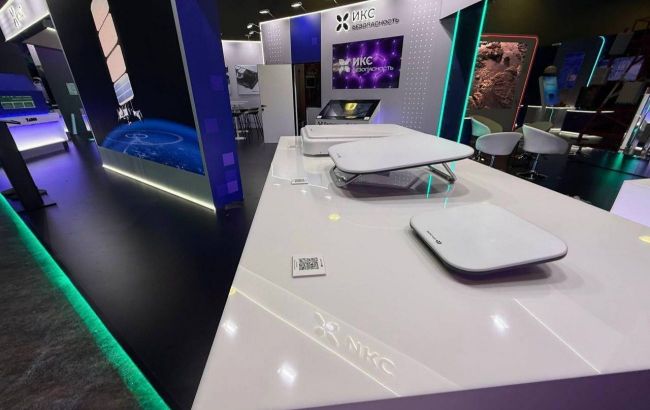 Photo: Rassvet terminal (Bureau 1440)
Russian company Bureau 1440 has presented three terminals for the Rassvet satellite system — analogues of Starlink.
What terminals were presented
The Russian developer of the Starlink analogue said it had developed three subscriber terminals.
The first presented was the 1440.ULTRA — a mass-produced device with maximum performance and data transmission speeds of up to 700 Mbps. As noted, it is designed to connect industrial enterprises, remote areas, infrastructure facilities, and equipment to satellite communications.
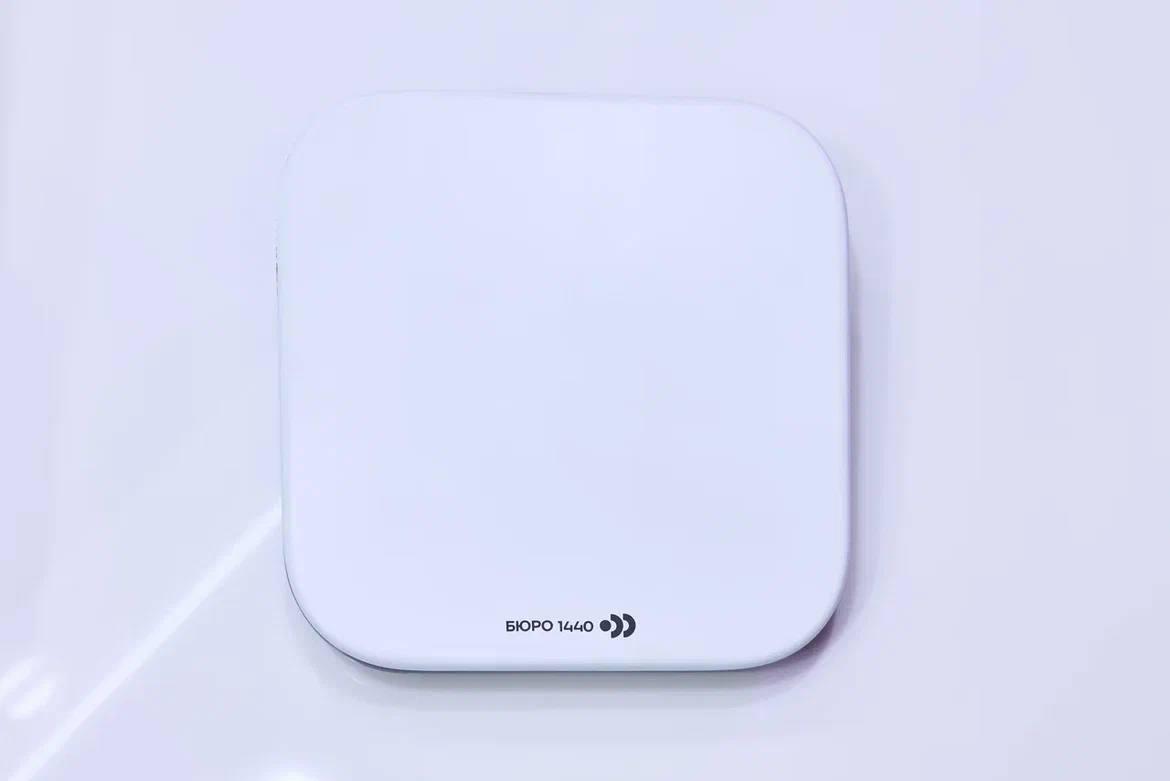
Photo: Rassvet terminal (Bureau 1440)
The second terminal, 1440.ZEMLYA, was developed for railway transport. According to the company from the aggressor state, it will ensure the operation of the service on rolling stock at speeds of up to 400 km/h.
The third, 1440.MINI, is a Starlink Mini analogue — a concept for a compact device with a target data transmission speed of about 100 Mbps. It is designed to connect a small number of users and can be used as a portable communications device for rescue teams, emergency service crews, and in other mobile-use scenarios.
In terms of purpose, specifications, and dimensions, the 1440.ULTRA is an analogue of the standard Starlink Standard terminal, while the 1440.ZEMLYA is an analogue of Starlink Performance. The 1440.MINI corresponds to Starlink Mini in concept, but currently exists only as a concept.
Given their characteristics, similar terminals could potentially be installed on Russian attack drones for strikes against Ukraine.
Bureau 1440 is currently deploying the Rassvet low-Earth-orbit satellite communications system.
In March 2026, the company launched the first 16 satellites of the target constellation into orbit, and in July, another 16 spacecraft. According to the company, the system uses 5G NTN technology for communications between satellites and ground terminals, while the satellites use laser communications with each other. During testing, the company claimed data transmission between spacecraft at distances of up to 1,000 km at speeds of up to 10 Gbps.
As RBC-Ukraine reported, the launch of 16 satellites on March 23 was delayed by approximately three months due to production problems. Under the Russian federal project, 156 spacecraft are to be deployed in 2026, 292 in 2027, which will allow a full commercial service to be launched, and 318 in 2028.
In March, it was reported that Russia had launched into orbit and taken control of the first 16 serial satellites of the Rassvet constellation, which is positioned as its own Starlink analogue. At the end of May, presidential adviser Serhii Flash Beskrestnov reported that these spacecraft were operating in test mode and that at least 200–250 satellites would be needed for stable communications. According to him, at that time the project showed no signs or evidence of military use.
The second serial launch took place on July 19: according to independent databases, the batch consisted of 16 spacecraft. For the declared round-the-clock coverage, as RBC-Ukraine reported, more than 250 satellites are required. At the same time, Bureau 1440 and Russian Railways are preparing to integrate satellite communications into 135 high-speed Sapsan and Lastochka trains, while another project by MegaFon and Bureau 1440 combines a satellite terminal with a portable 4G and 5G base station.