Russia burns billions on refinery repairs, Ukrainian strikes cut revenues — ISW

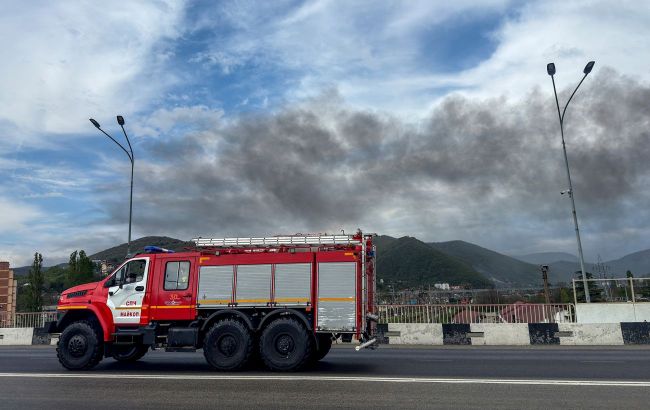 Photo: Ukraine is striking ports and factories, and Russia can't profit from high oil prices (Getty Images)
The conflict in Iran drove up global oil prices, and Russia formally received twice as much money from the sale of raw materials. But the actual benefit turned out to be minimal, according to ISW.
The numbers on paper are one thing, but the budget is another
In April 2026, Russia collected nearly 917 billion rubles (approximately $12 billion) in oil production taxes. By comparison, in March it was only 443 billion rubles (about $6 billion). That is, formally, twice as much.
But at the same time, the government allocated nearly 350 billion rubles (about $4.68 billion) in subsidies to oil companies. This money was allocated to keep gasoline prices from rising in Russia and to repair damaged oil refineries.
As a result, actual revenue from oil and gas in April amounted to about 856 billion rubles ($11.4 billion), against a forecast of 835 billion rubles ($11.2 billion). The excess over the target is negligible.
Strikes on refineries are reducing exports
Russia’s key oil ports, Ust-Luga and Primorsk in the Leningrad region, are currently not operating at full capacity. Because of this, Moscow cannot fully ramp up exports, even as market prices rise.
An anonymous source in the Russian Ministry of Finance told Vlast / Faridaily that oil and gas revenues are expected to rise in May 2026. Finance Minister Anton Siluanov previously announced an expected additional 200 billion rubles (about $2.7 billion)—and these remarks specifically referred to the May forecasts.
Ukraine continues to strike at oil infrastructure deep within Russian territory. Strikes on ports and refining facilities limit the Kremlin’s ability to generate more revenue, even as oil prices rise.
Strikes on Russian oil refineries are a more effective tool for putting pressure on the Russian economy than Western sanctions.
While sanctions have only a partial effect, attacks directly reduce the volume of processing and export of raw materials.
Learn also how the conflict in the Middle East benefits Kremlin leader Vladimir Putin.
Rising oil prices due to the Iranian factor should, in theory, fill Russia’s coffers, but subsidies and damaged infrastructure offset this effect.