How Middle East crisis is helping Putin refill Russia's war chest

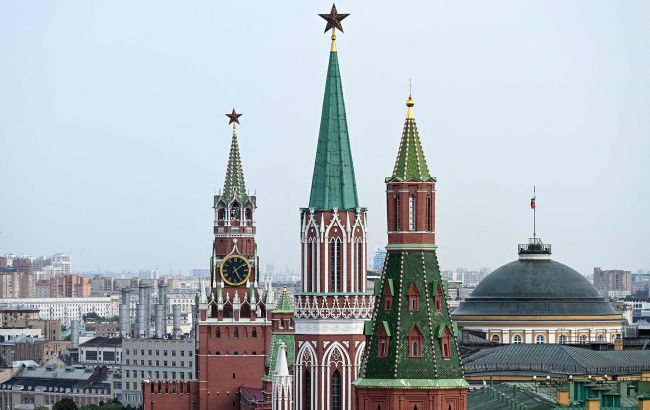 Photo: The Kremlin (Getty Images)
Rising oil revenues amid the conflict in the Middle East have allowed the Kremlin to partially rebuild reserves depleted to finance the war, according to Bloomberg.
Russia has resumed purchases of foreign currency and gold for its National Wellbeing Fund for the first time since June of last year, following a sharp increase in global oil prices.
In May, Russia’s Finance Ministry plans to buy 110 billion rubles worth of foreign currency and gold, equivalent to roughly $1.5 billion. The amount also includes deferred operations from March and April.
Under Russia’s fiscal rule, if the price of Russian oil exceeds $59 per barrel, excess revenues are transferred to the National Wellbeing Fund. If prices fall below that level, reserves are used to cover the budget deficit.
During the first two months of 2026 alone, Moscow spent about 419 billion rubles from the fund due to declining oil revenues.
According to Russia’s Finance Ministry, available assets in the National Wellbeing Fund stood at 3.6 trillion rubles as of May 1. That is 14% lower than in January and nearly 60% below pre-war levels.
Russian authorities had previously considered lowering the oil price threshold in an effort to slow the depletion of reserves. However, after oil prices surged, the plan was postponed at least until the fall.
"In our baseline, we expect the National Wellbeing Fund to rise by around $12 billion over the rest of the year, more than offsetting the 1Q decline," said Ekaterina Vlasova, an economist specializing in Central and Eastern Europe and Russia.
At the same time, the Kremlin fears the current situation may only be temporary. Russian Finance Minister Anton Siluanov stated that maintaining financial stability and reducing the budget’s dependence on oil prices remain key priorities for Moscow.
Another potential risk for Russia is the possible withdrawal of the United Arab Emirates from OPEC, which could impact the global oil market and change supply balances.
Earlier, the Commissioner of the President of Ukraine for Sanctions Policy, Vladyslav Vlasiuk, said Russia had lost part of its oil export capacity following strikes on key Baltic ports, particularly Primorsk and Ust-Luga, through which a significant share of Russian oil shipments pass.
According to the Black Sea Institute of Strategic Studies, Russian oil exports fell by 16.8% in April compared to March — a decline of nearly 1.8 million tons.