Iran war could be a win for Putin: Here's why

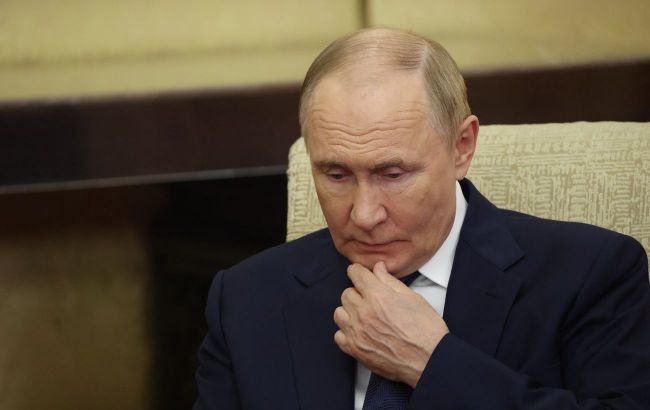 Photo: Vladimir Putin, President of Russia (Getty Images)
The war in the Middle East benefits Putin. While the US is attacking Iran, Russia is quietly gaining advantages, Forbes reports.
Read also: 'Wars can be fought forever': Trump claims US holds nearly unlimited weapons stockpiles
Moscow has chosen a tactic of strategic hedging — maintaining contact with all sides but not interfering. It has publicly expressed support for Iran but has not provided any real assistance. There are three advantages to staying on the sidelines and observing.
Oil prices are rising - Russia is making money
The first and most obvious benefit is oil prices.
Over 20% of global oil and gas exports pass through the Strait of Hormuz. After the start of hostilities, Iran ordered ships to turn back and threatened to attack each of them. If the Strait is finally closed, the markets will react with a sharp jump in prices.
This is critical for Russia: oil and gas account for 45% of the federal budget. More expensive oil means more money for the war against Ukraine.
Weapons for sale
The second benefit is the arms trade.
Even during the active phase of hostilities, Iran agreed to buy 500 Verba launchers and 2,500 surface-to-air missiles from Russia. Russia has been the main supplier of weapons to Iran since 1979 — a third of all Iranian arms imports come from there. Each sale means additional income for the Kremlin.
US is not spending ammunition on Ukraine
The third benefit is the depletion of American stocks.
Military operations against Iran require large expenditures of PAC-3 interceptor missiles for Patriot systems and APKWS missiles, which the US uses to shoot down Russian Shahed drones. The more they are spent in the Middle East, the less remains for Ukraine.
Iran tensions
On February 28, the US and Israel launched joint strikes on Iranian regime targets. Iran then attacked US bases in Kuwait, the UAE, Qatar, Bahrain, and Jordan.
Due to the hostilities and mutual attacks, shipping in the region has virtually stopped, with volumes falling by 75%. Tanker owners are simply not willing to risk going out to sea.
According to the US Central Command, the Strait of Hormuz is still open — Iran is not mining it or patrolling it constantly. At the same time, ships have already begun to avoid this route on their own.
Iranian attacks on energy facilities in the Middle East have triggered the largest increase in natural gas prices since 2022. April gas futures in Europe jumped 46% to €46.55 per MWh.
Analysts have calculated that if the strait is blocked for a month, gas prices in Europe could more than double. Qatar and Saudi Arabia have already halted part of their fuel production.