How Ukrainian strikes on Russian refineries are hitting Kremlin revenues, economist explains

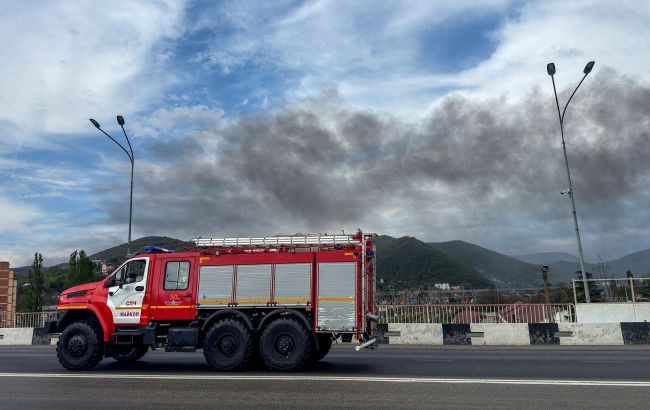 Photo: Ukrainian drones hit the Tuapse oil refinery four times in two weeks (Getty Images)
Western restrictions on Russian oil have only a limited effect. By contrast, Ukraine’s strikes on Russia’s export infrastructure are causing tangible, real damage, said Oleksandr Martynenko, head of the Corporate Analysis Department at ICU, in an interview with RBC-Ukraine.
Key points:
- Sanctions effectiveness in question. Western restrictions have failed to stop Russian oil exports to Asia.
- Refinery strikes as a real alternative. Ukraine’s direct attacks on Russia’s oil infrastructure and export terminals are having a measurable impact on the war budget.
- Surge in prices and Russia’s profits. Compared to the prewar period, global oil prices have risen by about 30%, and Russia’s Urals crude is at times trading even at a premium to Brent.
- Asian pivot. Russia has successfully redirected supplies to India and other Asian countries, minimizing the effect of the European embargo.
- Market outlook. A return to the $60–70 per barrel range is not expected for now.
"If we are talking about Western sanctions, many have serious doubts about their effectiveness. Meanwhile, Ukrainian strikes on Russia’s export infrastructure are causing significant damage," Martynenko said.
According to the analyst, traditional sanctions have failed to halt Russian oil supplies to Asia, leaving their impact limited. At best, the West has forced Russia to sell oil at a discount to market prices. However, even that discount has been significantly reduced amid the Middle East conflict.
How Russia is earning more and why it matters
The current oil market situation is playing in Moscow’s favor. Compared to prewar levels, oil prices have risen by more than 30%. But even more telling is the change in the discount.
"Before the conflict, the Urals discount to Brent reached $30–35 per barrel. Now this grade is sometimes trading at a premium — sometimes up to $10–20," Martynenko explained.
Another factor has been the rising demand for Russian oil from Asian countries, especially India, which has sharply increased imports due to supply shortages from the Middle East.
For Ukraine, this means worsening terms of trade. The country imports natural gas, oil, and petroleum products, and is therefore directly affected by higher global prices.
Why refinery strikes are the real sanctions
Unlike financial restrictions, direct strikes on Russia’s oil infrastructure have a concrete and measurable effect. Martynenko described them as perhaps the only sanctions currently working effectively against Russian oil.
Attacks on refineries and export terminals directly reduce the volumes Russia can sell on external markets. As a result, budget revenues that fund the war decline.
Will oil prices return to prewar levels?
Prospects for normalization of the oil market remain uncertain. December futures are holding around $80 per barrel. Markets are optimistic about a possible resolution of the Middle East conflict, but do not expect a return to the $60–70 range seen before it began.
The reason is the so-called geopolitical premium. Investors are already pricing in the heightened risk of a renewed blockade of the Strait of Hormuz — one of the most critical transit routes for global oil trade.
At the same time, Martynenko does not rule out the opposite scenario — a sharper drop in prices. High oil prices are driving increased production worldwide, particularly in the Americas. A prolonged period of expensive oil could also significantly reduce global demand — a risk that, in his view, markets are currently underestimating.