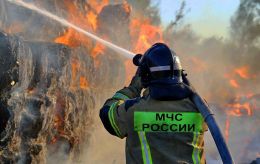
'Missed call' from Ukraine: Russia's Tuapse oil refinery takes three hits in fresh strikes


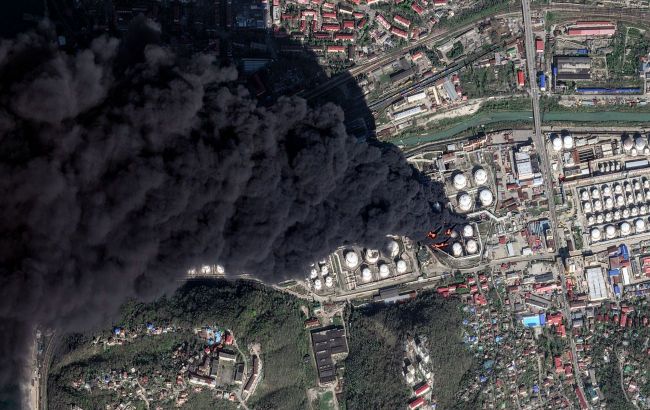 Photo: Ukrainian forces have attacked the oil refinery in Tuapse for the third time, a massive fire is raging (Getty Images)
Ukrainian drones have struck the oil terminal in Tuapse (Krasnodar region, Russia) for the third time in the past two weeks. A large-scale fire has engulfed new storage tanks. Local authorities have been forced to evacuate residents.
RBC-Ukraine has compiled the consequences of the attacks on Tuapse and why this refinery is strategically important.
Key points
- Hat-trick from the Defense Forces. Ukrainian drones successfully attacked the Tuapse refinery for the third time in two weeks (April 16, 20, and 28). Today, new tanks that had previously remained intact caught fire.
- Environmental disaster. A spill of oil products into the Tuapse River and the Black Sea has reached an area of 10,000 square meters — the slick is visible even from space. Due to the rains, oil overflowed containment barriers, contaminating 50 km of coastline.
- Forced evacuation. For the first time since the attacks began, authorities announced an urgent evacuation of residents from streets adjacent to the burning terminals. The city is covered in toxic smog, with fuel oil rains reported.
- Authorities are concealing the truth. Just days ago, local officials denied the scale of pollution, and today, security forces detained Kedr outlet journalist Anastasia Troyanova, who was documenting the aftermath of the strikes.
- Strikes on the Kremlin’s war machine. The refinery produces about 12 million tons of oil per year and is a critical hub for fuel exports and logistics support for Russia’s Black Sea Fleet and troops in the south.
Third strike on the refinery in two weeks
The latest operation at the Tuapse refinery was carried out by operators of the 1st Separate Center and the 413th Raid Regiment in cooperation with the Special Operations Forces, the SBU, the Defense Intelligence of Ukraine, and other Defense Forces units.
The Special Operations Forces ironically called the strike a “hat-trick,” noting: “Tuapse, you have a missed (call) again.”
For the third time, Ukrainian SOF deep-strike units in concert with Defence Forces have hit Tuapse oil refinery on the Black Sea. pic.twitter.com/L3IQhiBV2n
— SPECIAL OPERATIONS FORCES OF UKRAINE (@SOF_UKR) April 28, 2026
Previously, the facility was attacked on April 16 and 20:
- April 16: Key units were hit, and the fire lasted several days.
- April 20: Strikes targeted port infrastructure with finished products.
In total, 24 tanks were destroyed and 4 damaged in previous raids.
Three strikes. One outcome: less fuel for Russia’s war.
— Defense of Ukraine (@DefenceU) April 28, 2026
: @usf_army pic.twitter.com/Z7jkLgd5bX
Today, according to preliminary data, at least four more tanks that had previously remained undamaged caught fire.
Analyst Nazarii Barchuk of the Ukrainian Security and Cooperation Center explained to RBC-Ukraine that, unlike the April 16 and 20 attacks, this time the refinery itself was hit rather than the tank farm. This sequence of strikes is logical, as it aims to limit the operation of the entire complex.
“The first strikes, which resulted in over 60% of the port’s capacity being affected (24 destroyed and 4 damaged tanks and transport hubs), blocked the very possibility of oil transshipment, the facility’s logistics. And today’s attack marked the beginning of the destruction of the refinery itself,” the expert said.
Environmental disaster and evacuation
Due to the threat of fire spreading, on the morning of April 28, the Tuapse city administration announced the evacuation of residents from Koshkina and Pushkina streets adjacent to the plant. Regional governor Veniamin Kondratyev confirmed a serious emergency and a large-scale fire.
В Туапсе вирують великі пожежі на нових резервуарах після вже третьої атаки на #НПЗ#Туапсе #Tuapse pic.twitter.com/7gmJWpWH5d
— РБК-Україна (@rbc_ukraine) April 28, 2026
“There is another serious emergency in Tuapse. Due to an attack by enemy drones, a large-scale fire broke out at the refinery,” the governor wrote.
The refinery is currently burning, with hundreds of people trying to extinguish it. Columns of smoke rising from the plant are visible across the city. The situation in the region is close to catastrophic:
- Pollution: A new spill of oil products into the Tuapse River has been recorded. Oil slicks have already spread to beaches 50 km from the city.
- Toxic rain: Smog from the fires is causing fuel oil rains and soil contamination. Previously, smoke from the plant reached the outskirts of Stavropol.
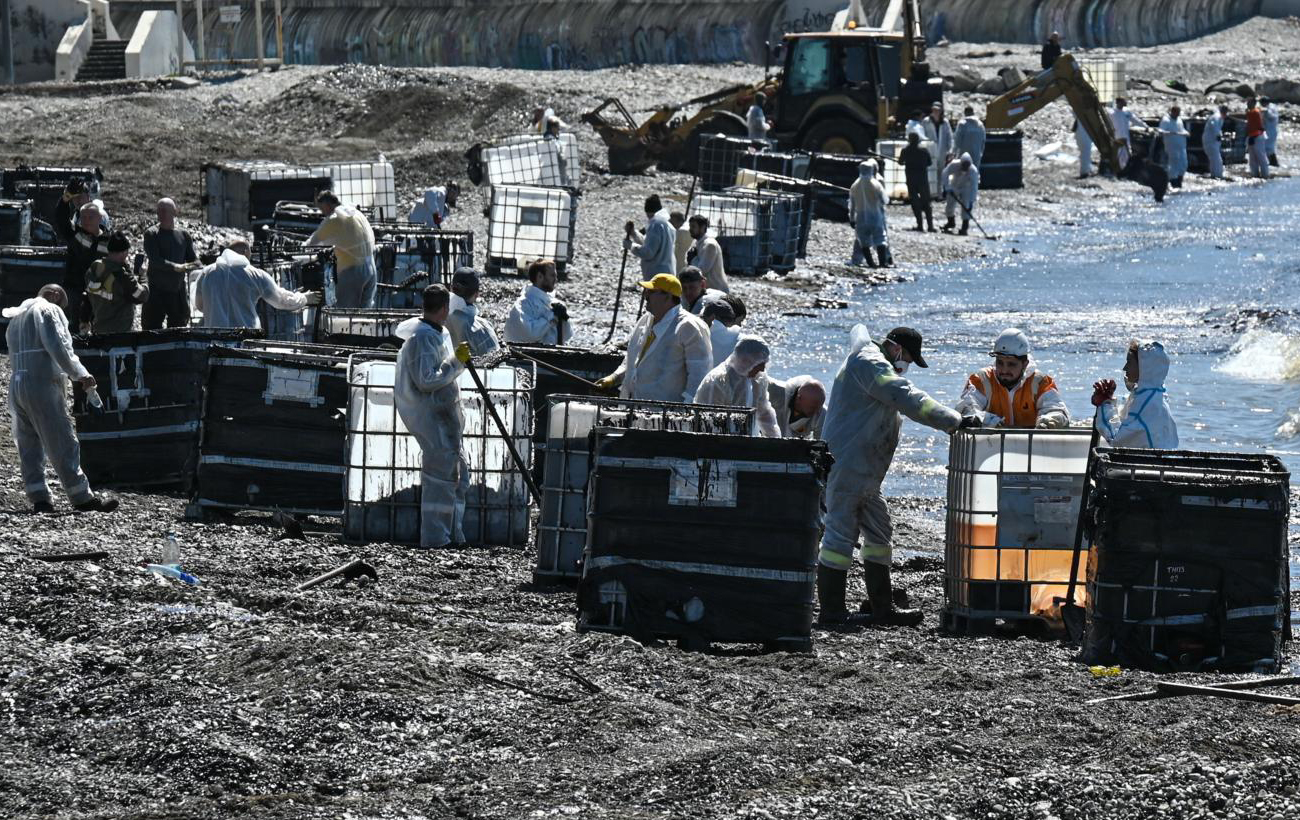
Photo: Oil after the strikes on the Tuapse refinery is being collected in the city with buckets and shovels (Russian media)
The national public health agency urged residents not to go outside or open windows, but authorities continue to conceal data on the real excess of toxic substances in the air.
Despite the dangerous consequences, school classes have not been canceled. And the city beach, where fuel oil discharges were found, was covered with fresh gravel by the administration.
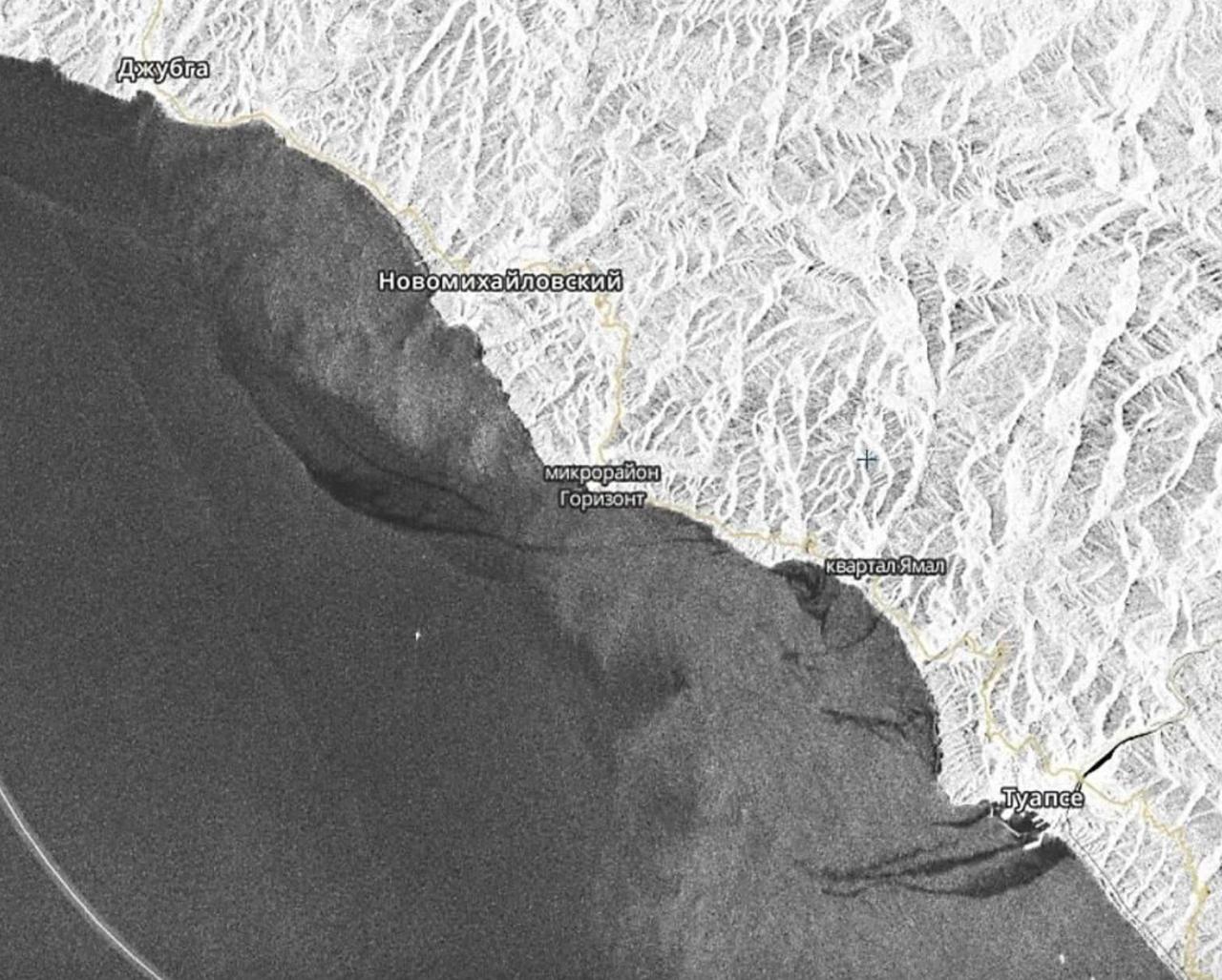
Satellite image: The oil slick from Tuapse is approaching Putin’s palace in Gelendzhik
Detention of the journalist who exposed the aftermath
Amid the fire, security forces detained Kedr journalist Anastasia Troyanova, who was preparing a report on the aftermath of the strikes.

Photo: Russian security forces detained journalist Anastasia Troyanova, who was reporting on the consequences of the strike on the Tuapse refinery (Russian media)
Before a “preventive talk” at the Interior Ministry station, she managed to publish footage of black columns of smoke over the city. According to her, there is a strong smell of burning in the air, and people are at risk of poisoning without protective equipment.
Why the Tuapse refinery is important for Russia
Tuapse is a small port city on the Black Sea coast, roughly halfway between Krasnodar and Sochi. Tourist sites coexist there alongside the Tuapse oil refinery, which occupies a third of the city’s area.
The plant forms a single complex with the marine terminal of Chernomortransneft (Transneft group). This is a key export hub for Russia on the Black Sea.
The facility, owned by Rosneft, is one of the largest in the country with a capacity of about 12 million tons per year.
Expert Nazarii Barchuk emphasizes that in terms of shipping capacity, the oil port ranks fourth in all of Russia, behind only Primorsk, Novorossiysk, and Ust-Luga, exporting up to 10 million tons of oil products, or 90% of what it processes annually.
“Accordingly, the shutdown of this port and, in particular, the refinery directly affects the export flows of the enemy’s oil products, which in turn hits the Russian economy, whose key sector is oil. And, as a result, this affects the enemy’s ability to wage war,” the expert said.
The Tuapse refinery produces fuel for the Black Sea Fleet and the grouping of troops in southern Ukraine.
“We can also mention Vysotsk, but it is a port located in the Baltic, like Primorsk. It is less accessible to our drones. Yet, given the experience of striking Ust-Luga, it is still not beyond our capabilities, meaning the chance of hitting these ports remains,” Barchuk says.
Taking into account the Defense Forces’ strategy aimed at destroying Russia’s oil export capabilities, further attempts will target the above-mentioned ports, the expert concludes.