NATO boosts defenses of its newest members amid Russian threat

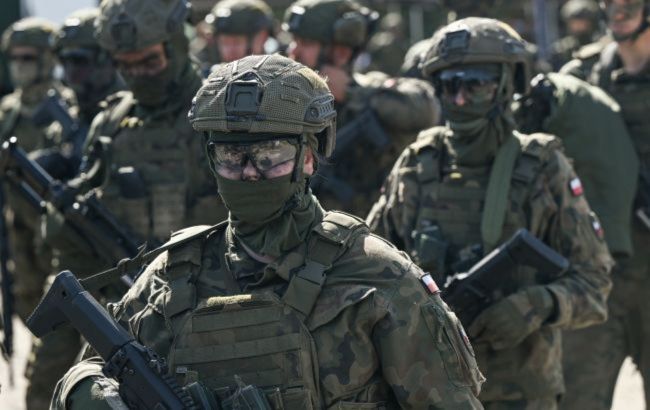 NATO strengthens defenses in Finland and Sweden (photo: Getty Images)
NATO has launched a large-scale operation to reinforce the defense posture of Sweden and Finland. Rapid reaction units have officially begun operating on the territory of the Alliance's freshest members, according to ERR.
Strategic reinforcement of NATO flank
The outlet says NATO land forces began operations this weekend to strengthen security in the bloc's two newest member states.
NATO Supreme Allied Commander Europe, US General Alexus Grynkewich, noted that the area surrounding these countries is among the most strategically important and complex regions in the world.
To provide rapid protection for NATO's northeastern flank, a new multinational military formation has been activated:
- Forward Land Forces Finland (FLF) — a forward-deployed land force in Finland that will operate as a rapid reaction unit
- Swedish Battle Group — officially joined the newly established military formation last Saturday.
Similar NATO forward land force units have already been operating for years in other European countries, including Bulgaria, Estonia, Hungary, Latvia, Lithuania, Poland, Romania, and Slovakia.
Critical significance of region
Sweden and Finland occupy strategically important geographic positions. They control coastlines along the maritime route used by Russia's navy to move warships between St. Petersburg and Kaliningrad.
In addition, Finland shares a long border with the Russian Federation and has a history of resisting Russian aggression. The country fought the Soviet Union twice during World War II.
Concerns about potential Russian attack on NATO
Previously, Latvian Armed Forces Commander Kaspars Pudāns stated that Russia has gained a significant advantage in both the number of drones and the speed of their production. In his view, the Kremlin may try to exploit this window of opportunity before the end of 2028, while NATO countries are still completing their own military modernization programs.
At the same time, concern is growing in European capitals that Russia could broaden the conflict into Europe much sooner. Western officials fear a potential strike on the Baltic states, islands in the Baltic Sea, or NATO territories in the Arctic within the next 12 months, amid a reduced US military presence and the possibility of an energy crisis.
In response to these risks, Germany has already adopted its first-ever military strategy, officially identifying Russia as the primary threat to national security. Berlin has begun preparing the Bundeswehr to repel a potential act of aggression and plans to build the strongest conventional army in Europe.