Europe fears Russia could attack NATO within next year - WSJ

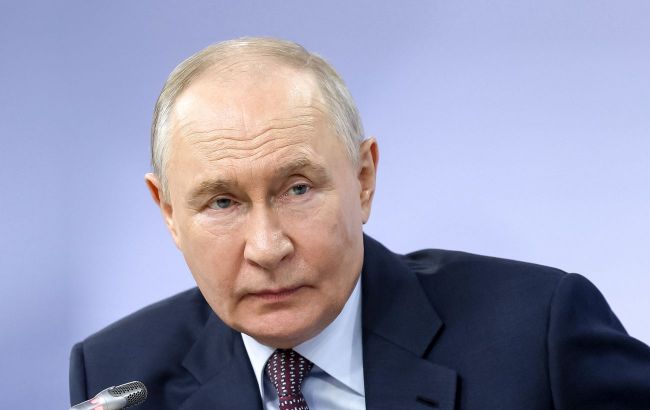 Russian President Vladimir Putin (photo: Getty Images)
Russia has reached a deadlock in its war against Ukraine. Therefore, fears are growing in European capitals that Russian President Vladimir Putin may try to reshuffle the cards by expanding the conflict into Europe, The Wall Street Journal reports.
Several European officials responsible for national security have warned that Russia may try to test NATO's cohesion by striking one of the Baltic countries, Swedish or Danish islands in the Baltic Sea, or alliance territory in the Arctic.
In addition, recent threats by US President Donald Trump to withdraw from NATO and his steps to reduce American troops stationed in Europe are increasing the threat.
Senior European officials fear that Russia may see an opportunity to strengthen its position within the next 12 months, as the oil crisis caused by the war with Iran creates additional political turmoil in Europe, supporting far-right parties seeking to restore purchases of Russian oil and gas and end aid to Ukraine.
According to representatives of European intelligence and military agencies, there are no signs that Russia is actually redeploying troops or equipment to organize attacks on the Baltic states or other territories outside Ukraine.
However, Putin will face a difficult choice in the coming months. According to estimates by Western intelligence services, Russian forces are losing nearly 35,000 soldiers per month, exceeding the Kremlin's ability to recruit personnel.
It is noted that continuing the war in Ukraine at the current pace will soon become impossible without forced mobilization, and Putin needs to somehow justify such a step.
"If you just mobilize for this war, then you would send a signal that you are not really winning this war. So there comes the point where they need to escalate in order to justify the mobilization. And that's a very dangerous point. Of course, nobody sees in the head of Putin, but this could be the calculus to move forward and change the linearity of this war," said EU High Representative for Foreign Affairs and Security Policy Kaja Kallas.
At the same time, as WSJ notes, Putin continues to claim that victory is near, and there are no signs that his strategic goal — domination over all of Ukraine and the redistribution of the balance of power in Europe — has changed in any way, despite the problems Moscow faces on the battlefield.
For Russia, the EU is now an irreconcilable enemy that must be punished or destroyed.
The publication notes that Russian troops would likely perform much better against European armies than against Ukraine, especially if the United States does not rush to help. However, to begin such an escalation, Russia would first have to replenish the ranks of its army.
"Mobilization, technically, is absolutely doable; their mobilization system has been fixed. But this would also create serious internal problems and pressure, which then could lead in different interesting directions. It would be a risky decision for Putin," said Kaupo Rosin, director of the Estonian Foreign Intelligence Service.
At the same time, senior German lawmaker Norbert Röttgen believes that the idea of breaking the deadlock in Ukraine by expanding the war to NATO countries in the Baltics could be tempting, but dangerous for Putin.
"This would be such a huge and additional big risk for Putin to, after having not been sufficiently successful against Ukraine, to simply add another very strong adversary in a military conflict," he noted.
At the same time, Röttgen acknowledged that Putin is known for his tendency toward risky actions and is capable of escalating the conflict.
Threat to Europe from Russia
Europe has long feared that Russia could expand the war beyond Ukraine.
Polish Prime Minister Donald Tusk recently warned that Russia could attack one of the NATO countries within the coming months, not years. He is also not certain whether the United States would defend Europe in such a scenario.
Germany, meanwhile, adopted the first military strategy in its history, officially identifying Russia as the main security threat in Europe.
Defense Minister Boris Pistorius stated that Moscow is preparing for a confrontation with NATO and is already waging a hybrid war against the West.
At the same time, the Center for Countering Disinformation under Ukraine's National Security and Defense Council assesses that Russia's hybrid provocations — aircraft entering the airspace of Baltic countries and statements about the West's plans to seize Kaliningrad — are part of an information campaign aimed at fueling panic.
According to the Center for Countering Disinformation, Russia will not have the resources for a full-scale war in the Baltic states until 2028.