Poland’s PM warns Russia may strike NATO sooner than expected

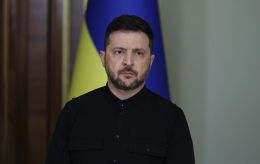
 Photo: Donald Tusk (Vitalii Nosach, RBC-Ukraine)
Polish Prime Minister Donald Tusk, in an interview with the Financial Times, warns that Russia could attack a NATO country within months, not years. He also said he is not fully certain the United States would defend Europe in such a scenario.
“This is something really serious. I’m talking about short-term perspectives, rather months than years,” Tusk said, referring to a potential Russian attack.
According to him, the key question for NATO’s eastern flank is whether the Alliance can “politically and also logistically, to react, for example, against Russia if they try to attack.”
Doubts about the US and Article 5
Tusk clarified that his remarks are not skepticism about NATO’s Article 5, but rather “hope that guarantees on paper will translate into something very practical.”
“I want to believe that [Article 5] is still valid, but sometimes, of course, I have some problems. I don’t want to be so pessimistic . . . but what we need today is also practical context,” he added.
The prime minister noted that the issue is not the level of Polish-American relations, but how those ties would function in the event of a real threat.
Drone provocation in September
Tusk recalled an incident last year when around 20 Russian drones violated Polish airspace.
“I had some problems during the night in September when we had this pretty massive drone provocation made by the Russians. It wasn’t easy for me to convince our partners in NATO that it wasn’t a random incident, it was a well-planned and prepared provocation against Poland,” he said.
According to him, some allies preferred to “pretend that nothing happened.”
What Europe needs
Tusk stressed that for Europe to repel a potential strike, it needs real defense capabilities and the ability to move forces quickly between countries.
One of the key lessons from the war in Ukraine, he said, is that Europe increasingly understands the need for joint action in security and defense.
“This is why I want to be, you know, certain that if something happened, that . . . Russia knows the reaction will be tough and unequivocal,” the Polish prime minister emphasized.
Meanwhile, the Center for Countering Disinformation under Ukraine’s National Security and Defense Council assesses that Russia’s hybrid provocations — including airspace violations in the Baltic states and claims about alleged Western plans to seize Kaliningrad — are part of an information campaign to spread panic.
According to the center, Russia will not have the resources for a full-scale war in the Baltic states until 2028.
As previously reported by RBC-Ukraine, Germany has adopted its first-ever military strategy, officially naming Russia as the main threat to European security.
German Defense Minister Boris Pistorius stated that Moscow is preparing for a direct confrontation with NATO and is already waging a hybrid war against the West.