Russia's biggest banks feel fallout from Wildberries attacks

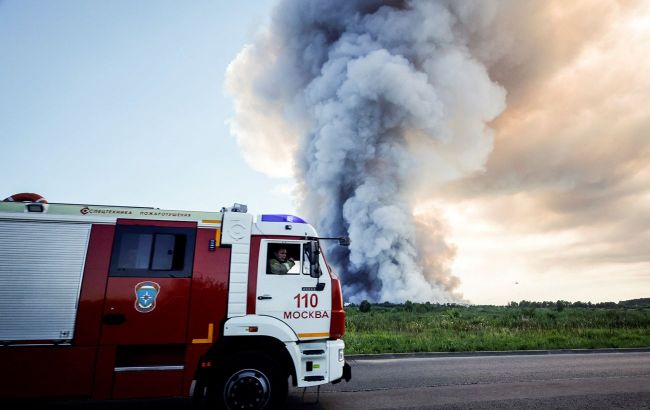 Photo: Fire at the Wildberries warehouse (Getty Images)
Russia's largest state-owned banks, Sberbank and VTB, are showing a deterioration in the quality of their loan portfolios due to a rise in non-performing loans and an increase in provisions. The deterioration in the mortgage portfolio has become particularly noticeable, according to the Foreign Intelligence Service of Ukraine.
Russian financial institutions are increasingly forced to focus on debt restructuring rather than active lending, which may indicate mounting pressure on the Russian economy.
The share of stage-three non-performing loans rose from 4.8% to 5.5% over the quarter. Given the bank’s total loan portfolio of $658.7 billion, this corresponds to approximately $36.3 billion in non-performing loans.
Sberbank
At the same time, Sberbank increased its provisions for potential losses by 8.6%. The number of defaulted loans in the project finance segment rose by 27.9%, in the corporate sector by 22.6%, and past-due debt increased by 23.7%.
The deterioration in the mortgage portfolio was particularly noticeable—delinquent payments there rose by nearly 50%.
Sberbank CEO German Gref acknowledged that the bank's credit committee is now increasingly focused on debt restructuring rather than issuing new loans.
At the same time, Taras Skvortsov, Deputy Chairman of the bank's Management Board, lowered the forecast for Russian economic growth in 2026 to 0–0.5% and warned of a possible tax increase in 2027.
E-commerce companies have become a particular risk for the bank. Sberbank reports growing problems among marketplace customers, particularly Wildberries, as an increasing number of borrowers seek debt restructuring.
VTB
Similar problems are mounting at another major Russian state-owned bank—VTB.
The bank, which holds approximately 8 trillion rubles in retail deposits, announced a 10% reduction in its head office staff. Its profit for the first half of the year fell by 20%, and in the second quarter, by 34%.
In a single quarter, VTB increased its provisions for non-performing loans by nearly a third—to 66.5 billion rubles. The bank's return on equity fell from 20.5% to 13%, and its capital adequacy ratio dropped to 10.7%, just above the Central Bank of Russia’s minimum requirement of 10%.
The bank's problems began to mount as early as 2025. By the end of the year, the share of non-performing loans in its portfolio had nearly doubled—to 14.2%, which is about one-third higher than the average for the Russian banking system.
At the same time, the actual scale of the risks may be greater, as a significant portion of the lending was tied to companies in the military-industrial complex.
VTB shares have already fallen to historic lows on the Moscow Exchange, in part due to investor concerns about the risks associated with the bank's strategic partnership with Wildberries.
The situation at Russia's two largest state-owned banks reflects a common trend: high borrowing costs, weak economic growth, and sanctions pressure are deteriorating the quality of bank assets.
Financial institutions are forced to increase reserves, restructure debt, and cut costs, which could create additional risks for the Russian banking sector and the economy as a whole.
News context
According to Forbes, the Ukrainian Armed Forces have already destroyed at least 17% of Wildberries' warehouses—over the past two weeks, Ukrainian forces have been attacking facilities belonging to Russia's largest marketplace almost daily, and the company can no longer hide its massive losses.
Amid these strikes, it has emerged that Wildberries was actively seeking logistics capacity in Kazakhstan. It has also imposed strict restrictions to protect against further attacks—as of August 3, the company has banned employees from bringing smartphones to work.