Fuel coupons in occupied Crimea, limits in Moscow: Russia's gasoline problem is getting worse


 Photo: Fuel sales restrictions have reached gas stations in Moscow and St. Petersburg (Getty Images)
While occupied Crimea faces strict gas station rationing, fuel limits have unexpectedly spread to Moscow and St. Petersburg.
What is actually happening in Russia after Ukrainian strikes on oil facilities, and whether this indicates a fuel market crisis in Russia, was explained in a comment to RBC-Ukraine by Hennadii Riabtsev, Director of Special Projects at the Psychea Scientific and Technical Center.
Key points:
- Fuel rationing and coupons at gas stations. After Ukrainian drone strikes on Russian refineries, Crimea introduced gasoline coupons, while gas stations in Moscow, St. Petersburg, and several regions imposed fuel sales limits.
- Logistical collapse in Crimea. The most difficult situation is on the occupied peninsula, where fuel shortages and long queues at gas stations have emerged due to logistics problems.
- Impact of Ukrainian strikes. Fuel rationing at gas stations is a consequence of attacks on refineries. After strikes, plants are shut down for inspection and repairs, disrupting normal fuel supply chains.
- Decline in refining and losses. At the same time, oil refining volumes in Russia have already fallen to approximately the level of 2009, while strikes on oil infrastructure are causing significant economic losses.
- Conditions for a real crisis. However, for local disruptions to turn into a large-scale fuel crisis, Ukraine’s Defense Forces would need to intensify pressure on Russia’s oil industry further.
Fuel shortages in Crimea and restrictions in Moscow and St. Petersburg
Large-scale Ukrainian drone strikes on Russian oil refineries have triggered serious logistical difficulties in Russia and in temporarily occupied Ukrainian territories.
In May alone, according to Bloomberg, Ukraine carried out at least 30 strikes on Russian oil facilities, hitting eight of the ten largest companies in the sector. The focus has shifted to secondary processing units, which are more expensive and difficult to repair due to sanctions.
Amid these developments, fuel rationing and rising prices have hit Moscow, St. Petersburg, several Russian regions bordering Ukraine, and occupied Crimea.
What is the fuel situation in Russia?
The most difficult situation is in occupied Crimea. Since May 31, 2026, gasoline has been sold on the peninsula only via coupons. The day before, in Sevastopol, a temporary suspension of fuel sales was announced, with an exception made only for emergency services.
Multi-kilometer lines for gasoline continue to form across the peninsula.
The authorities of the Crimea are also trying to address shortages by introducing daily limits on the sale of A-95 gasoline per customer. In the occupied Luhansk region, Russian authorities imposed a 20-liter limit per person on A-92, A-95, and diesel fuel, citing a significant increase in demand.
In Moscow and the region, the ORTK (Odintsovo Regional Fuel Company) gas station network introduced strict limits, allowing customers to purchase no more than 60 liters of gasoline and 100 liters of diesel fuel per customer.
In addition, the Russian outlet Kommersant reported a sharp increase in fuel prices at Moscow gas stations due to logistical difficulties.
In St. Petersburg, the hometown of Russian leader Vladimir Putin, the Kirishiavtoservice gas station (a large network of gas stations operating primarily in Russia's Leningrad region) has also introduced fuel limits because of supply disruptions.
In Russia's Belgorod and Kursk regions, Rosneft gas stations have stopped selling gasoline in canisters. In the Kursk region, a 20-liter limit on A-95 gasoline is also in effect.
Meanwhile, following its ban on gasoline exports, the Russian government announced a six-month ban on exports of aviation fuel starting June 1, lasting through November 30, 2026.
Is there a fuel crisis in Russia?
Despite growing concern and reports in foreign media, Hennadii Riabtsev says it is still too early to speak of a nationwide fuel crisis in Russia.
"They have plenty of gasoline. There is no crisis in the Russian Federation. There are enough petroleum products to meet all needs. The local problem in Crimea is linked to the fact that our military has done an excellent job targeting logistics," Riabtsev said.
Ukraine's Defense Forces have established fire control over the highway linking Russia's Rostov-on-Don with Crimea through Mariupol and Melitopol.
According to the expert, Ukrainian drones have disrupted nearly all of Russia's logistics routes into Crimea:
- Railway ferries have been destroyed by naval drones.
- Transporting hazardous cargo across the Crimean Bridge is prohibited because of fears of new explosions.
- The land corridor through Dzhankoi and the Novorossiya highway has become highly risky due to remote mining and Ukrainian strikes.
- The Feodosia oil depot has been almost completely knocked out, meaning Russia can no longer amass significant fuel reserves. As a result, the only remaining supply route is currently an automobile ferry operating from Russia's Krasnodar region.
Why are Russian gas stations facing fuel limits?
Riabtsev explains that fuel rationing at gas stations in Moscow, St. Petersburg, or Belgorod is a temporary and situational problem. They emerge as a result of successful strikes on local oil refineries.
"After the strike on a refinery, the plant is temporarily shut down to assess the damage and organize the next stages of the technological process. For two to three weeks, there is a disruption in the normal fuel distribution system. As a result, contracts have been signed, but the gas station's fuel truck is still waiting because shipments have been suspended by the military (for example, from the Volgograd refinery)," the expert says.
According to him, Russia's oil refining volumes have indeed declined and fallen to roughly the level seen during the 2009 crisis, but Russia still has plenty of petroleum products.
Riabtsev notes that bans on gasoline exports and restrictions on diesel sales through intermediaries are a traditional Russian practice that was used even before the full-scale war to maintain domestic market balance.
As for the ban on aviation fuel exports, the expert points to both political motives—specifically to spite European carriers—and Russia's own growing internal needs.
When will Russia's fuel crisis become real?
The expert cautions against taking analyses, such as Bloomberg articles about a fuel collapse, at face value, noting that there are currently no objective signs of a nationwide crisis across Russia.
However, he stresses that Ukrainian strikes on refineries and oil pumping stations remain highly effective. He points out that the cost of Ukrainian drones is far lower than the damage inflicted on Russia through destroyed infrastructure and lost revenue.
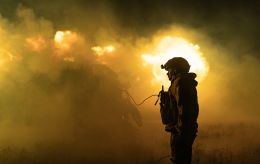
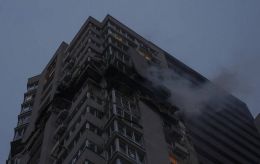
At the same time, burning facilities, towering smoke plumes, and so-called "oil rains" create significant propaganda pressure inside Russia.
Nevertheless, Riabtsev emphasizes that these attacks alone will not deprive the Russian army of fuel or stop the war. In the event of a critical shortage, the Russian military will simply requisition oil products from civilians, farmers, and businesses.
Commenting on fuel rationing at gas stations in Moscow, Belgorod, and the Kursk region, Hennadii Riabtsev agreed that they are a direct consequence of Ukraine's actions.
"Yes, this is the echo of those attacks. And for that echo to turn into thunder — or, even better, lightning — Ukraine's Defense Forces will need to keep working hard, persistently, and without interruption to increase the pressure," the expert concluded.