Russia faces fuel shortage risk after record Ukrainian strikes - Bloomberg

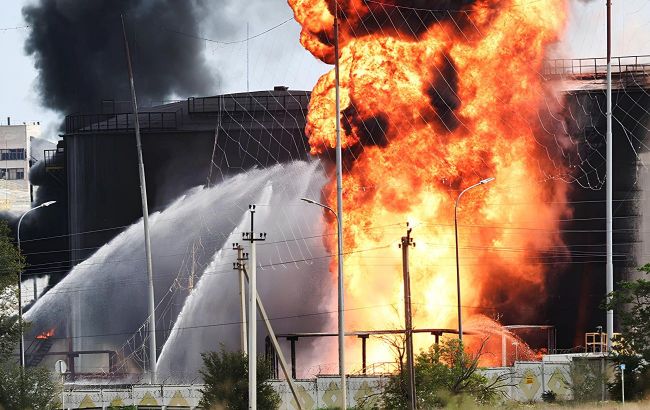 Russia's gasoline supply has fallen sharply amid refinery disruptions (photo: Russian media)
Ukraine targeted eight of Russia's ten largest oil refineries in May. Moscow now risks facing fuel shortages at home, Bloomberg reports.
Record number of attacks
In May, Ukraine carried out at least 30 strikes on Russian oil facilities — the highest number recorded in any month since the start of the full-scale invasion.
At least 16 of those strikes directly targeted oil refineries. Drones attacked eight of Russia's ten largest refining facilities.
Kyiv relied on repeated strikes against the same targets to inflict maximum damage and prevent rapid repairs.
The Yanos refinery, jointly owned by Rosneft and Gazprom Neft, was hit three times during the month. Lukoil facilities in Nizhny Novgorod and Perm were struck twice each.
New tactic: Targeting complex equipment
Previously, Ukraine mainly targeted primary processing units, which are relatively easy to repair. The focus has now shifted to secondary processing units.
Secondary units help refineries produce more gasoline and diesel, but can be much harder and costlier to repair as Western sanctions make it difficult to source replacement equipment from overseas, explained Sergey Vakulenko, an industry veteran and a scholar at the Carnegie Endowment for International Peace.
In addition to refineries, drones have also been targeting export terminals, pumping stations, and fuel storage facilities.
Refining falls to 2009 levels
According to estimates by analytics company OilX, average refining volumes reached 4.58 million barrels per day in May. That is 700,000 barrels less than a year earlier and the lowest level since October 2009.
Due to refinery shutdowns and reduced capacity, analysts expect volumes to decline further.
Moscow imposes export bans
To prevent domestic shortages, Russian authorities have banned aviation fuel exports until the end of November. Sales of most gasoline grades to foreign markets had already been banned earlier.
A ban on exports of most gasoline grades has been in effect again since April 1. This has partially supported domestic supplies.
Prices rise, supply shrinks
Officially, the situation at gas stations appears relatively calm: the average gasoline price has risen by only 2 rubles since the beginning of the year, reaching 67.53 rubles per liter.
However, exchange data tells a different story. By the end of May, volumes of premium AI-95 gasoline offered for sale in the European part of Russia had fallen to around 5,000 tons per day — one-third of the level seen a year earlier. Exchange prices for this type of fuel increased by more than 20% year-on-year.
This is already making it more difficult for independent gas station chains not affiliated with major oil companies to purchase fuel wholesale.
The Kremlin denies there is a problem
On May 21, Kremlin spokesman Dmitry Peskov said Russia saw no risk of a fuel shortage, attributing the decline in production to seasonal maintenance and saying fuel supply and demand remained balanced.
At present, only the occupied Crimean Peninsula has introduced restrictions on fuel purchases. Last summer, shortages affected Russia's Far East and occupied Ukrainian territories.
Connection to the Middle East
The attacks coincided with the crisis in the Strait of Hormuz: traffic through the waterway has virtually come to a halt due to the conflict in the Middle East. The loss of barrels from Gulf countries forced Russia to increase crude oil exports.
Recently, the Volgograd oil refinery halted operations following another strike.
More recently, Ukraine's Defense Forces struck the Saratov oil refinery for a second time. The facility sustained additional damage.