Iran makes bold statement on Strait of Hormuz following Trump's warning

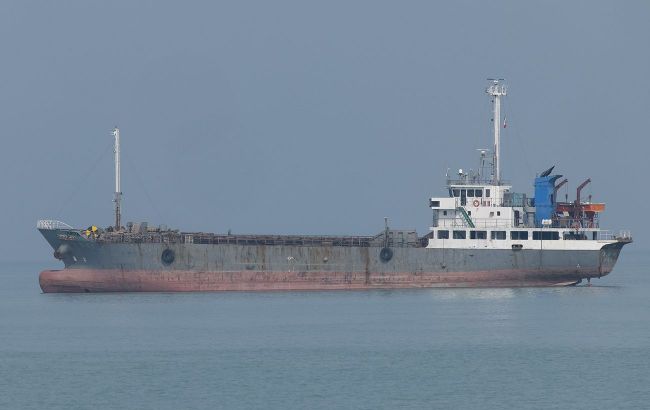 Photo: The Strait of Hormuz remains blocked amid conflict with Iran (Getty Images)
The Strait of Hormuz remains open to shipping, except for "enemy-linked" vessels, Iran's representative to the International Maritime Organization, Ali Mousavi, says, according to Reuters.
Mousavi said Tehran is ready to cooperate with the International Maritime Organization to improve maritime security in the Persian Gulf. However, he emphasized that ships not connected to "Iran's enemies" may transit the strait only if "security measures" are coordinated with Tehran.
"Diplomacy remains Iran's priority. However, a complete cessation of aggression as well as mutual trust and confidence are more important," the Iranian representative said.
Mousavi blamed the current situation in the Strait of Hormuz on actions by Israel and the US.
Mutual threats
Recently, US President Donald Trump issued an ultimatum to Iran. He threatened to strike Iranian power plants if the Strait of Hormuz was not fully opened within 48 hours.
In response, Iran promised to plunge Persian Gulf countries into darkness if the United States carried out strikes on Iranian power plants.
Situation around the Strait of Hormuz
Iranian forces have effectively blocked the Strait of Hormuz and carried out a series of attacks on civilian vessels and energy infrastructure after US and Israeli strikes on Iranian targets.
The strait is one of the key routes for global oil trade: in 2025, roughly 13 million barrels per day passed through it, about 31% of maritime oil shipments.
Amid the effective blockade, global oil prices surged sharply, already leading to higher fuel costs.
Escalation in the Middle East has caused serious concern among world leaders, who condemned Iran's attacks on civilian targets and called for an immediate end to waterway mining and missile strikes.
Initially, leaders of the UK, France, Germany, Italy, the Netherlands, and Japan signaled readiness for tough measures; Canada later joined them.
The circle of countries supporting increased pressure on Iran has now expanded significantly. Full details on which nations joined this coalition are available in the RBC-Ukraine report.