Putin opens new front against Germany's Merz over Ukraine

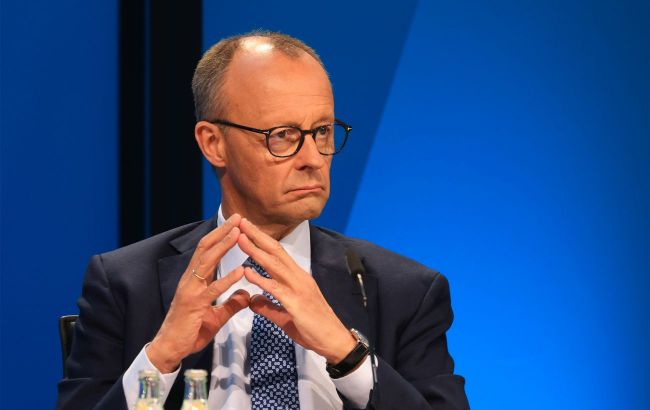 German Chancellor Friedrich Merz (photo: Getty Images)
Russian President Vladimir Putin is deliberately targeting the reputation of German Chancellor Friedrich Merz — using Ukraine as a political weapon, Politico reports.
Why has Putin intensified his actions now
Chancellor Friedrich Merz's approval ratings are falling sharply. Germany's economy is weakening. Against this backdrop, the far-right party Alternative for Germany (AfD) is leading in polls ahead of state elections in eastern Germany in September.
For the Kremlin, this is the perfect moment. According to the publication, Putin is increasing pressure on one of his main strategic opponents — the European leader who most actively supports Ukraine.
"Russia is looking for partners within Europe that it can use for its own purposes, and the goal is, naturally, to get the AfD to come to power in the near future — whether in a state election or, eventually, in the next federal election," said Chris Schulenburg, a lawmaker for Merz's Christian Democratic Union (CDU) in Saxony-Anhalt.
According to him, this would give Russia "a strategic partner in Germany, and thus a foothold in Europe."
What Putin has already done
The publication writes that in recent weeks, the Kremlin leader has used various levers of pressure. Openly — by stopping supplies of Kazakh oil to eastern Germany through a Russian pipeline.
More covertly, by proposing former Chancellor Gerhard Schröder as a mediator in peace talks on Ukraine, attempting to divide public opinion inside the country. One of Putin's advisers invited lawmakers from Alternative for Germany to the annual economic forum in Saint Petersburg.
How the Kremlin is shaping Merz's image
Kremlin propaganda portrays Merz as an ineffective and detached politician. His refusal to restore energy ties with Russia is described as economic suicide for Germany.
Moscow also accuses the chancellor's conservatives of being warmongers who support Kyiv and refuse to negotiate with Putin.
These narratives are taking root especially well in eastern Germany, where attitudes have traditionally been more favorable toward Russia.
Propaganda in numbers
The Berlin analytical center Polisphere recorded that this month, the number of critical materials about Merz in the German-language branch of the Kremlin-linked network Pravda sharply increased compared to the beginning of the year.
The influence of such media "should not be underestimated," Polisphere noted, particularly because of their impact on large language models and artificial intelligence-generated news summaries.
Eastern Germany is the main vulnerability
The Kremlin sees the eastern German elections as an opportunity to "massively weaken Germany and especially this government," said Stefan Meister, a Russia expert at the German Council on Foreign Relations.
"If there's one thing the Russians are good at, it's identifying their opponents' weaknesses and exploiting them," he added.
According to him, eastern Germany is "essentially the entry point for the AfD to seize power."
Earlier, Merz appealed to Chinese President Xi Jinping to influence Putin to end the war against Ukraine.
The chancellor expressed hope that Beijing would use its diplomatic leverage during the Russian president's state visit to China, but acknowledged that he does not expect changes in the strategic relationship between Moscow and Beijing.
Merz also proposed granting Ukraine the status of an associate member of the European Union. This would allow Ukrainian officials to participate in European Union summits and ministerial meetings, but without voting rights.