Faster than NASA rockets? Fusion engines are headed for space tests

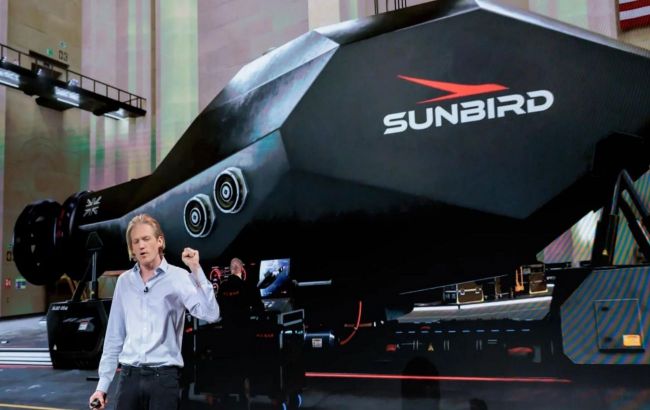 Startups have built the first prototypes of fusion engines (photo: Pulsar Fusion)
Fusion engines could radically transform space travel — startups are bringing a technology once confined to science fiction closer to reality, according to Live Science.
How does it work, and what are the advantages?
Scientists explain that nuclear fusion involves combining two light atoms into a heavier one, releasing an enormous amount of energy in the process.
Unlike terrestrial power plants, where the main challenge is containing plasma, in space it can be expelled through a nozzle to generate continuous thrust.
A spacecraft powered by such an engine could accelerate to hundreds of kilometers per second.
This could shorten mission times and free up more payload capacity, since nuclear fusion requires significantly less fuel than chemical propulsion systems.
"If we continue on the current trajectory, everything we know about space travel is going to change within a decade," said Stephane Lintner, CEO and co-founder of Helicity Space.
"Fusion propulsion in some ways is harder, in some ways is easier, than terrestrial energy production," added Bhuvana Srinivasan, a professor of aeronautics and astronautics at the University of Washington.
Key developments and testing timeline
British startup Pulsar Fusion has already demonstrated the production of "first plasma" inside its Sunbird test engine, containing it with an electromagnetic field. The company uses helium-3 and deuterium to generate thrust.
Pulsar Fusion founder Richard Dinan says a trip to Mars would require only a few hundred grams of the primary fuel, along with 10 to 20 metric tons of deuterium propellant.
This could allow the spacecraft to reach speeds of up to 529,000 km/h (329,000 mph).
"I think we will see fusion as a propulsion system pretty soon. The demand is certainly there," Dinan said.
Read also: Europe unveils most powerful spectrograph to capture thousand galaxies at once
Project timeline
2027: Pulsar Fusion plans to conduct the first demonstration tests of its fusion engine in orbit.
The 2030s: Helicity Space expects to launch its Helicity Drive prototype, which uses pulsed plasma, and achieve a positive energy balance.
2028: Meanwhile, NASA is developing the SR-1 Freedom, a nuclear fission-powered spacecraft designed for a Mars mission. However, this technology is less advanced than fusion propulsion and is not as fast.
The use of these new propulsion systems could open the door to exploring the most distant objects in the Solar System.
For example, a mission to the dwarf planet Sedna, which would normally require about 30 years using chemical propulsion, could reach its destination in just 10 years with a fusion engine.
More to explore: