Moon may hold 4-billion-year-old archive of alien traces: Scientists suggest search

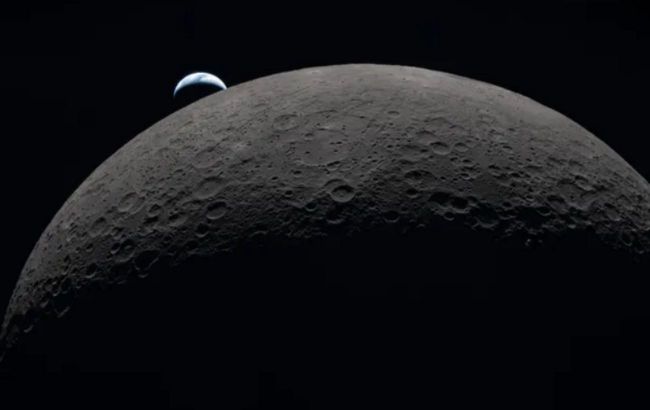 SETI will search for microscopic UFO debris (photo: NASA)
Scientists propose searching for aliens on the Moon – they want to find tiny artificial particles that may have traveled through space for billions of years, according to a study published on the arXiv preprint server.
Scientists believe the Moon is an ideal natural archive for collecting interstellar material.
Unlike Earth, it has no active geological processes, water or dense atmosphere. As a result, the Moon’s surface has accumulated cosmic dust for 4 billion years in a largely unchanged state.
What is the new method and how will the search be conducted?
The study’s authors, led by SETI Institute associate scientist Luis Pino, say that advanced extraterrestrial civilizations could have left behind durable microscopic fragments from space construction or research missions.
To test this hypothesis, scientists propose the following approach:
- Take about 1 cubic meter of lunar regolith for initial analysis (roughly the volume of a household refrigerator);
- Use modern optics, electron microscopy and materials science analysis;
- Employ artificial intelligence algorithms to rapidly scan for and identify anomalous particles of artificial origin.
Read more: Comet changed its direction of rotation for the first time in history: scientists find an explanation
The practical value of the Artemis and Chang'e missions
Modern space programs will help obtain the necessary soil samples. In particular, NASA’s crewed Artemis program and China’s robotic Chang'e missions will deliver regolith to Earth.
For now, scientists emphasize that there is no direct evidence of alien technology on the Moon, but the method itself is ready for scientific testing.
Even if no traces of aliens are found in the first samples, the research will help improve models of cosmic dust movement, study the impact of interstellar material on the Moon’s geology and test new equipment for analyzing lunar soil that did not exist during the Apollo missions.
Read also: Historic milestone: 124-meter Starship rocket achieves orbit for the first time