Missile-free defense at 36,000 km: France launches Project Yoda space program

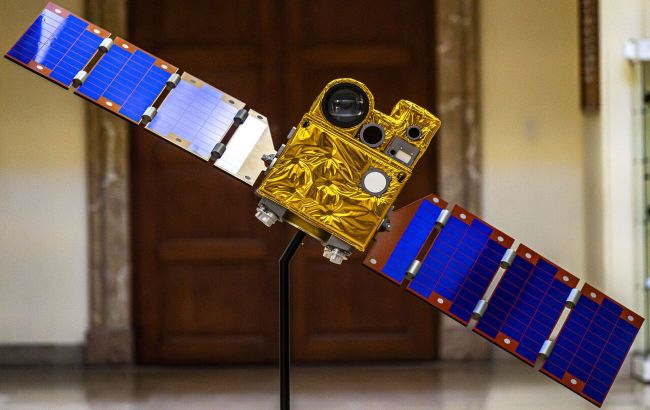 France launches the Yoda satellite program (photo: R. Léal/armée de l'Air et de l'Espace)
The French Space Command (CDE), together with the National Centre for Space Studies (CNES), is developing a new defense program called Yoda, according to Futura.
The project name Yoda stands for Yeux en Orbite pour un Démonstrateur Agile—"Eyes in Orbit for an Agile Demonstrator."
The goal of the project is to launch two small patrol satellites into geostationary orbit to detect potential threats, espionage, and hostile maneuvers near the country's strategic objects.
France began forming its own defense strategy in space following a series of unfriendly actions by other states.
In particular, in 2018, a dangerous approach by a Russian spacecraft to a Franco-Italian government satellite was recorded, and in late 2025, President Emmanuel Macron officially declared "outer space a potential battlefield."
Tasks of the Yoda system
The development takes into account the increase in cyberattacks, signal jamming, satellite espionage, and the creation of new weapons - such as the Chinese pulsed system TPG1000Cs with a power of 20 gigawatts or Russian interceptor spacecraft.
The Yoda program aims to solve the following key tasks:
- Patrolling geostationary orbit at an altitude of about 36,000 kilometers;
- Tracking, inspecting, and recording dangerous approaches by foreign objects;
- Practicing active defense maneuvers;
- Modeling orbital operations;
- Testing interaction between two identical satellites weighing several tens of kilograms each, one of which will serve as a target for the other.
Technical details and prospects
The platform development has been entrusted to the French company Hemeria, and the project is managed by CNES. The goal is to maintain Europe's full technological sovereignty.
The launch of both devices is scheduled for before 2030.
In addition, by the end of 2027, France will engage the commercial Paladin satellite to inspect geostationary orbit.
In the future, the country plans to supplement the satellite guard with ground-based lasers and powerful jamming systems, abandoning the use of interceptor missiles due to the risk of creating space debris.
More interesting: