Alternative to Patriot: Flamingo missile maker unveils new air defense system

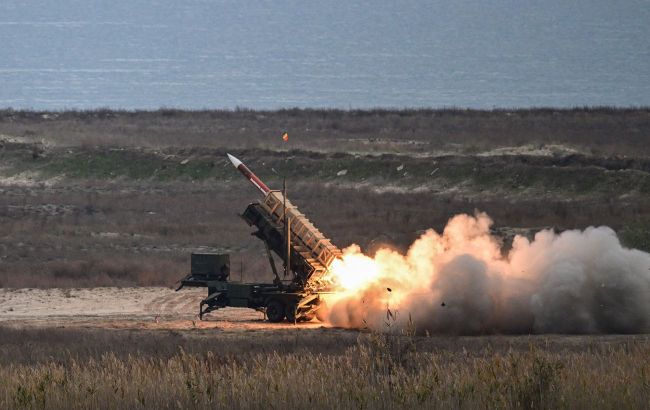 Photo: Patriot air defense system (Getty Images)
Fire Point, the manufacturer of the Ukrainian Flamingo cruise missile, is in talks with European companies to launch a new air defense system that is expected to become a cheaper alternative to Patriot, Reuters reports.
Fire Point co-founder and chief designer Denys Shtilierman said the company aims to reduce the cost of intercepting a ballistic missile to under $1 million.
Currently, Ukraine and many other Western allies rely heavily on US-made Patriot systems to intercept ballistic missiles. However, these systems are becoming increasingly difficult to obtain, partly due to their active deployment in the Persian Gulf to defend against Iranian attacks.
According to Shtilierman, intercepting a single ballistic target with Patriot often requires two or three missiles, each costing several million dollars.
"If we can decrease it to less than $1 million, it will be ... a game changer in air defence solutions," he said. "We plan to intercept the first ballistic missile at the end of 2027."
At the same time, he did not name the European companies Fire Point is negotiating with. According to him, the company is "deeply interested" in cooperation in radar technology, missile guidance systems, and communications — areas where it currently lacks expertise.
Shtilierman noted that European companies, including Weibel, Hensoldt, SAAB, and Thales, have strong radar solutions.
In the first days of the Middle East conflict, Israel and its allies used about 800 Patriot missiles to intercept Iranian targets. By comparison, Ukraine has received around 600 such missiles over the entire course of the full-scale war.
The Pentagon has already asked the White House to approve a request to Congress for more than $200 billion to fund the war against Iran, highlighting the scale of US needs and the rapidly rising cost of the campaign.
Estimates suggest that in just the first 12 days of the operation in Iran, the United States depleted stockpiles of precision-guided weapons that had been built up over the years. Replenishing them will take significant time and come at a very high cost.