Will Russia flee Crimea? Mejlis chair reveals what could push occupiers to the brink


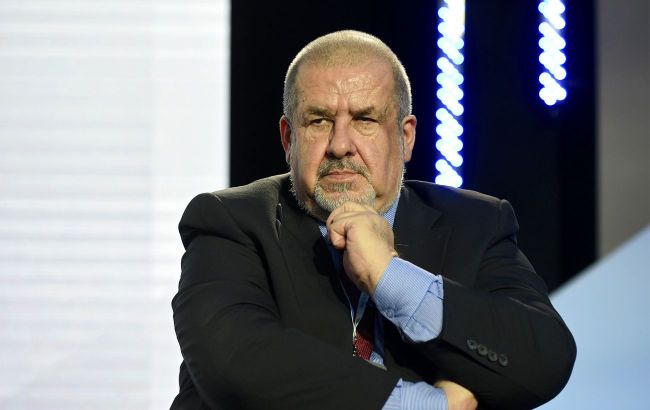 Photo: Refat Chubarov, Chairman of the Mejlis of the Crimean Tatar People (Getty Images)
Crimea faces fuel shortages and bank card disruptions, trucks are stuck in miles-long queues, and Ukrainian drones are appearing in the skies above the peninsula more frequently than ever.
How stable is Russian control over Crimea today, and what mood prevails among the peninsula's residents? In a blitz interview with RBC-Ukraine, Chairman of the Mejlis of the Crimean Tatar People Refat Chubarov shared his assessment.
Key points:
- Logistics crisis: Regular Ukrainian strikes and fire control over supply routes have turned Crimea into a frontline zone, triggering a fuel crisis.
- Local sentiment: Hundreds of thousands of Crimeans remain loyal to Ukraine, but large-scale public protests are currently impossible due to Russia's harsh repressive control.
- Prospects for de-occupation: A complete blockade of the peninsula would leave Russian forces without resources and force them to begin evacuating troops.
- Russian exodus: Even subtle signs of a Russian withdrawal, such as the removal of archives or museum valuables, will trigger a psychological breaking point, sparking a mass flight of illegally resettled Russians.
– A year ago, Crimea was deep in Russia's rear. Today, we see queues at gas stations, fuel rationing coupons, and disruptions in logistics. How serious is this crisis for Russia, and could it spread to other sectors such as food, medicine, or communications?
– I would say that even a year ago, Crimea had already become a frontline territory for the Russians. Starting in August 2022, there were successful strikes on military targets.
It began with the attack on the Novofedorivka airbase near Saky, where Russian military aircraft were destroyed. Then there were three attacks on the Kerch Bridge. As a result, the bridge can no longer perform all the functions envisioned when it was designed.
Today, there is hardly a day without attacks on military facilities in occupied Crimea, and there are many of them. Experts estimated more than 225–230 such sites two years ago, and that number has not decreased. Crimea has been completely militarized. Russia launches missile strikes from there, and drones take off from the peninsula to attack mainland Ukraine.
Naturally, all of these military facilities are priority targets for the Ukrainian Armed Forces.
Just last night, if we look at the geography of the strikes, we see attacks on the Saky airbase, Kacha airbase, and Belbek airbase. There were also strikes in central Simferopol targeting military units, something even the occupation authorities were forced to acknowledge.
As for the fuel crisis, it was to be expected. It is the direct result of active and targeted operations carried out by Ukraine's Security and Defense Forces.
There is a land route running from Rostov-on-Don in Russia through occupied Mariupol and Melitopol to Crimea. The Russians call it the Novorossiya highway. Ukrainian forces now maintain fire control over certain sections of that route.
As a result, Russia's ability to transport fuel by road to occupied Crimea and nearby occupied areas of the Kherson and Zaporizhzhia regions has been severely restricted.
Now the crisis is unfolding. It is causing a certain degree of panic among the population, which is unavoidable. The crisis directly affects people living in occupied Crimea.
Reactions vary. Some curse Ukraine. But many others signal that they are prepared to endure these hardships if they help bring Crimea's liberation closer.
We communicate every day with people in occupied Crimea. I want to emphasize that hundreds of thousands of people — Crimean Tatars, ethnic Ukrainians, and representatives of other nationalities — remain devoted and loyal to the Ukrainian state. Yet when faced with these difficulties—since fuel shortages complicate life for our people living in occupied Crimea—they are ready to endure it.
Yesterday, I had a brief conversation with one resident who told me, "The most important thing is that what is happening today culminates in the swift liberation of Crimea."
People had similar hopes in 2022, when the first highly accurate strikes on Crimea began. Later, they waited for the counteroffensive, hoping it would result in the peninsula's liberation.
Now, as many experts argue that full control over the land corridor could eventually force Russia to consider evacuating and withdrawing from Crimea, people are uplifted. Their hopes are growing stronger.
But here it is important to speak honestly and directly with our people in Crimea and to explain that the Ukrainian Armed Forces are trying to do everything possible to ensure that the Crimean peninsula becomes fully blocked in terms of the Russian army’s ability to operate and supply itself.
In this context, it is clear that there are two remaining supply routes for both troops and food deliveries to Crimea.
The first is the Kerch Bridge, which we have already discussed. Although it has been significantly weakened after three explosions, it continues to perform certain functions. Vehicles and people continue to cross it, but it can no longer support heavy freight trains.
That is already a very important development. The ferry has been destroyed, and there is no longer any freight ferry connection to Crimea. This is the result of the Ukrainian Armed Forces destroying those ferries.
This road is the land corridor to Crimea. Of course, fire control is not yet full control over this route. However, if these efforts eventually result in full control over the land corridor, and if (this is a bit of speculation, as I am not a military expert) the Kerch Bridge is destroyed, then many analysts already predict that the Russians will have no choice but to figure out how to evacuate their forces from Crimea.
This is because they have no strong position at sea and do not control the Black Sea. They can occasionally deploy ships from ports located in their own territory, particularly Novorossiysk, from where they launch missiles at mainland Ukraine and then retreat again under coastal defense protection. At sea, the Russians can no longer defend the Crimean peninsula from liberation.
— How likely do you think it is that Crimea could effectively become an island in the near future, that is, will be completely cut off from Russia, given the current dynamics both on the land corridor and in the air? Do you see a scenario of de-occupation without a large-scale ground operation? And what would the transition period look like if Russian forces begin withdrawing before Ukrainian forces, such as the Armed Forces or National Guard, have entered the peninsula—would there be chaos?
— I will partly rely on some forecasts made by experts in the field of modern warfare.
Although everyone acknowledges that the Russia–Ukraine war, especially in its current phase since 2022 (when it became a full-scale war), has significantly changed perceptions of how wars are conducted and what tools are used to achieve objectives by the warring sides.
And now, amid what is to some extent a blockade (though not yet a complete blockade of occupied Crimea from the land), we are already seeing consequences, including a fuel crisis.
Some experts note with surprise that cutting supply lines to a military grouping on territory they de facto control, but where they cannot fully exercise authority due to a lack of resources, creates problems the enemy is unable to resolve.
If they cannot solve these problems, they must either abandon these territories or somehow respond. And this will also affect other theaters of military operations.
Strengthening problems with maintaining the Russian military grouping in Crimea will create additional difficulties for the Russian army in other sections of the front, particularly in the Donetsk and Luhansk directions. They will be forced to decide whether to continue sustaining their forces in occupied Crimea or find other ways to ease their situation. According to experts, there are no realistic alternatives other than the evacuation of part of the Russian troops.
If such a process begins, it would bring catastrophic changes in the psychological mindset of Russians, potentially triggering a chain of developments that could become irreversibly destructive for the Russian army. Therefore, experts currently see the creation of even greater pressure on Russian forces in occupied Crimea as an opportunity to fundamentally change the course of the Russia–Ukraine war.
I, to some extent, share this view, approaching it as a historian. There has not been a single war in which Crimea was involved as a territory without its loss or liberation fundamentally changing the situation. This was true in 1920 and again in 1944.
Therefore, the liberation of Crimea—regardless of the method, whether through a military operation or through a scenario in which the enemy army finds no alternative but to withdraw, as happened in 1920 with the White Army—would dramatically shift the situation. If Russia is forced to withdraw its forces, its entire system would begin to collapse, and it would move toward a point of no return.
— Can we expect that pro-Ukrainian populations, including Crimean Tatars or even pro-Russian residents, might become a trigger under conditions of blockade, hunger, and hardship, and themselves push out the occupation authorities? In other words, is there enough anger and capacity for such a scenario?
— I would argue that in modern warfare, where a vast array of digital technologies is deployed, total surveillance is maintained along with the enhanced capabilities of punitive agencies to reach any individual they consider an opponent.
So, given the capabilities of modern occupation regimes such as the Russian one, I do not see any possibility of such a small territory for open mass actions by an unarmed population against armed occupiers. However, weapons are not always the decisive factor in such situations.
As soon as it becomes possible (and I want to emphasize again—if it becomes possible) to significantly strengthen the blockade of fuel supplies as the main component sustaining the operational capability of the Russian army, and if there are further restrictions or even disruptions in the supply of other goods needed to maintain the Russian military presence, then even the first, barely noticeable changes may begin to appear, such as the withdrawal of certain elements of infrastructure.
I am not saying that Russians will suddenly start withdrawing all their forces overnight, but certain infrastructure and specific facilities will begin to be relocated. We are already receiving information that all rare, valuable exhibits in Crimea’s museums have been cataloged, and preparations are underway for the evacuation of Crimean archives.
These are not actions carried out in complete secrecy. They involve specific individuals who have families; they talk about it somewhere, and they pass this information to one another, despite the risks for them.
And as soon as even such subtle processes begin, they will immediately affect people’s psychology and behavior. We expect that the first to react once these developments become noticeable, such as Russians beginning to move or what they call the evacuation of their most valuable exhibits or equipment, will be those who have settled in Crimea.
And they are already thinking about it now, and there is some data from those monitoring these processes. And this is not a small number—almost one million people have settled in Crimea. Just imagine when one part of them, anticipating an even more difficult situation, and some of them will already realize that the liberation of Crimea is inevitable, starts leaving Crimea.
This will create a psychological turning point in people’s attitudes. This psychological shift, when those who are expecting liberation become more encouraged, while others fall into depression, will trigger processes that the Russians will not be able to stop through administrative means. For example, the departure of people who have settled in Crimea. All of this will then lead to other processes and changes in the mood of people living within Russia itself.
But I want to emphasize again that this requires very tangible actions, which depend primarily on the military. I cannot go into detail here, as this is outside my area of competence, but I do know one thing: behind every such victory of the Ukrainian Armed Forces—such as a complete blockade of the land corridor or severe damage, or even destruction, of the Kerch Bridge—these actions will have enormous significance for turning the expectations we are discussing into reality.
This includes the behavior of hundreds of thousands of people in Crimea who remain loyal to the Ukrainian state.
Read also:
Ukrainian drones hit Russian patrol ship in Crimea
Fuel coupons in occupied Crimea, limits in Moscow: Russia's gasoline problem is getting worse