'Trump said today's Putin is not the same as he was a year ago.' Interview with top Ukrainian diplomat Kyslytsya


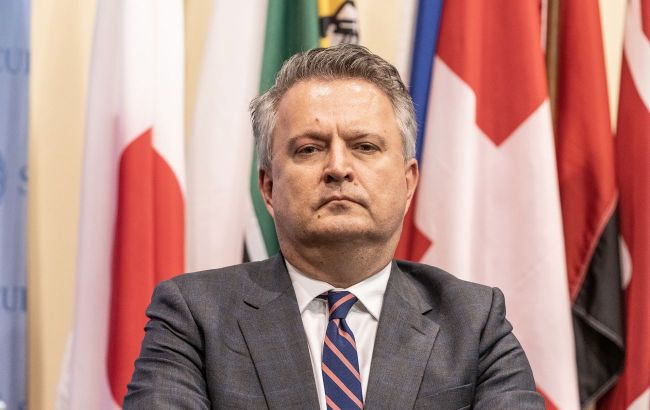 Photo: Sergiy Kyslytsya, First Deputy Head of the Office of the President of Ukraine (Getty Images)
While the peace process has slowed for now, the key factor remains the situation on the battlefield and deep inside Russia. Ukraine's recent military successes are also improving the prospects for progress at the negotiating table.
The diplomatic track toward ending Russia's war in Ukraine has cooled in recent weeks, but the reasons have less to do with a breakdown in talks than with a scheduling problem 6,000 miles away: the American officials who had been shuttling between Kyiv, Moscow and the Gulf were suddenly consumed by the crisis with Iran.
That is the account offered by Sergiy Kyslytsya, Ukraine's first deputy head of the Office of the President and one of the country's key negotiators, in an interview with RBC-Ukraine. Even as formal three-way sessions have paused, he said, contact between Kyiv and Washington has not — President Volodymyr Zelenskyy and President Trump have spoken by phone and in person several times in recent weeks alone, and Ukrainian and American negotiating teams remain in near-constant touch.
Diplomat's central argument is that the war itself, not the diplomacy around it, is doing the most persuasive work. Ukraine's increasingly effective strikes on Russian logistics and strategic sites deep behind the front, he said, are reshaping how Washington sees the conflict — and, by extension, how much leverage Ukraine has at the table. "This adds up to a picture in which, at the very least, Putin is not winning the war — and probably he is losing it," Kyslytsya said. Even Secretary of State Marco Rubio, he noted, has publicly suggested that Ukraine's battlefield successes are opening space for a genuine off-ramp from the war.
Evolution of the talks
Asked to characterize the current state of negotiations — frozen, slow, or simply absent — Kyslytsya insisted on distinguishing what happened in 2025 and what has happened since. The sessions held in Istanbul last year, he said, were not negotiations at all. "What happened there was an exchange of positions," he said, describing them instead as a series of meetings without American participation, despite Zelenskyy's explicit instructions that Ukraine would only sit down with the Russian delegation if the United States was in the room.
At the first Istanbul session, Kyslytsya recalled, the Russian delegation tried to frame the talks as a continuation of the 2022 Istanbul negotiations — an attempt Kyiv rejected immediately. He was struck, he said, by how quickly Vladimir Medinsky, the Kremlin's chief negotiator, backed off that claim, only to keep trying variations of the same argument in later rounds: that Ukraine had once been willing to accept a shorter settlement document, and that holding out now would only mean a longer and harsher one later, given Russian advances on the front.
Little came of the sessions substantively, Kyslytsya said, apart from an agreement on the scale of prisoner exchanges — a humanitarian outcome he called significant given how many families were affected, even if the exchanges themselves were not new. What defined the Istanbul rounds more than anything, he said, was the amount of time consumed by Medinsky's digressions into history — a habit Kyslytsya dryly connected to the Russian negotiator's well-documented record of plagiarized academic work.
"Turkish wars, Swedish wars, who did what to whom," he said, describing the historical detours Medinsky offered instead of engaging on substance. The Ukrainian delegation, he said, made a deliberate decision not to get drawn into these historical arguments, letting the Russians talk themselves out before steering back to the actual agenda.
That changed once the venue moved to Abu Dhabi and Geneva in 2026 — even before the Iran war began. Those sessions, held twice in Abu Dhabi and once in Geneva, were genuine three-way negotiations, split into political and military working groups, with the American delegation asking questions and offering answers rather than simply observing. General Christopher Cavoli, NATO's Supreme Allied Commander Europe, played a particularly important role in the military track whenever the Ukrainian and Russian sides reached an impasse, Kyslytsya said.
Ninety percent of a technical framework and a wall of politics
Kyslytsya, who sat on the military working group, described it as the less publicized but more successful of the two tracks — overshadowed in press coverage by the political group, but essential groundwork for anything the political side might eventually agree to. Any political settlement, he argued, would still require an extraordinarily complex system of verification and monitoring along a front line far longer and more heavily armed than anything the Organization for Security and Co-operation in Europe ever attempted — a mission that, in an earlier era, considered contracting two drones a technological breakthrough.
The military group's work began with something as basic as agreeing on shared vocabulary — settling, for instance, on common definitions of "ceasefire" and "line of contact" so the two sides would not later argue over semantics. But even that ran into resistance: in Istanbul, Kyslytsya said, Medinsky rejected the idea of a ceasefire outright, at one point offering only a brief pause in fighting to exchange the bodies of the dead. By Geneva, negotiators had reached what Kyslytsya described as a genuine framework agreement on future verification and monitoring, with the American delegation confirming its own role in implementing it.
Even so, the group hit a wall. "The military side did ninety percent of the job," Kyslytsya said, crediting Ukraine's chief of the General Staff, Andrii Hnatov, for skillfully steering the talks that far — but the remaining questions, he said, could only be resolved by politicians, not generals.
Then came Iran.
When Washington's attention shifted
The American officials running point on Ukraine, Kyslytsya noted, were largely the same people managing the parallel — and increasingly urgent — negotiations with Iran. He recalled a bilateral meeting in Miami just before the Iran war broke out, when the Russians could not attend for various reasons, leaving Ukrainian and American officials two intensive days together. But the toll of the overlapping crisis was obvious: what was a Sunday morning meeting for the Ukrainian side was already the sixth hour of the workday for Steve Witkoff, who told them he had been on multi-channel calls about Iran since 4 a.m. "It's clear that under those conditions, commitment is difficult even as a matter of physics," Kyslytsya said.
Asked whether the partial resolution of the Iran crisis might now free up more American attention for Ukraine, Kyslytsya cautioned against isolating any single factor, describing the war as multifactorial— but noted that the picture had shifted in several ways at once. Zelenskyy and Trump have spoken by phone twice in the past month alone: on June 14, ostensibly to mark Trump's birthday, though Kyslytsya said 90 percent of that call concerned the battlefield and prospects for a settlement, and again on July 4, in a lengthier call devoted specifically to the peace process. Between those two calls came a full slate of diplomacy, including conversations on the sidelines of the G7 summit and a three-way call among Zelenskyy, Trump and French President Emmanuel Macron.
He also pointed to a video call earlier this spring in which Zelenskyy spoke with Witkoff and Jared Kushner, joined by Senator Lindsey Graham and NATO Secretary General Mark Rutte — a conversation in which the Ukrainian side raised its frustration that Witkoff and Kushner had traveled to Moscow at least seven times but had still, to that point, never visited Ukraine itself. Asked whether there was any indication of when that might change, Kyslytsya said the Americans had agreed a visit was necessary, but it had yet to materialize. No amount of briefing material prepared by intelligence services or the State Department, he argued, substitutes for sitting down in Kyiv with the government, lawmakers, soldiers and ordinary citizens. Nearly every foreign visitor to Ukraine, he said — presidents, prime ministers, lawmakers alike — comes away saying how much it mattered to see the country firsthand.
Kyslytsya also noted a shift in the Trump administration's own rhetoric, especially at the G7 summit in Évian, where the group issued a joint statement Washington ultimately joined — a sign of unity he said should not be underestimated. He also pointed to the parallel track run by the so-called "coalition of the willing," which he suggested could use a fresh look at where it stands, even as he credited France and the United Kingdom with leading on some of the most consequential questions, including the Paris memorandum that opened the door to deploying foreign contingents in Ukraine. A related channel, the "E3" format bringing together Britain, France and Germany, produced what Kyslytsya called a productive conversation between Zelenskyy and the three countries' leaders in London.
But the most persuasive factor by far, he said, is what the Ukrainian military itself is doing. The current situation on the front — and the deep and medium-range strikes landing inside Russia — is making a forceful impression in Washington, he said.
Why Washington's view of Putin has changed
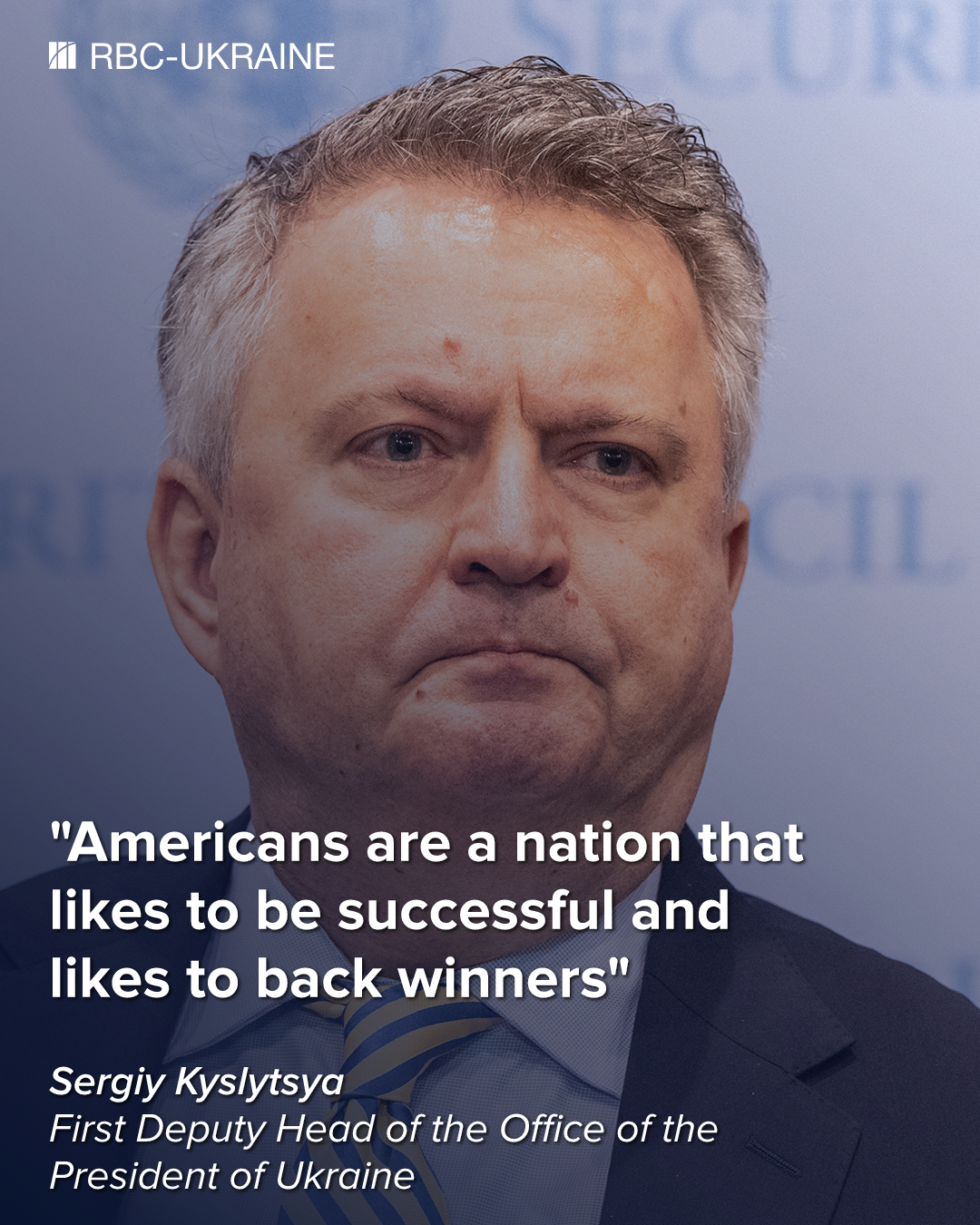
Asked how durable that impression might prove to be, Kyslytsya offered a broader read on the American psyche: a nation, he said, that likes to be successful and likes to back winners. In previous years, he argued, Russia had some success planting a narrative in Washington that Moscow was on the verge of finishing off Ukrainian resistance in the Donbas — and Ukrainian negotiators were warned more than once that if Kyiv would not accept the terms on the table, a ceasefire might eventually be dictated by battlefield results rather than negotiation. Russian officials, he said, have made similar predictions repeatedly over the past two years, each time claiming Ukraine had only three months left before collapse.
That is why he watched with interest as the Russian side tried to spin the spirit of the Anchorage summit into something more favorable to Moscow — an interpretation he dismissed as a Russian invention, embraced mainly by journalists and political analysts rather than anyone actually involved in the negotiations. He said he was struck instead by Rubio's recent remarks about Anchorage, which he considered an important signal from Washington.
Kyslytsya also disclosed one line from a closed-door G7 session involving Ukraine that he said captured how clearly Trump understands the situation: "Trump said today's Putin is not the same as he was a year ago." Asked to interpret that remark, Kyslytsya suggested the Americans can plainly see that despite years of promises, Russian forces still have not taken the Donbas. He said he suspects Washington is also watching where Russia stood during the Iran conflict, watching Putin's setback in Armenia's elections, and watching Russia's economic strains — all of it, he said, adding up to a picture in which Russia is not winning the war and is more likely losing it. The open question, he added, is whether other countries around the world are actually prepared to accept a Russian defeat, given how disruptive the collapse of Russian power could prove to be.
Kyslytsya argued that many in the West still carry over instincts from the late 1980s and early 1990s — a preference for stability over democracy in Russia, rooted in fears about loose nuclear weapons, terrorism and narcotics trafficking. "As long as there's stable power — doesn't matter what kind," he said, describing that mindset, adding that some in the West still believe restoring trade with Moscow would deter future aggression by giving the Kremlin something to lose.
Territory and the shape of a settlement
Asked whether the conditions exist for another three-way session along the lines of Istanbul, Abu Dhabi or Geneva, Kyslytsya said any durable settlement remains unimaginable without direct American involvement, even if the eventual outcome is never formally called a "peace agreement." He described this summer as a decisive window, shaped simultaneously by conditions on the battlefield, the international calendar, and domestic politics in Washington.
Pressed on whether a leaders'-level summit focused specifically on territory is realistic — given Zelenskyy's repeated insistence that the territorial question be settled at the very top, against a backdrop of Russian officials suggesting either that Zelenskyy travel to Moscow or that extensive groundwork must precede any leaders' meeting. He pointed instead to what he called the objective reality that Russia cannot win the war, and that Putin is paying an enormous price for continuing it: more than 30,000 dead and wounded a month, a toll that keeps accumulating regardless of how much bravado the Kremlin projects. He cautioned, however, against assuming Russia is close to economic collapse, describing a system with deep roots in the Soviet era and in Tsarist Russia, where ordinary lives were never highly valued.
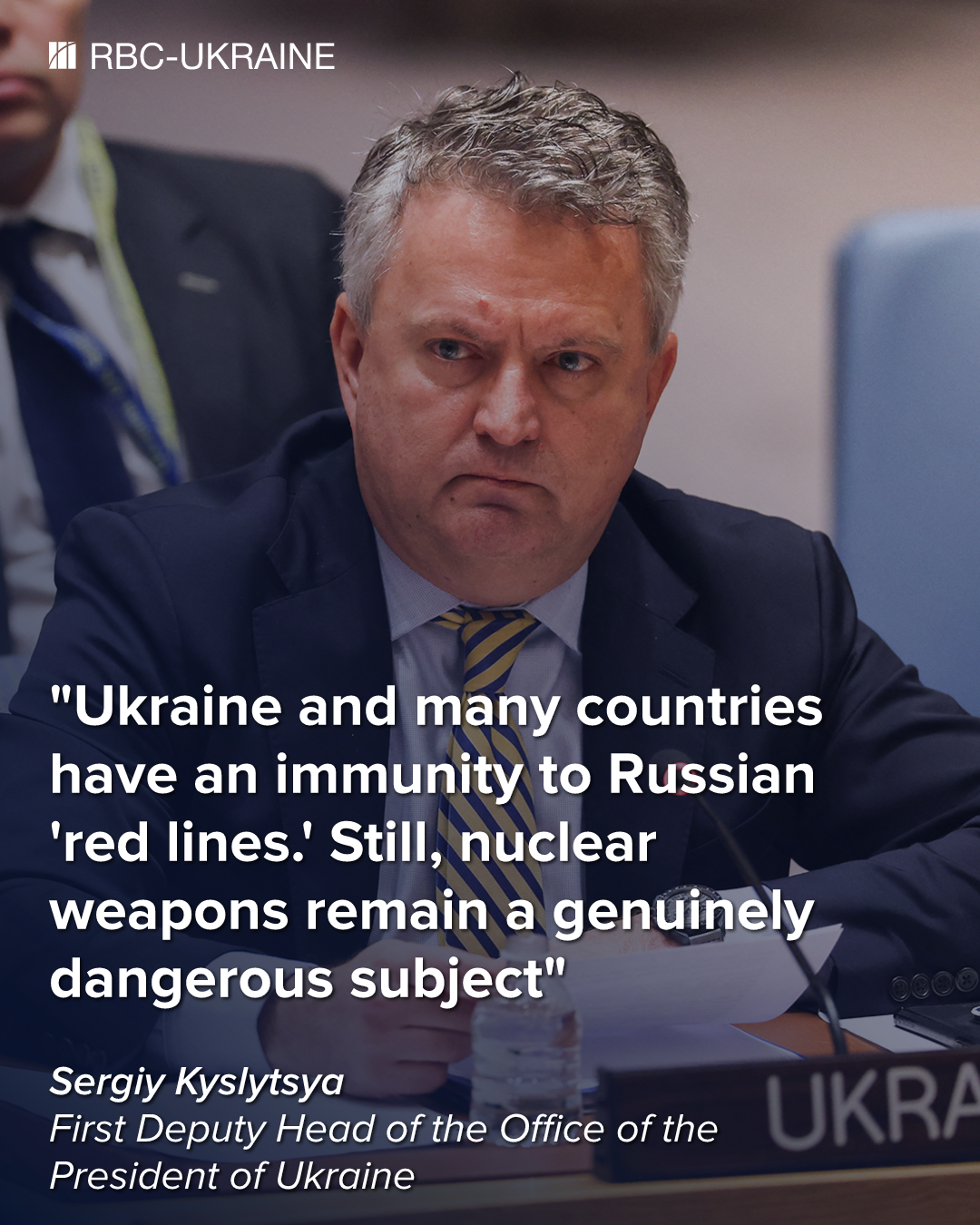
Kyslytsya also addressed, without being asked to name it directly, the fear voiced by some European officials about what a cornered Russia might do — including the specter of tactical nuclear use. He said many countries, Ukraine included, have effectively developed an immunity to Russian "red lines." Still, nuclear weapons remain a genuinely dangerous subject, one on which he believes both the United States and China, as nuclear powers themselves, maintain fairly clear channels with Moscow.
On Belarus, Kyslytsya confirmed that Ukraine retains channels for signaling to Minsk, following reports from Alexander Lukashenko and Kremlin spokesman Dmitry Peskov that Kyiv had passed messages through intermediaries close to the Kremlin. He noted a period of jamming of Russian retransmission towers, followed by two days of talks between Lukashenko and Putin, after which most of the towers were deactivated. He described Lukashenko as caught between mounting pressure from Moscow and a clear-eyed understanding of what deeper involvement in the war against Ukraine would cost him and his country.
Asked whether Ukraine might offer compromises short of territorial ones, Kyslytsya said the entire 2025-2026 negotiating process already demonstrates Ukraine's willingness to accept any compromise that does not violate its constitution. He noted, with some resignation, that Putin continues to claim Ukrainian forces are encircled near towns and even rivers that do not exist inside Ukraine's borders — a sign, in Kyslytsya's telling, of just how detached from battlefield reality some of the Kremlin's claims have become.
Asked to define Ukraine's current formula for peace, Kyslytsya offered a broad answer: the only real guarantor of security on the European continent today is the Ukrainian armed forces themselves. If Ukraine's European and transatlantic partners come to recognize that, working together with Europe and the United States will allow them to contain a threat that, even after the war ends, Russia will continue to emanate for decades to come.