'Doing everything to please Trump didn't deliver results and it won't.' Interview with German security expert Nico Lange


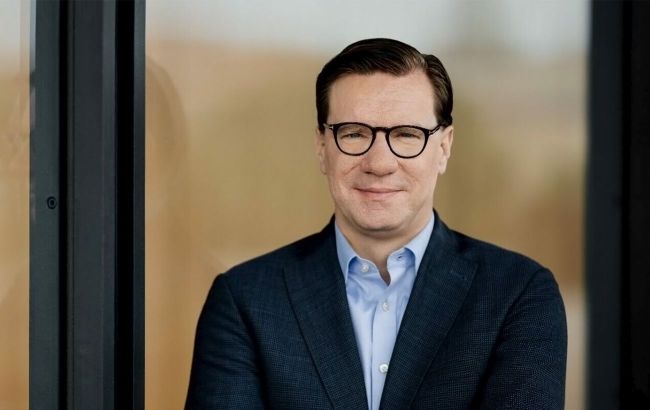 Nico Lange (photo: Getty Images)
Germany is emerging as Europe's top defense spender, but outdated bureaucracy is still holding back rapid weapons deliveries. The time for illusions about Russia is over, and Berlin is now looking for ways to act independently of Washington's support.
In an interview with RBC-Ukraine, former Chief of Staff at the German Ministry of Defense, Nico Lange, explains whether Europe can defend itself without Trump and why Ukraine has become central to its security.
Key points:
- Lack of strategy: European partners have no clear idea of the way forward, so Ukraine must develop its own solutions for EU security.
- Regional alliances: A way out of the security crisis lies in bilateral agreements and closer ties between Ukraine and the Baltic and Nordic countries outside NATO.
- Germany's transformation: Germany has become a leader in defense spending, but bureaucracy and legacy structures still hinder its ability to act effectively.
- Ukraine as a source of innovation: The Bundeswehr is already adopting Ukrainian military experience, creating drone units and bringing in Ukrainian instructors.
- Technological partnership: Cooperation should be based on joint ventures where Ukraine retains ownership of its technologies and data.
- Political fragmentation: The main risk to continued support is hesitation among EU governments due to internal divisions.
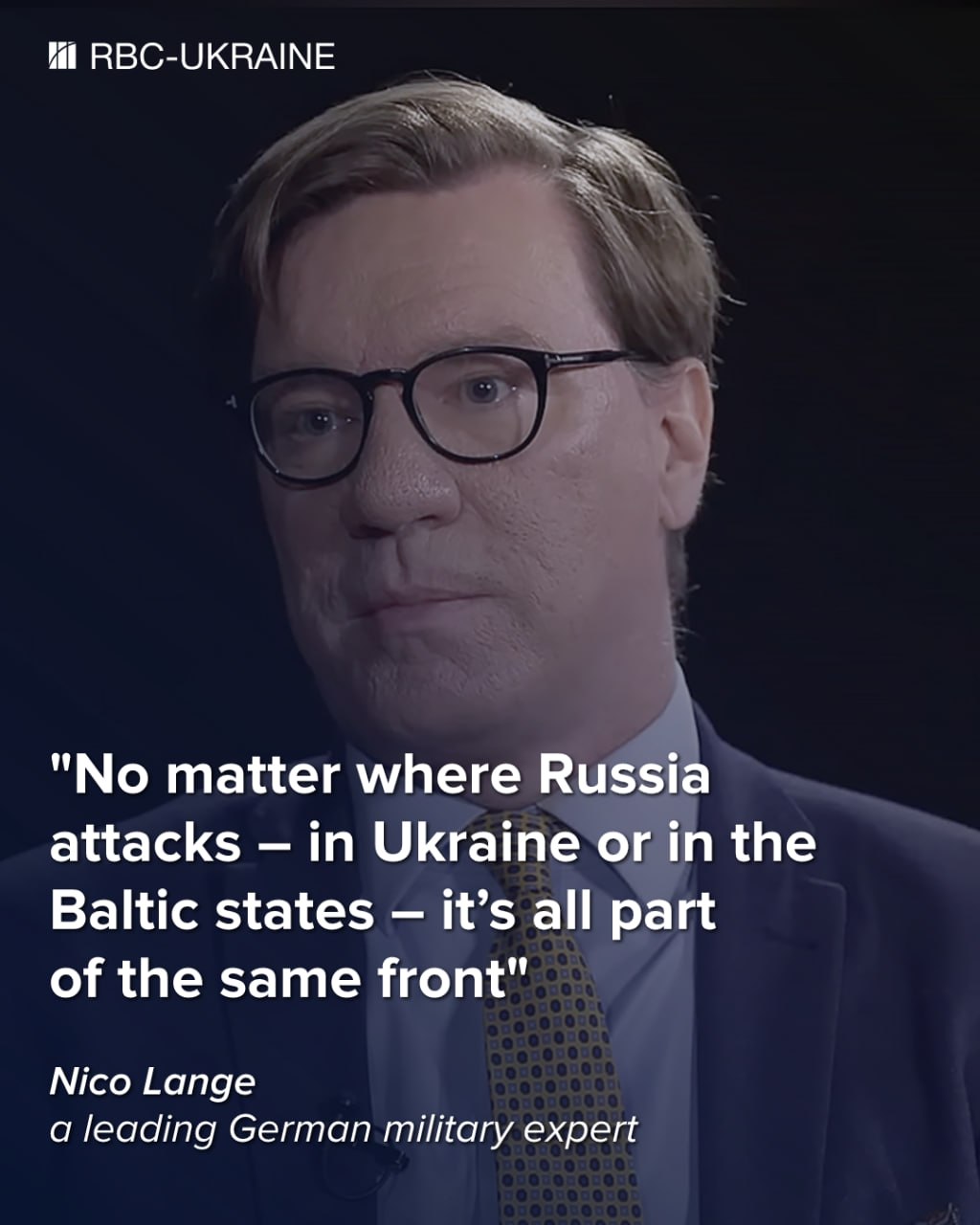 Nico Lange on deterring Russia from opening new fronts (RBC-Ukraine infographic)
Spring in Ukraine may be cold in terms of weather, but it's heating up on the battlefield and in foreign policy. Bogged down in the Iran war, US President Donald Trump has ultimately abandoned efforts to bring negotiations between Ukraine and Russia to a conclusion.
Taking advantage of this, Russia has stepped up offensive operations in an attempt to advance in Ukraine's Donbas. At the same time, the Kremlin is sending increasing signals about a possible attack on the Baltic states—Lithuania, Latvia, and Estonia. All of this comes amid growing uncertainty over whether Trump would defend European NATO members in a potential war with Russia. Europe still lacks a clear understanding of how to respond to these challenges.
"The European partners of Ukraine do not have ideas apart from 'let's do the same, let's provide more support, and hope that somehow things will solve themselves.' So I think it's up to Ukraine to develop some ideas," Nico Lange, founder and director of the Institute for Risk Analysis and International Security (IRIS), told RBC-Ukraine.
One of Germany's leading security experts, Lange served as Chief of Staff at the Defense Ministry under Angela Merkel and acknowledges that Germany's political leadership harbored many illusions about Russia.
Now Germany must learn from those lessons. In this context, he says, cooperation with Ukraine is key—Ukraine has evolved from a passive object into a full-fledged actor shaping policy across Europe.
— Today, we see the de facto collapse of negotiations between Ukraine and Russia. Do the European countries, and Germany in particular, have a clear understanding of what to do in the face of continuing Russian aggression in this situation?
— Well, I think that's true also – at least partly for Ukraine, but also for the Europeans – we have to admit that this exercise of pleasing Trump, doing everything not to offend Trump, and playing in his theater of negotiations, did not deliver any results, and it's not expected that this will produce a result.
So from that point of view, it's not a tragedy that this negotiation theater is ending, because it was not leading anywhere. But the question is what comes next, and where the Europeans are now. If you look at the practical support for Ukraine, there is just a small group of European countries that are really supporting Ukraine, and they do not have a clear picture of how to move this forward.
So I think it's important for Ukraine now to help them with the strategic thinking, to provide some ideas, because there will be no ideas from the US, and if there are ideas from the US, they will be bad.
The European partners of Ukraine do not have ideas apart from "let's do the same, let's provide more support, and hope that somehow things will solve themselves." So I think it's up to Ukraine to develop some ideas. I would not expect big ideas from the partners; I would rather come up with good Ukrainian ideas.
— You mentioned the US. Should the EU – Europe in a broader sense – prepare scenarios for when the US might leave Europe alone with Russia?
— I have been arguing for quite some time now. We need to spend the money and the resources with the European partners and NATO so that we get the military capabilities that until now have only been provided by the US. I think we need to have our own ability to act.
I think in that sense, Ukraine is part of the solution, and that's the new development that Ukraine should use for itself.
Ukraine is not an object. Ukraine is a subject, and we have seen this with new partnerships that Ukraine is exploring in the Gulf region. And I think in that spirit, Ukraine should offer ideas for European security where the Americans are not providing security anymore – Ukraine is part of the solution to this. I think the strategic partnership with Germany that was just discussed a couple of weeks ago points already in the right direction, and I think that is the avenue we should take.
— Russia is sending messages about a possible attack on the Baltic states. To what extent is NATO prepared for this scenario and ready to counter Russian attacks?
— There are several elements to this. I think one element is that we know that Russia, when it gets into trouble or when there is a situation where Russia decides it cannot move forward in Ukraine, for sure, they will create a different theater immediately.
Very much like they created Donbas to consolidate Crimea, they will do something else to consolidate their gains and their wins in Ukraine. And I think the Baltic Sea region and the Black Sea region – they are both suspicious for that – and Russia will look for opportunities there.
The question of how ready NATO is is not easy to answer because, on the one hand, I think the Nordic states and the Baltic states are absolutely ready. On the other hand, many others in Europe are reluctant. Without the US, we cannot implement the plans we have, which rely on the backbone of the US, if the US is not a reliable partner.
So maybe a solution to this would be to say to the Russians: "You know, it's the same thing whether you attack in Ukraine or you attack in the Baltics." Maybe it's a good idea to say: "Look, Ukraine and the Baltic states will have a treaty where they will assure themselves."
— You mean a bilateral treaty?
— Yes, I think the way forward is not within NATO or within the EU. I think the way forward is groups of countries doing things together.
— But in this scenario, how would it correspond with Article 5 of NATO?
— It does not hurt. You know, you can do this additionally. The message to the Russians must be: "Whatever you do in Ukraine or in the Baltic states, you will be beaten. You cannot win this." And I think Ukraine is part of that message.
And I mean everybody – I mean also me as a German, but everybody also in the Baltic states. If you ask yourself the question: "If you are attacked by Russia, do you want the Ukrainians to fight on your side or not?" I think everybody will have to answer: "I want the Ukrainians to fight on my side for this." I am sure the Baltic states want this, so let's use this.
— Scenario of providing drone interceptors to Middle East countries by Ukraine is also considered for Baltic states, and maybe there are some informal developments in this regard. But how would it be implemented more formally, more on the official level?
— I think having bilateral security assistance agreements. Ukraine has many bilateral security assistance agreements within the Kyiv Security Compact already. Maybe they can be used to build on top of that. More than just knowledge transfer.
You could also have exercises together, you could have even troops being there for exercises or for common work. So there are, I think, steps to make.
When it comes to drone interceptors, I believe we all should push for the drone missile and air defense in Ukraine and on the eastern flank of NATO and the EU to be integrated.
This needs to be one system, and it will be better for everybody. Ukraine will help the eastern flank of NATO, and with the capabilities the NATO countries have, they will help Ukraine. It needs to be integrated into one air defense system.
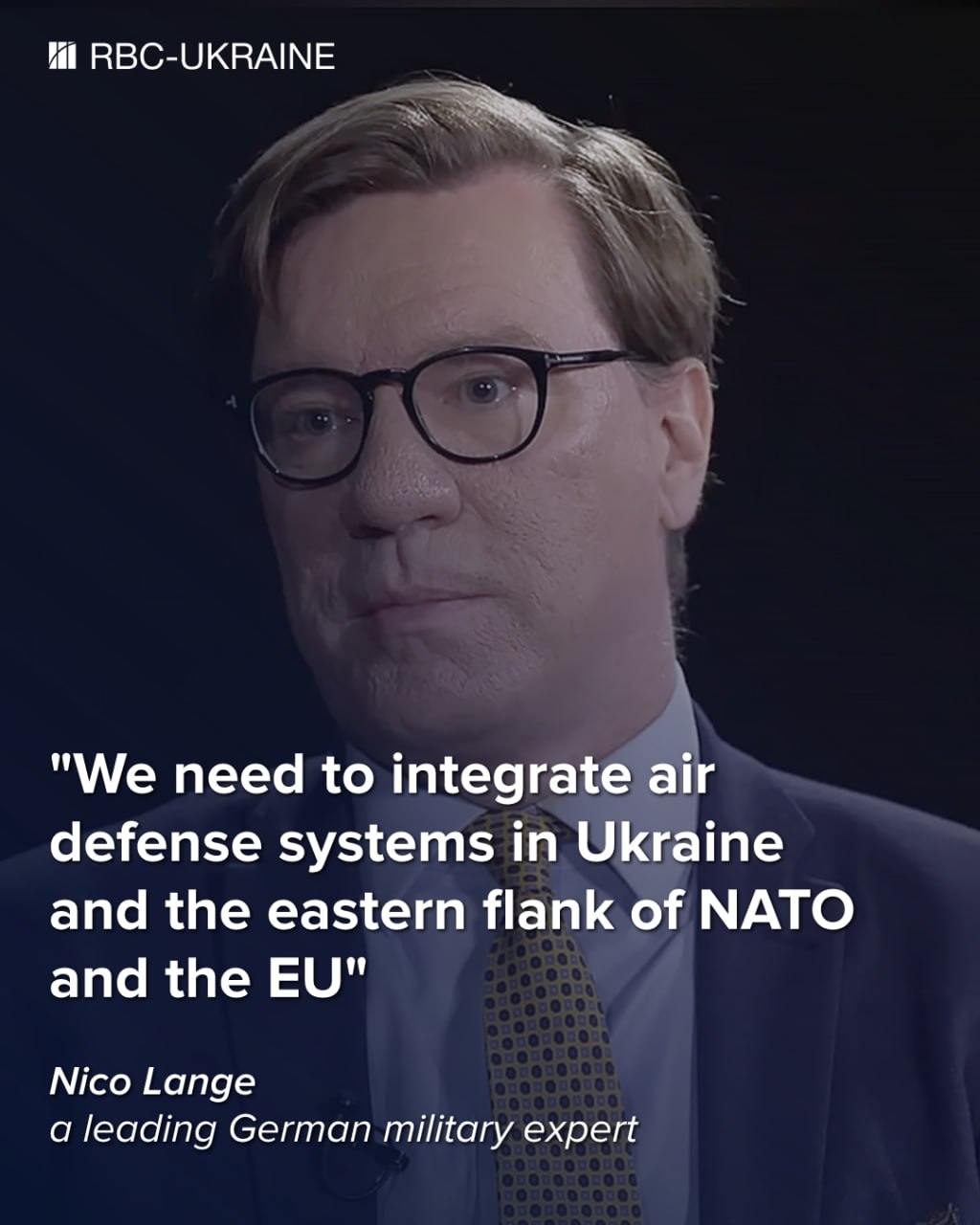 Ukraine and the Alliance must join forces (RBC-Ukraine infographic)
— Let's talk about Germany. You served in the Ministry of Defense before the full-scale Russian invasion, but at that time, defense was not a top priority for the German government.
— Well, I belong to a group of people who tried to make this a priority, but I think you feel it until now in part of the German political elites: there was a reluctance to accept the reality.
There was a lot of wishful thinking when it comes to security and when it comes to Russia. The waking up to reality in Germany is always under the danger that they will fall back into the old patterns of wishful thinking. It's one of the big mistakes Germany must learn from, because I think we would have had possibilities to focus more on defense and to deter Russia from a full-scale invasion.
So, at least Germany should not make the same mistakes again and should be much more forward-leaning on defense. On the one hand, you could say that now Germany is one of the leading supporters of Ukraine. Germany has come a long way, but still, Germany is very reluctant when it comes to the European military presence in Ukraine — the coalition of the willing.
You could say on the money and industry front, Germany is very forward-leaning, but the political decision-making is lagging. Still, Germany is now a very key country in this.
— Are there dramatic changes after the Scholz government and with Merz?
— Well, there are changes in the right direction, but I think Germany needs to change more, and Germany needs to be more forward-leaning on defense.
I am fighting for a Germany that gets closer to where the Nordic countries and the Central-Eastern European countries are mentally. Because if Germany becomes more Nordic or more Central-European in that sense, then the reluctant countries in Europe – Spain, Italy, France – cannot hide behind Germany anymore.
Germany does not even need to lead in the strategic sense; Germany just has to catch up to the Scandinavians and the Central-Eastern Europeans.
— But if you talk about Europe in general, as you mentioned, from Ukraine's point of view, it looks far too slow. Is it so?
— Yeah. I think the positive development is that Germany, also now in its official military strategy, very clearly recognizes what Russia is and the threat that Russia poses. Germany was closing its eyes to this for a long time.
It's an achievement that Germany now sees this clearly. But in terms of consequences, Germany is far too slow. And Germany now, with the fiscal resources it has – being the biggest spender on defense in Europe – needs to spend the money differently and needs to become much faster. There, the German leadership is not sufficient.
The reforms in the system need to be more radical, and Germany also needs to be more offensive. It's not all about defense and resilience; it's about beating the other side. That's how you produce security.
You need to restore a sense of "we want to win this"; you need to restore a sense of "we deter the other side," signaling that we will beat them.
— What could speed up Germany's rearmament and defense policy? And what are the obstacles? Is it bureaucracy, a lack of political will, or maybe a lack of will to spend money on defense at the cost of social spending?
— Money is not the issue anymore. But, you know, if you have a system that does not work well, and then you say, "Okay, we keep the same system, the same structures, the same procedures, the same people, we just have more money," and then we expect a better result – that's not going to work.
I have been suggesting for quite some time to have a quota of the defense budget where we build a fast track – where the money will be spent outside of the usual system of military planning and procurement to stimulate certain important technologies, but also to finance the strategic enablers that allow Germany and Europe to act independently from the United States.
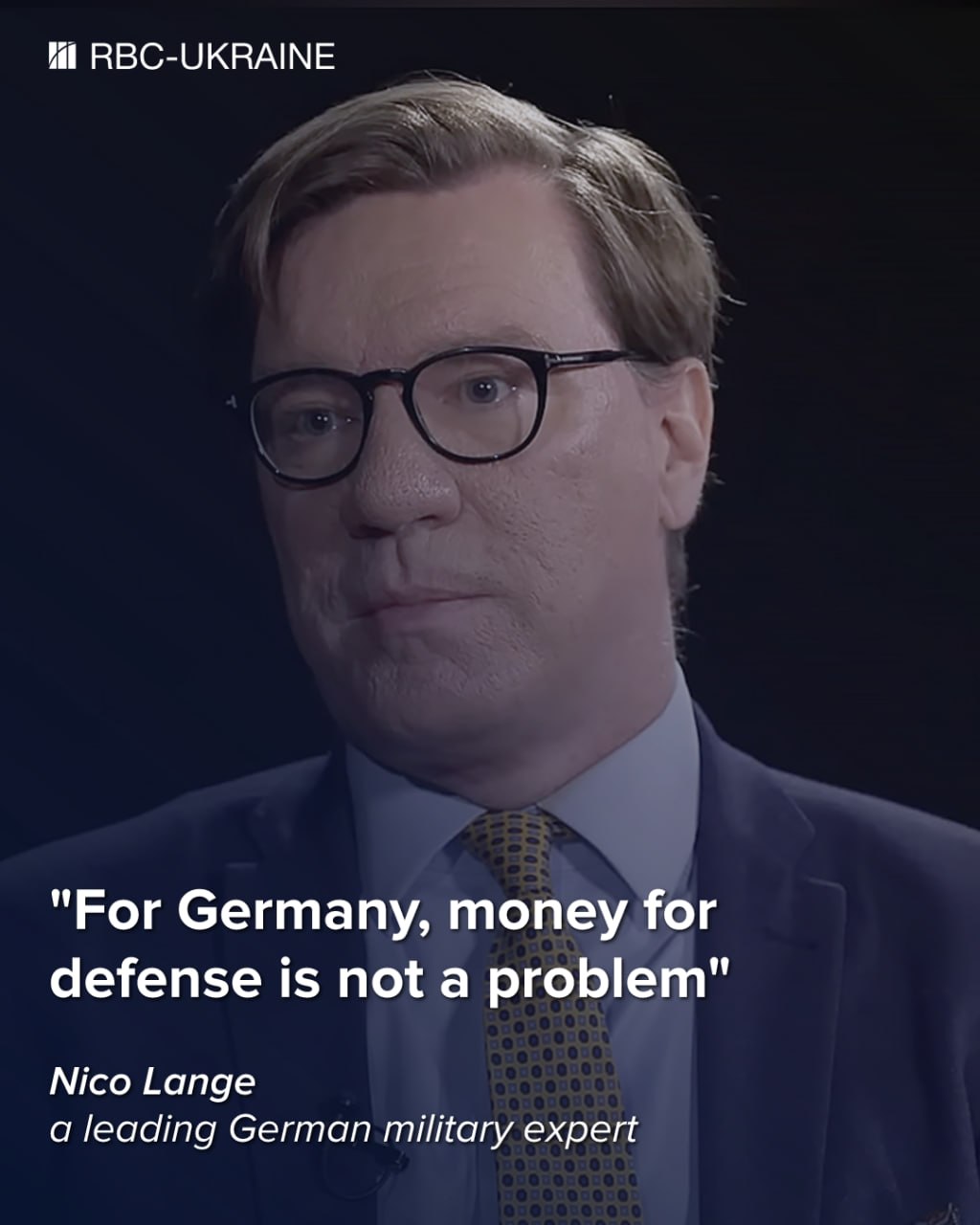 Berlin is ready to spend on defense (RBC-Ukraine infographic)
That's where the money needs to go. And then, I'm sorry to say, there also needs to be infrastructure; there needs to be different people. I mean, you in Ukraine know one of our generals very well, General Freuding. And I mean, this person alone makes a difference.
It's not about optimization of procedures or about building the structures differently; it's about giving the right people the freedom to make decisions and to move forward. We do not have enough of that in the German system, and there is some urgency in there.
The money for the 2025 budget is spent; the money for the 2026 budget is planned. If we don't do this right, we will not build the capability to deter Russia and to have a European ability to act. You can spend a lot of money also on the wrong things, and there is a danger there.
— To what extent is Germany prepared for a new kind of warfare? I mean, not the numerous expensive tanks or artillery, but thousands and thousands of cheap drones?
— That's why we need this quota: moving more money into defense innovation and into new types of warfare. Germany, like many Western armed forces, is too arrogant.
Many people still believe: "Oh, if we have to fight the Russians, we do it differently than the Ukrainians." And I think it's an illusion. We have to be very humble.
I have been out to the battlefield over the last few years very often, and I know that many things I see cannot be done by the Bundeswehr. I know the Bundeswehr quite well, and I am humbled and also concerned. Why are we not more radically adapting those lessons?
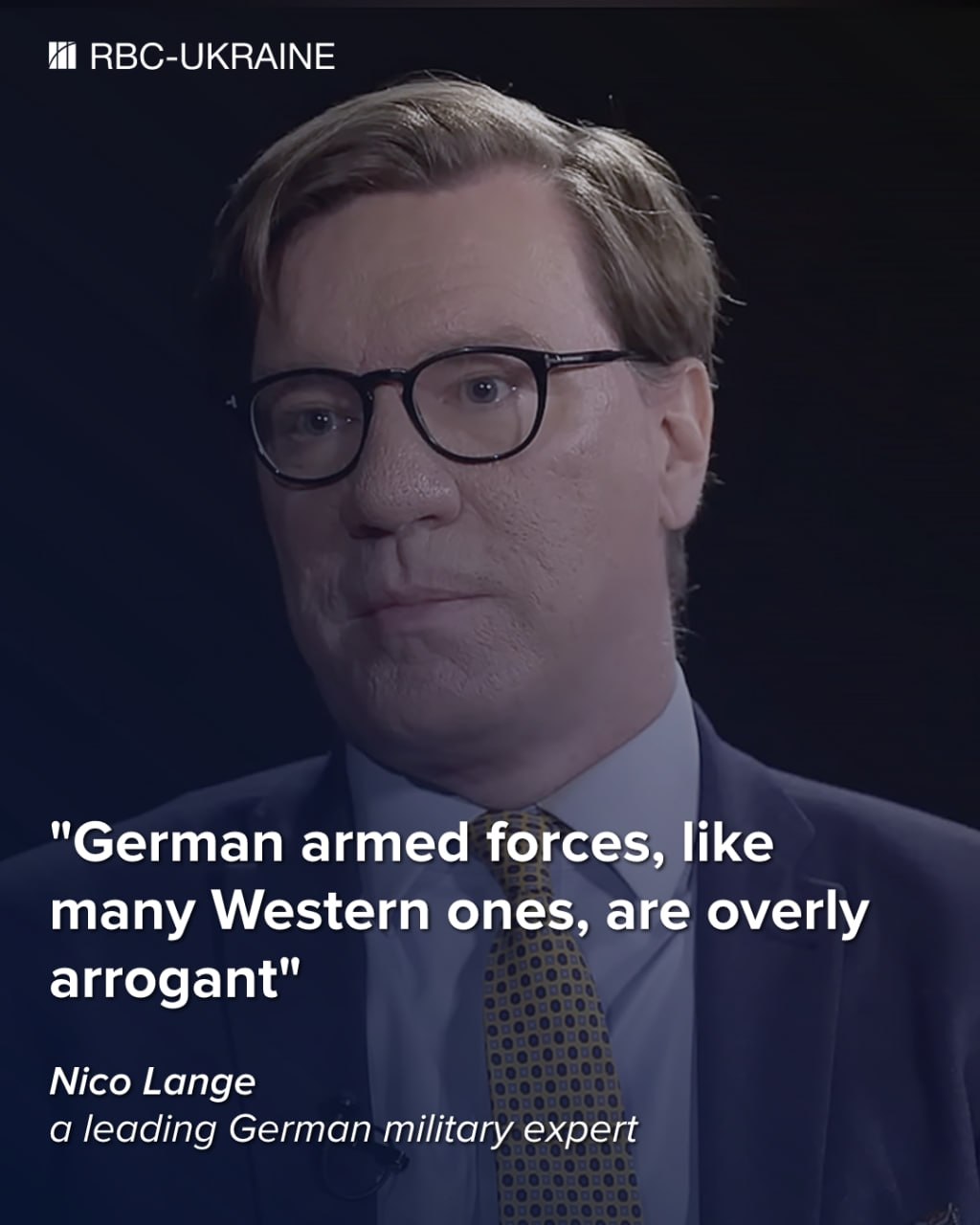 A new type of war requires a rethink of old approaches (RBC-Ukraine infographic)
I think it is starting now with Ukrainian instructors in land forces, with a more experimental approach, and with a "bird unit" in the armed forces, where we basically copy successful ideas from Ukraine. But Germany is by far not where it needs to be when it comes to this warfare.
And also elements that are very often overlooked: warfare in the electromagnetic spectrum, data fusion, sensor fusion – those kinds of things that enable warfare. Ukraine has so much practical experience with that, and we, in Germany, rely on ideas and on systems that won't work.
Also our survivability: if you talk about the infantry fighting vehicles and the tanks and the mechanized formations we have, I think their survivability in the kill zone would be very low. So yes, we are not where it is needed when it comes to this.
At the same time, I think there are problems we can solve together. Germany and Ukraine share the problem: we need to get better at expanding the kill zone, having drone-based and satellite-based ISR, having our own battlefield connectivity, meshed connectivity – all those things, because we cannot rely on US enablers forever.
There are great areas for cooperation, and everything related to missiles and missile defense is something I think we need to work on with even more urgency than now. So Germany can learn from Ukraine, and I think we have areas where we have to move forward together.
— In this context, which path would be better for Germany: importing ready-made Ukrainian drones, establishing joint ventures, or something else? Because Kyrylo Budanov recently warned at the export forum that Ukraine must be extremely cautious about transferring the technologies themselves, so as not to lose its unique advantage.
— I think Mr. Budanov is right. Ukraine should be careful with its intellectual property and with its data. This is very valuable. And for sure, in this world, Ukraine should not give this for free. Why should you?
I think there is a value in industry partnerships. I think there could be a potential use of the Ukrainian technology and the Ukrainian data to develop products together. The goal, I think, should be for Ukraine, very self-confidently, to be not only successful in the warfare in Ukraine, but to be successful with products on the European procurement market.
As I said, Ukraine is not an object. You are not subordinated to anyone. So you can be very self-confident in this. When it comes to selling Ukrainian products, it depends on the direction of travel. Because it's an overcrowded space. You meet someone on every corner in Ukraine with small drones or unmanned ground vehicles.
I think another new wave of small drones or unmanned ground vehicles will not decide this, not for Ukraine and not for Europe. So the next technologies that are coming, as I said, missiles, missile defense, electronic warfare, those kinds of things – they are extremely important.
In short, I think the biggest perspective for me is industry-to-industry partnerships on eye level, and then having common products that can be exported or that can be successful on the procurement market in the end.
I mean, the goal is that Ukraine and the European market will be the same anyway. So it's products for a common market. But I would not give anything away if I were Ukraine.
— Let's talk about political risks, because at the same time, AfD – Alternative for Germany – has become the most popular party. Why? Do you see the risks here in the context of defense policy and German foreign policy?
— I think one of the risks is obvious. The front of supporters for Ukraine is getting smaller. The US is not there anymore. There are just a few European countries really supporting Ukraine. Germany is one of them.
For Russia, Germany has always been a prime target. So now, I think, from a security point of view, we have to look at AfD and other forces in Germany as an entry point for Russian attempts to prevent European assistance to Ukraine.
Russia has not been very successful lately, if you look at the Republic of Moldova or Hungary. At the same time, you now have a certain development in Bulgaria, where Russia now has more opportunities.
So for sure, Russia will do everything it can to slow down German decision-making, to block German decision-making, and to influence public opinion; and it will use the AfD as a loudspeaker for the Kremlin. There is no doubt about that.
And we have to be aware that there might be a trial against a Ukrainian citizen who was allegedly part of blowing up Nord Stream. There is an energy discussion in Germany, where Russia is trying to send a message that Ukrainian attacks on Russian energy infrastructure are somehow detrimental to German interests. So we have to, I think, be very clear-eyed and fight this from the very beginning.
There are reasons why populist parties are popular in Europe. I have been working on Ukraine for the last 25 years. I lived here for the first time 20 years ago. You also had crazy people in Ukraine in the government at some point. It's something that happens everywhere. I think when it comes to this, it comes and goes. But we should not have the situation exploited by our enemy.
— Broadly speaking, in Europe, are there some safeguards to prevent the blocking of projects on rearmament in case of the most dangerous scenario in France? Next year, there will be presidential elections, where a sceptical president might come and try to stop all these initiatives.
— Well, first of all – I'm being very blunt here – if you look into the factual support Ukraine is getting from France, it probably wouldn't make a big difference, because France is not really doing much to help Ukraine.
— Yes, but France is very important for the coalition of the willing and for the European defense sector in general.
— That's what they believe, but – I mean, I'm not against it – but I'm just saying the biggest IPO in defense in Europe at all, a couple of weeks ago, was Czechoslovak Group.
So it seems it's maybe an outdated view to believe that the core of the European defense industrial base is French. That's not the case. You have very strong Scandinavian companies. The German businesses are very forward-leaning here in Ukraine.
When it comes to election risks, yes. You have those risks, I think, in many European countries. Some of them also have the face of right-wing populist governments already behind them. They are moving on to something else now.
I think the biggest danger that we face in European countries, especially in the big ones, is this kind of indecisiveness. You get election results where nobody really has a majority, and where it will be complicated to form a government.
Look at France. I mean, Macron is there, but for a couple of years now, he has had problems in forming a budget. Spain does not have a legal budget, I think, for the last three years. So the real problem is not whether this or that party is in power.
The real problem is that Europeans are not able to make decisions anymore, politically fragmenting. And I think that risk is also an underlying risk for Ukraine.
We can talk about France, we can talk about Germany, but I think Russia not advancing on the front lines will also force Russia back to the good old approach of trying to fragment Ukraine internally and playing on the rifts within the Ukrainian political spectrum.
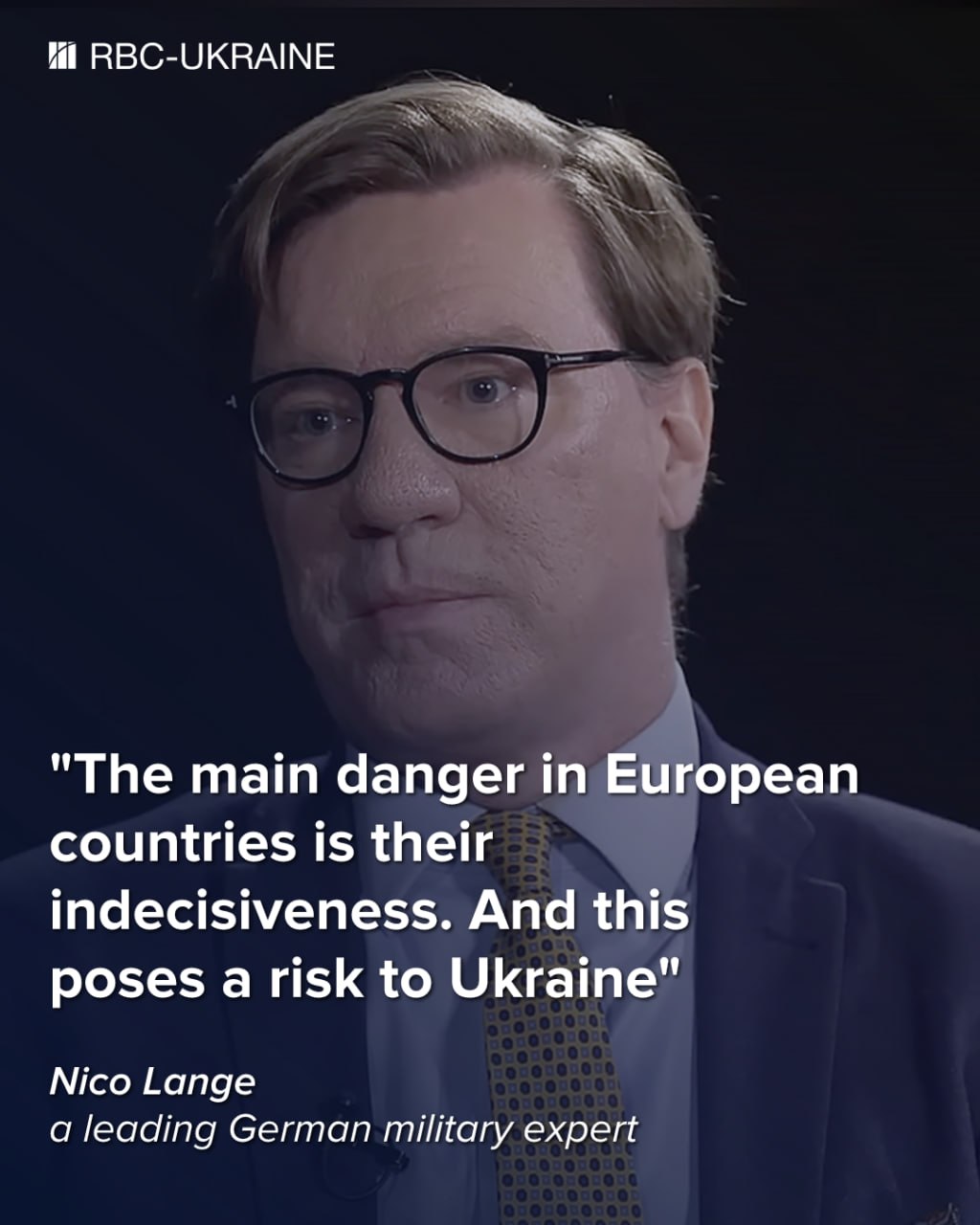 Political paralysis in some countries is complicating Europe's rearmament (RBC-Ukraine infographic)
I think the biggest risk for this year and next year will be Russia trying to exploit internal frictions. I think, as we can see so far with the spring offensive, it will be possible for Ukraine to handle this. But there are political risks, not only in France; they are also here in Ukraine.