'Arms race never stops': Inside Ukraine's drone war with Yaroslav Hryshyn, General Cherry


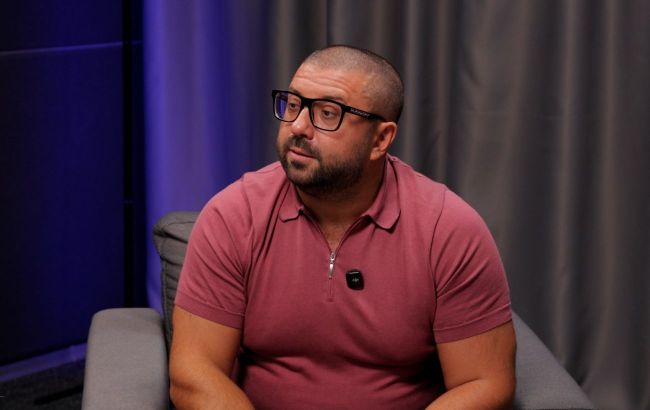 Photo: Yaroslav Hryshyn, co-founder of the drone manufacturer General Cherry (RBC-Ukraine)
Ukrainian forces are now flying drones made by General Cherry on a massive scale along the front line. The company's aircraft don't just strike Russian positions — they intercept Russian front-line drones known as Molniya and shoot down Shahed drones deep inside Ukrainian territory.
Yaroslav Hryshyn, co-founder of the drone manufacturer General Cherry, spoke with RBC-Ukraine about production numbers, the technology reshaping the war, and where the fight is headed next.
Key takeaways:
- Drone warfare. Ukraine is gradually closing the technological gap with Russia. In some areas, particularly interceptor drones, Ukrainian developments already outperform their Russian counterparts.
- 100,000 drones a month. General Cherry's production capacity exceeds 100,000 drones per month. The company continues to expand its portfolio, ranging from conventional FPV drones to fiber-optic UAVs, interceptor drones, and strike-wing drones.
- Interceptor drones. Around 40% of Russian Molniya ("Lightning") drones are shot down by AIR and AIR Speed interceptors. Meanwhile, Bullet drones have already destroyed hundreds of Geran and Gerbera drones.
- Fiber-optic drones. While Russia held the advantage in deploying fiber-optic drones just a year ago, the battlefield has now reached near parity between the two sides.
- The future of warfare. Over the next few years, drones will increasingly rely on AI, featuring terminal guidance and autonomous target acquisition, while drone swarms will become more common. The focus will shift toward systems capable of carrying heavier payloads over longer distances with greater autonomy.
- Ukraine's defense industry. One of the biggest challenges facing manufacturers remains the shortage of skilled workers, reduced access to Chinese components, and the ban on arms exports. Once the war ends, exports of Ukrainian-made weapons could become one of the key drivers of the country's defense industry.
In 2023, a group of volunteers from Zaporizhzhia who had been supplying the army with gear and vehicles launched a drone production line and sent their first test batches to the front. The name — General Cherry — is a nod to the Melitopol resistance movement that operated across the occupied parts of the Zaporizhzhia region throughout the war.
Today, General Cherry runs production sites across several regions of Ukraine, and its drones are among the most widely used at the front. The company's lineup includes classic FPV kamikaze drones, front-line interceptors, fiber-optic drones, "Shahed hunters," and fixed-wing strike drones. It recently unveiled a new model, "Sweetheart," designed for reconnaissance behind enemy lines.
General Cherry's drones
It is cherry season in Ukraine, and for the company that carries the fruit's name, the timing feels apt. "The front is very hot right now, and both the quantity and the precision of our strikes are growing every month," Hryshyn said. "We're working hard to save our people's lives and hit more enemy targets. So yes, cherry season is genuinely intense right now. Cherry is hitting hard."
The numbers back him up. This spring, General Cherry topped the rankings of Delta, the military's digital targeting system, by "e-points" — its method for confirming and verifying strikes — ahead of every other type of weapon in use. The ranking, Hryshyn said, reflects the company's entire product line, not just its FPV drones. "We have 39 codified products — FPV drones, interceptors, all of it. And we're talking about verified strikes with video confirmation." He calls Delta "a kind of arithmetic of war," and considers its adoption by Ukraine's Ministry of Defense, with every strike independently verified, a genuine breakthrough.
Is the company's success down to sheer volume, or to the quality of the product? Hryshyn insists it's both. "We do supply a huge number of drones, and fast. We're not necessarily shipping more units than other manufacturers, but our performance numbers are clearly better," he said. Some units flying 110 of the company's AIR anti-aircraft interceptors have shot down 100 targets — a hit rate approaching 100 percent.
Production, meanwhile, has more than doubled in a year. "Our production capacity is over 100,000 units a month, and we're running flat out to hit that number," Hryshyn said. A year earlier, in an interview with Forbes, he had cited a figure of 50,000 FPV drones a month. The jump, he said, comes down to effort. "It's down to our team's extraordinary effort. The need is enormous. Our people are deeply patriotic, deeply committed. The front needs these drones badly, so we work without days off, essentially around the clock, and we're producing far more than we did last year."
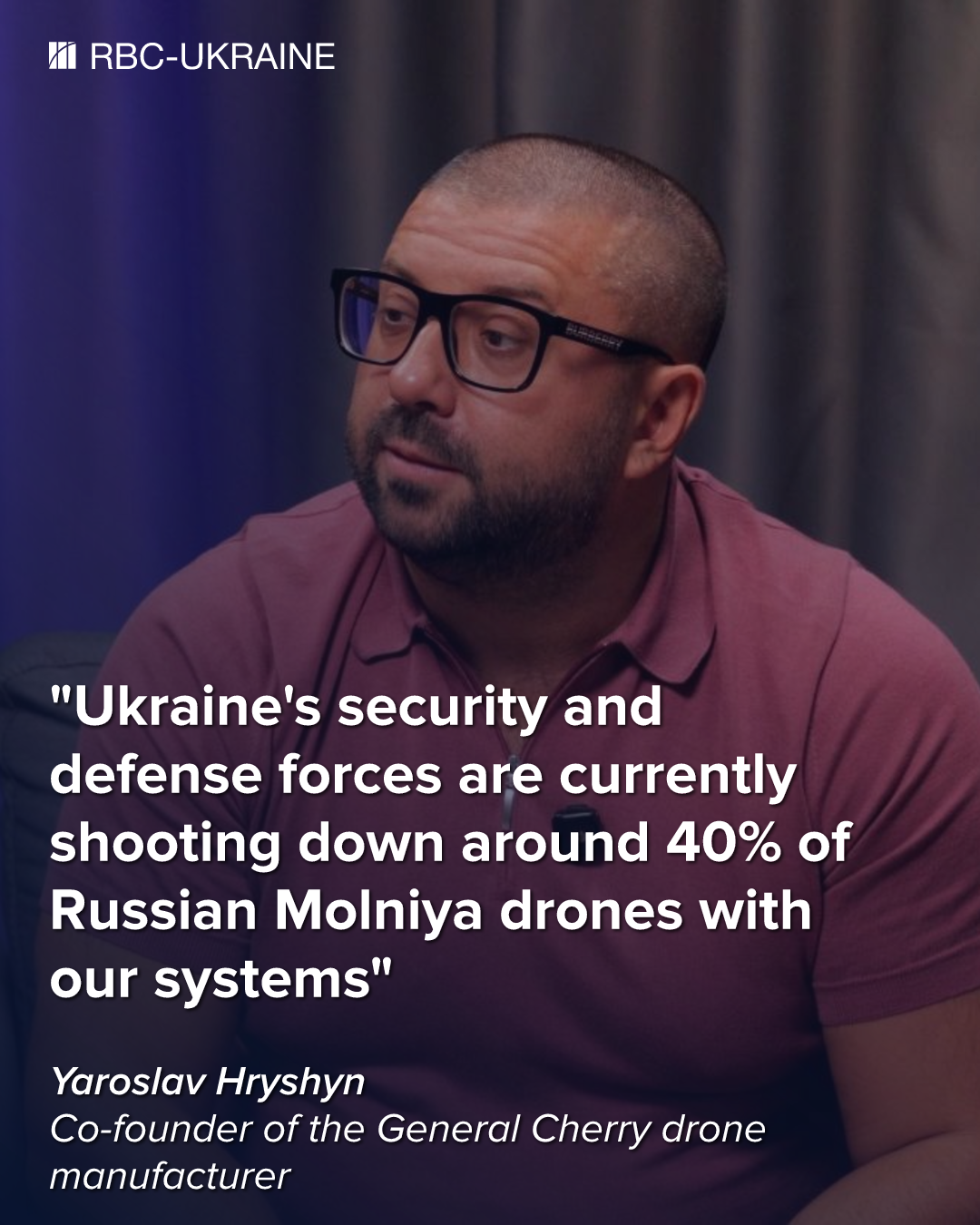
General Cherry also leads the Delta system's rankings for intercepted targets, largely on the strength of its AIR-line front-line interceptors. "There's the AIR and the AIR Speed. Each has its own job, its own targets, and both are in heavy use," Hryshyn said. "Ukraine's security and defense forces are currently shooting down around 40 percent of Russian Molniya drones with our systems. And Russia is launching about 50 percent more Molniyas every month than it did the month before. So we constantly need to scale up both the volume and the quality of what we build, and keep modernizing to match what the front needs."
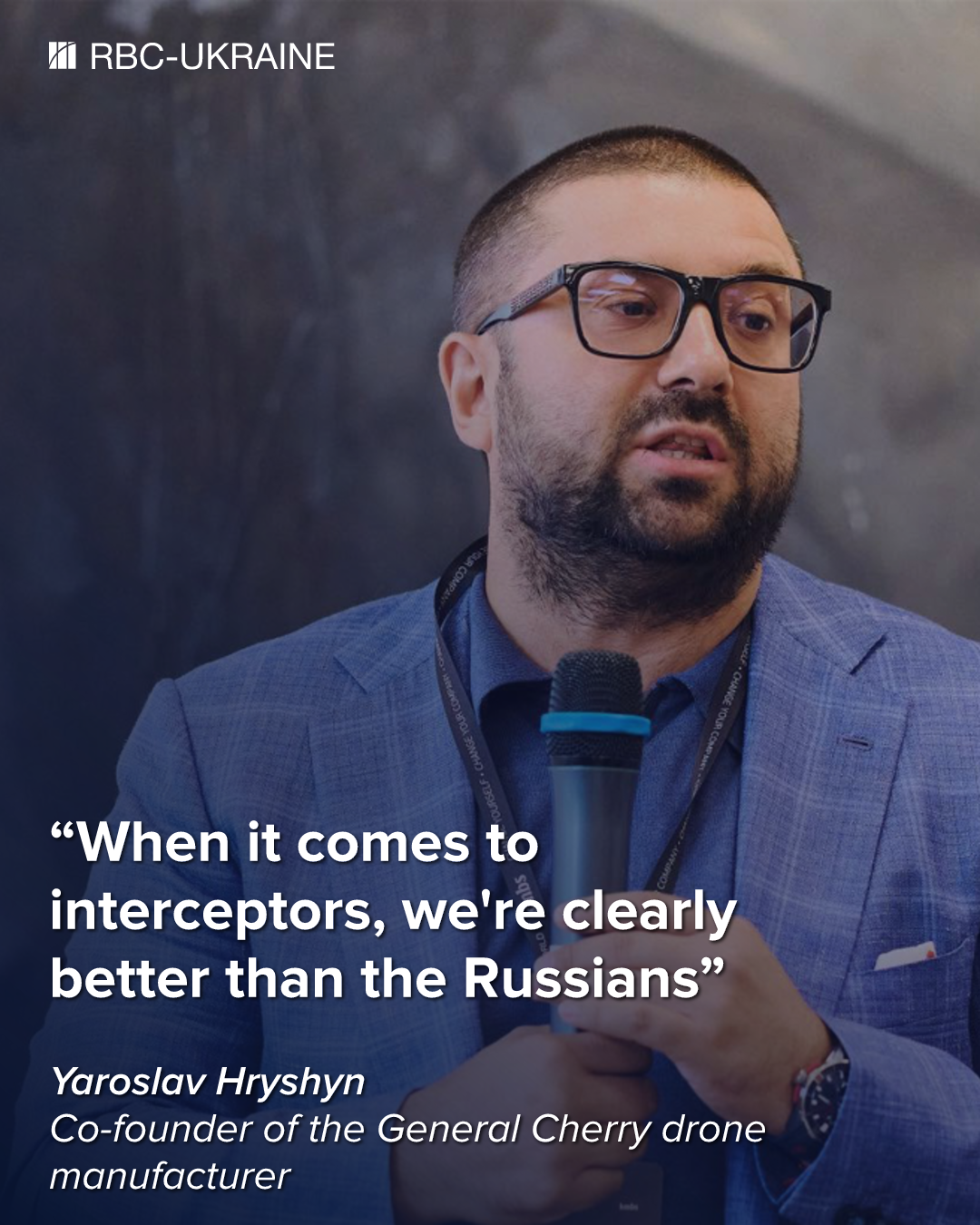
Russia, for its part, keeps tweaking its Shahed drones and experimenting with new launch tactics — changing direction, altitude, speed, and attacking in swarms. Hryshyn describes the resulting contest in blunt terms. "We simply don't have a choice. This arms race never stops, not for a second," he said. "We're definitely trying to stay ahead of them. When it comes to interceptors, we're clearly better than the Russians." The company is now rolling out a new drone called Khmarynka ("Little Cloud") — a strike-wing model meant to outperform the Molniya — which it plans to supply by the tens of thousands to hit Russian logistics and rear-area targets. "We know exactly how to do this," he said.
The innovation cycle itself, Hryshyn argued, has compressed from years to months for both sides. "If we want to survive, we need to make an extraordinary effort, squared. There's simply no other way. And it really is happening incredibly fast now — these are genuinely revolutionary shifts," he said. "Things that took trillions of dollars and decades of development elsewhere are playing out completely differently here, in practice, on the battlefield."
That compression shows clearly in fiber-optic drones, a technology Russia pioneered at scale roughly two years ago during Ukraine's incursion into the Kursk region, using it to counter Ukrainian troops. General Cherry's own fiber-optic model, OPTIX, is part of an effort that Hryshyn says has closed that gap entirely. "We've caught up. Russia really was ahead, but we managed to close the gap. There's a balance now — parity — in fiber-optic drones at the front." Their chief advantage is that they cannot be jammed by electronic warfare, though that comes at a cost to the operators. "They're harder to operate and more dangerous for the pilots, because it's easier to pinpoint their location — it puts the operator's life and health at greater risk," Hryshyn said. "So there's real heroism involved for the pilots who fly them. But the technology is in heavy use, and it matters a great deal."
Role of drones in the war
Fiber-optic drones have found a lasting niche rather than fading as a passing trend, Hryshyn said, though the company is already working on what comes next. "We're developing some very interesting solutions — a different technology that will fly farther than these fiber-optic drones, be easier to control, and give better video," he said. "We'll be able to show it soon. And we think that once we do, our pilots will be able to rely less on fiber-optic drones, which will be safer for them."
Pressed on which of the company's drones are in the highest demand, Hryshyn declined to rank them, arguing that the targets themselves dictate the need. "Radio-controlled drones matter for ground targets. Aerial targets matter enormously too, because that's active defense — that's how we save the lives of our people, civilians, and critical infrastructure," he said. He pointed to intercepted communications indicating Russian forces have been ordered to target civilians in places like Zaporizhzhia — gas stations, vehicles carrying civilians. "This is about our people's lives, so it matters enormously. But in war you don't get to pick and choose — you have to work comprehensively and systematically, hitting enemy manpower, air targets, ground targets, logistics, all of it."
He bristles at the term "game changer," a phrase he associates more with Western expectations than battlefield reality. "We don't like using that word, because the real game changer is the heroism of our pilots, our people — not the equipment," he said. "That's the word the West really wants to hear, so it can feel like pressing a button on an iPhone and achieving some result. But it doesn't work that way. It's all tied to the training, professionalism, and heroism of our people." Still, he acknowledges the ground has shifted permanently. "The situation has genuinely changed — robots and drones are taking up more and more space, there's artificial intelligence, drone swarms. The world will never again be what it was before 2022."
Asked to picture the battlefield two years from now, in 2028, Hryshyn described a front transformed by automation. "The kill zone will definitely be wider — it could reach 50 kilometers. There will definitely be a wall of drones, a wall of robots. Our border will be effectively protected, and nothing will get through," he said. "Drones will mostly rely on artificial intelligence — target lock-on, target acquisition, proper detection — and drone swarms will absolutely be in use. The systems that succeed will be the ones that can cover more distance, carry more weight, and operate with greater autonomy."
On components and exports
The dependence on Chinese components that runs through the drone industry is not yet a crisis, Hryshyn said, but it is a vulnerability worth taking seriously. "It's a strategic risk for the whole world. It isn't a problem yet, but it's a risk we need to minimize by building our own quality components," he said. Progress on that front is already underway through a partnership with the Croatian company ORQA, which manufactures its own components without Chinese parts. "We're already assembling drones from their components, and we'll soon start producing those parts in Ukraine as well."
Interest from abroad, he said, has surged over the past two years, sharpened further by the war in the Middle East. "Interest is very high. Everyone wants to work with us and wants to learn from us. Everyone understands the risks and dangers posed by Russia, Iran, North Korea, and China," he said. "We're essentially in the middle of a Third World War. So everyone needs to learn, and fast. We're actively training international partners, urging them to arm themselves, and we're ready to share what we know to protect civilians." That interest, he said, spans the United States, Japan, the Middle East, and Europe alike. "Everyone understands that tomorrow, war could show up on their own doorstep, so they're actively preparing for that. And without Ukraine, they simply won't manage it."
Some of that global appetite is pulling Ukrainian production abroad, though Hryshyn frames the shift as being about more than safety. "Security is certainly an important factor, but it's a multi-layered story," he said. "Exports need to happen — that's access to technology, capital, partnerships, and the smart people, the engineers, we need to bring in, working together with us in Europe, so they stay connected to us." He points again to Croatia, where ORQA's engineering team already contributes to R&D that feeds back into General Cherry's Ukrainian production line.
What is holding exports back is not a lack of demand but a wall of bureaucracy. "Right now, exports are essentially banned and blocked, both in practice and by law," he said. "That process needs to be launched, so we can work faster and legally. This export ban is genuinely slowing the development of our defense industry, our technology, and our production capacity." Pressed on whether it's a formal ban or simply heavy red tape, he didn't hedge. "You could call it a de facto and de jure ban. Everything is so difficult and takes so long that it's practically impossible."
Even so, he is confident that once the barriers come down, exports will become a pillar of Ukraine's defense industry once the war ends. "Absolutely," he said. "That's exactly how it will play out."