Inside Ukraine's robot army: UGV Robotics CEO explains next big leap

 Photo: Petro Leontiev (collage by RBC-Ukraine)
In the future, Ukrainian unmanned ground vehicles will support larger-scale ground-based autonomous systems to minimize the use of military personnel.
In an interview with RBC-Ukraine, Petro Leontiev, director of UGV Robotics, explains how autonomous turrets are learning to shoot down Shaheds and what Ukrainian turrets will look like in the future.
Key points:
- The Khyzhak combat module is capable of automatically detecting enemy drones. There have already been confirmed cases of the destruction of not only FPV drones but also large strike drones such as Shaheds.
- The Liut combat unmanned ground vehicles have two key tasks on the front lines. The first is to halt Russia’s advance, and the second is to clear logistics routes.
- A major challenge facing drone engineers is increasing the vehicles’ range. Due to the expansion of their operational radius, new models must be capable of traveling up to 100 kilometers, depending on the type of terrain.
- Heavier systems will be transported to the battlefield by smaller combat systems, which will thus conserve range and have greater autonomy.In the future, unmanned ground vehicle maintenance will be automated.
– Tell us about your key products and what you’re currently working on.
– Our company, which officially began operations in early 2024, had been engaged in R&D since 2023. We develop and manufacture ground-based robotic systems and combat modules equipped with artificial intelligence, which enable the autonomous destruction of aerial targets.
Today, we have two products that are already in production and in service with the military. These are the Liut ground-based robotic system and the Khyzhak combat module. We are also developing a new type of ground-based robotic system and a modernized turret with a larger caliber.
– What key battlefield challenges are your robotic combat systems currently addressing, and what challenges will the new models address in the future?
– In general, unmanned ground vehicles are designed to partially or completely replace humans on the battlefield, and our systems are also geared toward this goal. We manufacture combat robots, that is, they are armed with a 7.62-caliber machine gun, and as of today, they have several modes of operation.
There are two of the most common areas of application for our unmanned ground vehicles. The first is clearing logistics routes, that is, a road along which our logistics convoys can travel.
On this road, Russia deploys various loitering drones or explosive devices. In other words, they lay mines. The unmanned ground vehicle then moves in, uses its machine gun to destroy all of Russia’s mining devices, and thus clears the way for logistics convoys. This is more of a rear-area operation, meaning it’s not on the very front lines.
The second important role is using the unmanned ground vehicles as observation posts. Yes, there are fewer and fewer infantry troops, but Russia’s advance must be stopped. Therefore, the unmanned ground vehicles move into areas where Russian infantry might advance and operate in ambush mode.
If Russian movement is detected, the drone opens fire on them, inflicts damage, and, most importantly, stops their advance. Once detected, groups of Russians become easier targets for FPV drone crews, bombers, and other assets.
A third area that is currently being actively developed involves more proactive operations using unmanned ground vehicles. Often, troops need to penetrate deep behind Russian lines, into Russian positions, to deliver fire support, divert attention, support assault operations, facilitate an advance, and so on.
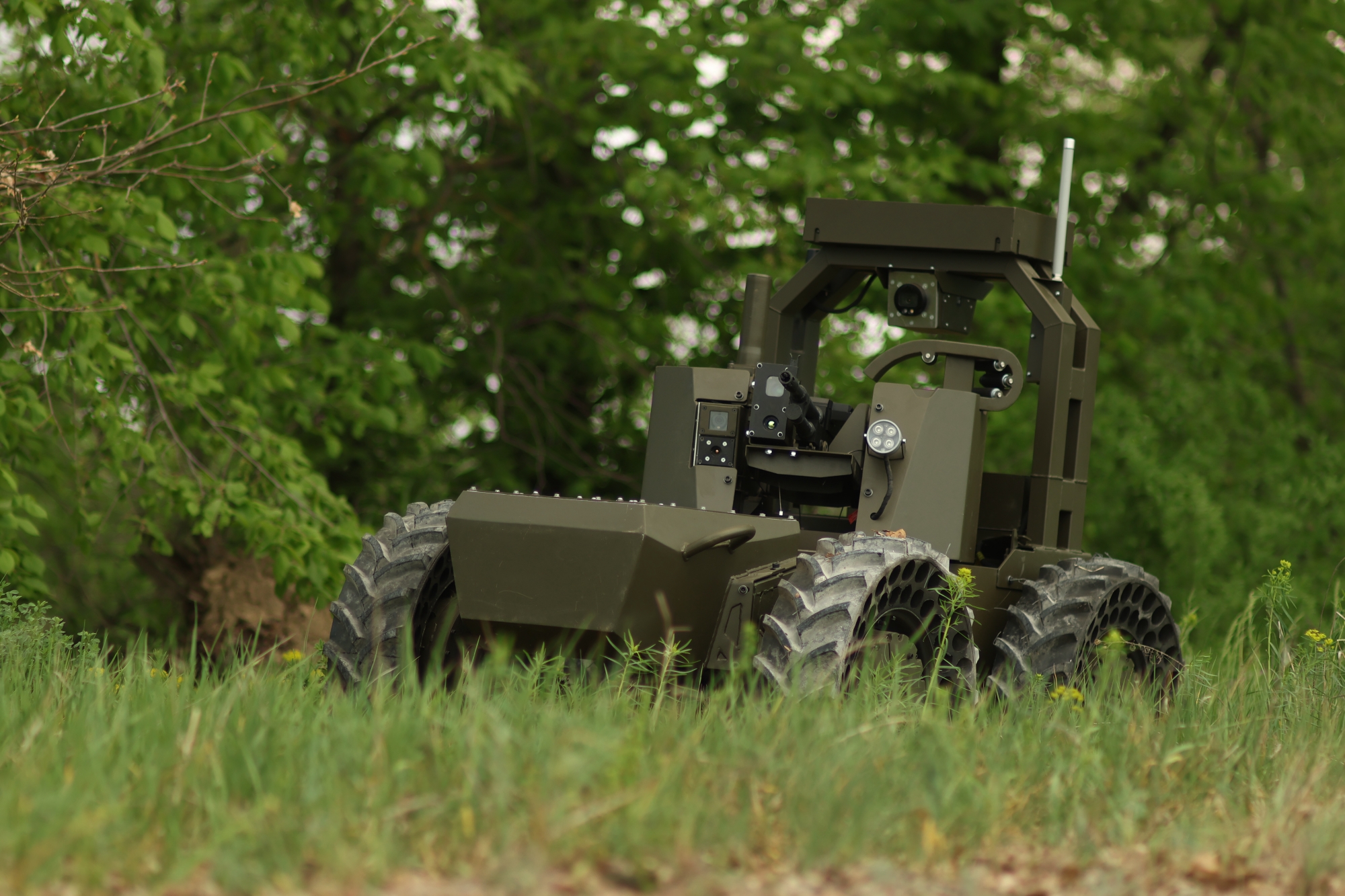 Photo: Ukrainian unmanned ground vehicles carrying out combat missions on the front lines (UGV Robotics press service)
– What is your Khyzhak combat module capable of?
– Its main task is to provide cover for positions against low-flying targets, primarily drones. This mainly involves ambush operations within a radius of 200–300–400 meters, depending on the type of target.
Currently, each turret requires an operator. The turrets are equipped with an artificial intelligence system that uses a trained neural network to detect and identify targets. Once a target is detected, the operator must confirm that it is a valid target and should be destroyed.
After confirmation, the system automatically begins tracking the target. It performs ballistic calculations of the target’s range and speed and calculates the point of lead, that is, where the shot must be fired to hit the target. The operator also makes the decision to fire.
We are also working to enable the modules to shoot down larger targets, such as Shaheds, in particular, and we are moving in that direction. To achieve this, it is important to increase the engagement range. Even with our current capabilities, we have already successfully shot down Shaheds under certain conditions of use for the combat module.
– What are the key challenges you face in modernizing the unmanned ground vehicle systems?
– The first major challenge is integrating Starlink satellite communications into our unmanned ground vehicle systems, which is now an integral part of ground-based systems’ operations. In fact, it’s the key element that enables them to function.
The second key issue is the range on a single battery charge and its continuous improvement. The fact is that the operational area is constantly expanding, and we’ve now reached the point where the range of new models is between 50 and 100 kilometers, depending on the type of terrain.
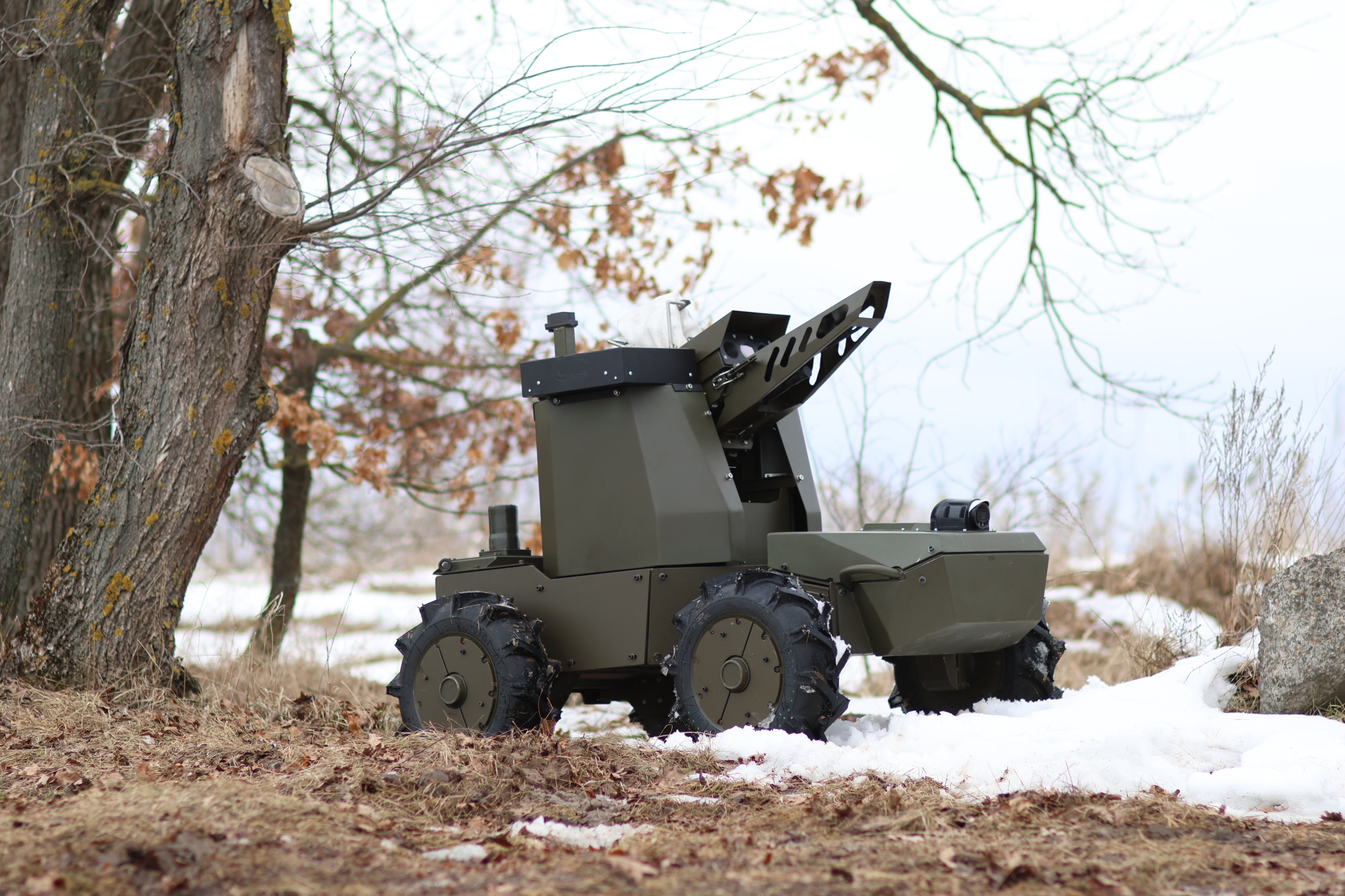 Photo: Unmanned ground vehicles are replacing infantry during Russian breakthroughs (UGV Robotics press service)
In other words, if the unmanned ground vehicle is traveling on hard terrain, it can cover 100 kilometers; if the terrain is very poor, such as mud or extremely rugged terrain, then the range is 50 kilometers.
One of the key features of the Liut unmanned ground vehicle is its armor, which protects it from various types of debris and sometimes even from direct hits. Provided its communication systems remain undamaged, the unmanned ground vehicle can withstand up to six hits from FPV drones. In addition, all four wheels have independent suspension, and each wheel has its own gearbox.
– What is the level of localization for your drones? How much of it is made in China?
– All body components and metalwork are manufactured in Ukraine. Certain electronic components are also sourced in Ukraine, but a fairly large number of simple electronic parts are sourced through China.
In fact, this is standard practice today. However, there are certain specialized components, such as gyroscopes, perhaps certain thermal imagers, and generally complex electronic devices… These components are supplied from European countries and the United States.
Ukrainian components account for well over 50% of our unmanned ground vehicles and turrets, both in terms of total quantity and cost. However, we import the key components that give our designs a technological edge from the EU and the United States.
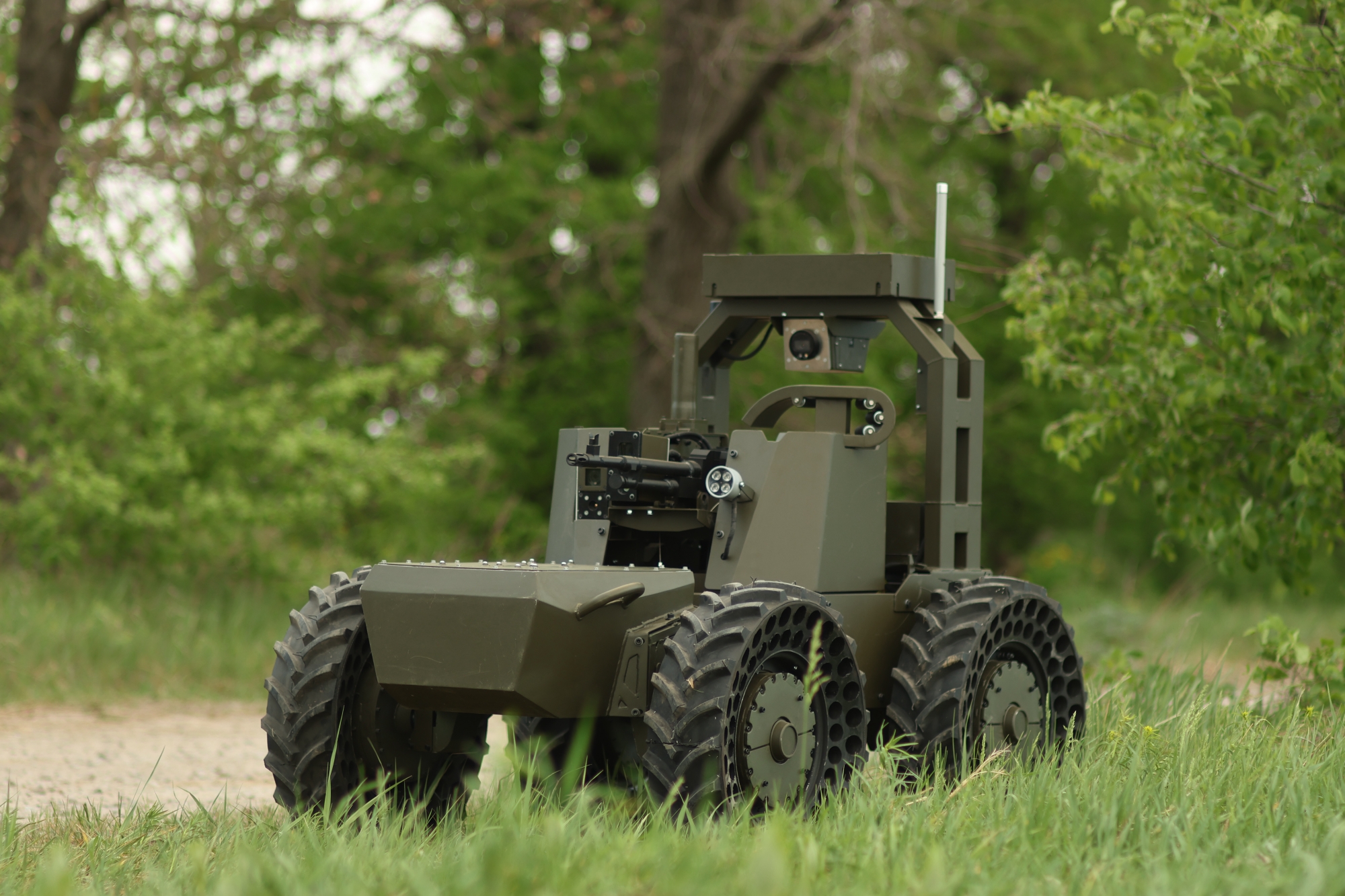 Photo: Ukrainian unmanned ground vehicles use over 50% domestic components (UGV Robotics press service)
– What do you predict unmanned ground vehicles will be like in 1–2 years, and what capabilities will they have?
– I base my predictions on what has already happened and on trends that have already materialized. Yes, in 2023–2024, unmanned ground vehicle technology evolved quite rapidly. In other words, the situation on the front lines was changing so rapidly that manufacturers couldn’t keep up with the military’s demands.
Toward the end of last year, this arms race stabilized somewhat. For example, we already know what an unmanned ground vehicle needs to be like to function effectively, and now we’re simply gradually improving its performance. Of course, it’s important to improve parameters such as range, image quality from cameras, and so on.
Today, small unmanned ground vehicles predominate on the front lines, but recently, there has been an increase in large, heavy ground-based systems capable of carrying heavy payloads.
Currently, combat unmanned ground vehicles have so-called staging points where the system is transported, and a designated person replaces the battery, recharges the battery pack, and performs basic maintenance. These points are located 10–15 kilometers from the front line, which is currently close enough.
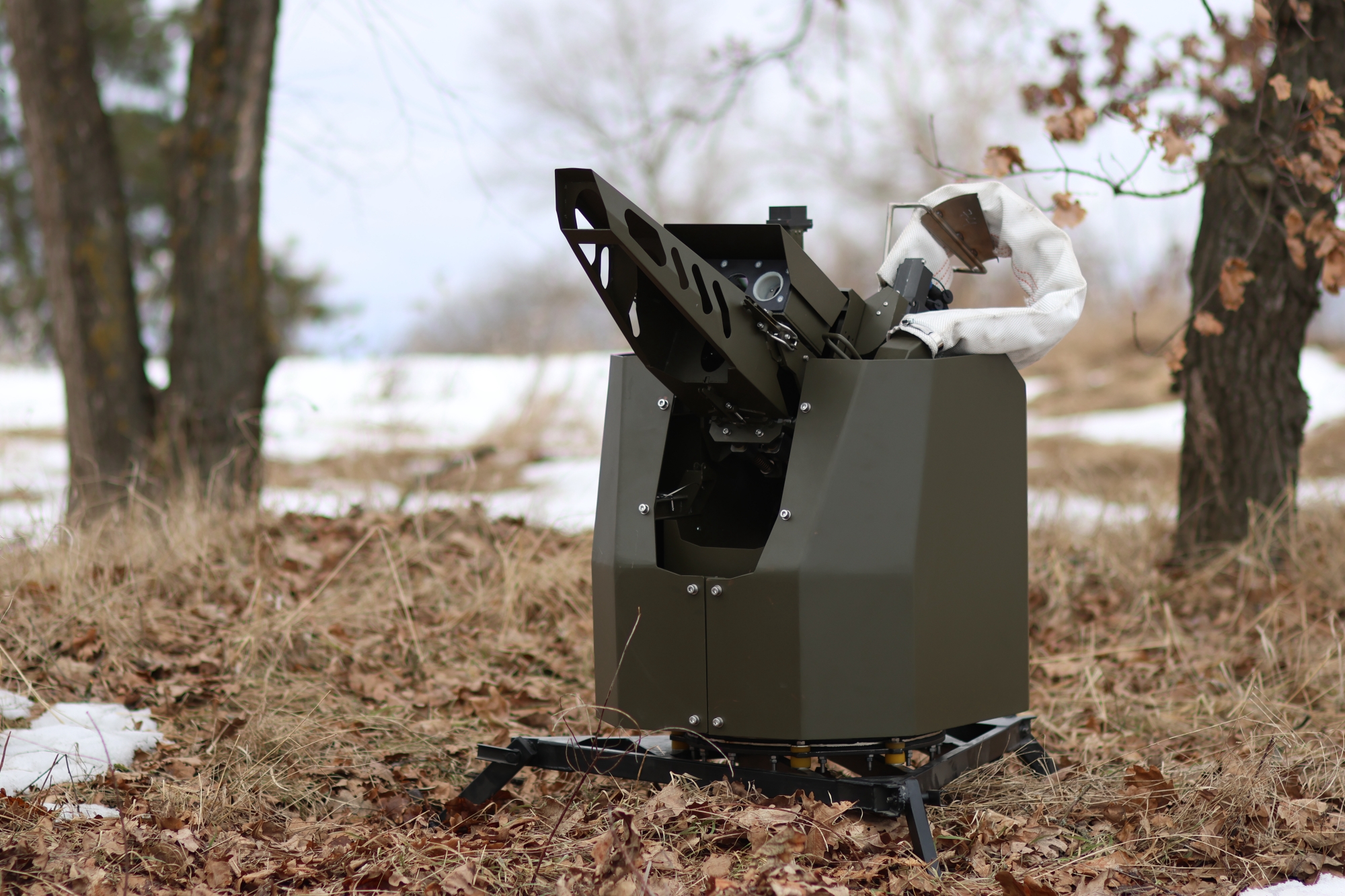 Photo: Large unmanned ground vehicles will assist small ones on the front lines (UGV Robotics press service)
Perhaps in the near future, smaller combat unmanned ground vehicles will transport heavier ones to the battlefield, thereby conserving their range and increasing their autonomy.
The second aspect is increased autonomy. For example, in the future, logistics unmanned ground vehicles will be able to carry out cargo delivery missions in fully autonomous mode. The robot will be programmed with a route; it will be able to navigate on its own, detect obstacles, overcome them, and ultimately reach its destination.